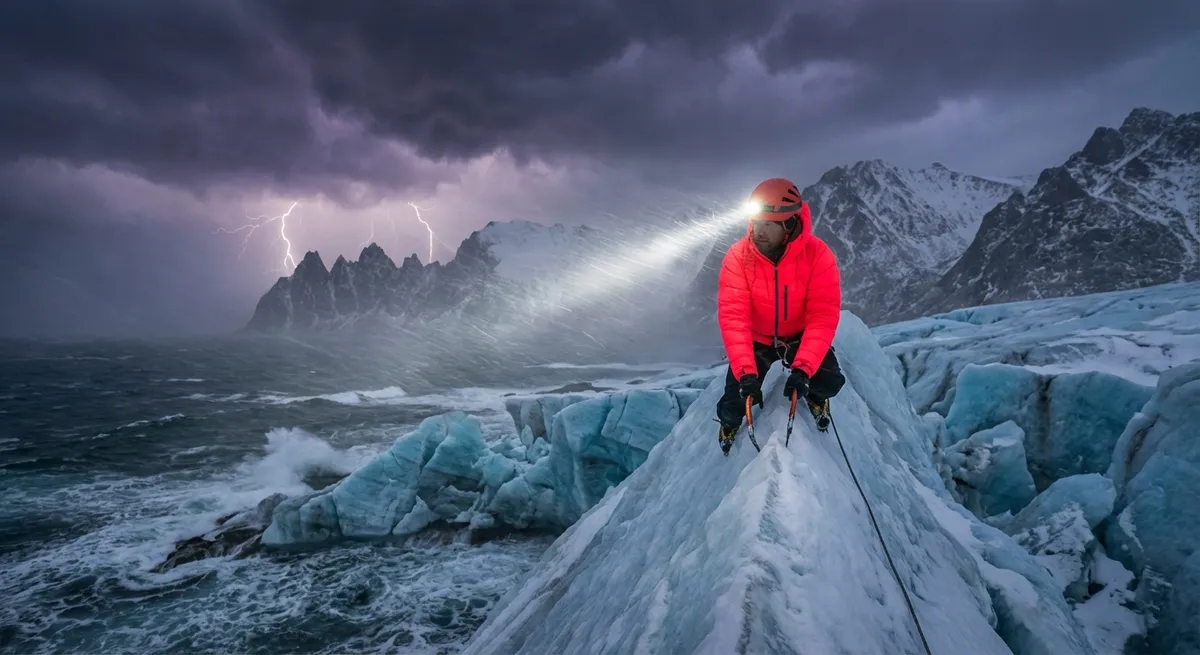
Extreme travel isn’t about ticking boxes or flexing for the algorithm. It’s about that electric moment when your brain whispers, “This is a bad idea,” and your soul answers, “We’re doing it anyway.” This is your invitation to step off the manicured trail and into the beautiful unknown—where the weather is rude, the ground sometimes moves, and you come home slightly changed (and slightly feral).
Below are five travel discoveries for people who read “hazard” as “maybe” and think “remote” is a compliment. None of this is safe in the theme-park sense—and that’s exactly the point.
Riding the Edge of the World’s Storm Alley
Welcome to storm chasing: the art of willingly driving toward the sky’s worst mood swings. In the American Great Plains, spring and early summer turn the horizon into a live-action apocalypse—supercells spinning like galaxies, lightning fracturing the clouds, and hail drumming the car roof hard enough to wake your ancestors. This is nature’s IMAX, except you’re in the front row with the Exit signs turned off.
Professional storm chasers run guided expeditions where you learn to read radar, chase “hooks” on storm maps, and position yourself on the safe(ish) flank of rotating supercells. The thrill isn’t just watching a tornado form—it’s the chase itself: bolting down grid roads, racing the gust front, and feeling barometric pressure drop like a mood swing. It’s a strange mix of science lab and car chase, where your classroom is a pickup truck and the chalkboard is an angry sky.
Extreme doesn’t mean reckless, though. Legit operations obsess over safety distances, escape routes, and fast weather analysis. You’ll talk mesoscale convective systems over gas-station pizza and learn why storm structure matters more than Instagram angles. At the end of a good chase day, you’re left with dirty gear, a blown mind, and that rare feeling of having witnessed something truly indifferent to your existence—and loving it for that.
Descent into the Underworld: Lava, Ice, and Vertical Dark
The surface is overrated. The real madness starts when you move vertically—down into volcanic tubes, glacial mills, and caves so untouched the air feels prehistoric. Think of it as reverse mountaineering: same commitment, just pointed toward the planet’s spine instead of its crown.
In Iceland, you can strap on a helmet and descend via elevator into the dormant magma chamber of Þríhnúkagígur, standing where liquid rock once seethed. The walls are stained in impossible colors—sulfur yellows, iron reds, volcanic purples—like the earth tried graffiti and never stopped. On other expeditions, glacier guides thread you through moulins, those nearly vertical shafts of blue ice where meltwater carves tunnels that look like the inside of a sapphire.
Then there’s technical caving: squeezes, vertical drops, and underground rivers that demand rope skills, headlamps, and the ability to ignore the part of your brain that hates enclosed spaces. Routes can take you through subterranean waterfalls, fossilized coral ceilings, and chambers full of formations that look like alien architecture grown in the dark. You learn to move slowly, breathe steadily, and communicate clearly because in these zones, panic is the real hazard, not the darkness.
Emerging back into daylight after hours underground feels like rebirth. Your sense of space rewires itself; streets feel loud and wrong; sunlight is too bright. You realize how thin that top crust of “normal life” really is—and how much planet is quietly roaring beneath your feet.
Sleeping Where the Maps Go Silent
For the average traveler, “remote” means no Uber. For you, it means a place where the nearest hospital is a helicopter ride away and your phone turns into a dead rectangle of useless optimism. This is expedition camping in the truest sense: no campground, no trail markers, no neighbors—just you, a small camp, and an absurd amount of sky.
Picture a packraft expedition in Arctic tundra, where you follow river systems that have no official names, dragging your boat over ice-choked shallows and camping on gravel bars while caribou stare like you’re a weird new species. Or a multi-day desert crossing by foot in Namibia or Jordan, carrying your own water between ancient wells and rock outcrops that look like the skeletons of gods. There are no kiosks. No signs. Just route-finding, judgement calls, and the understanding that “bail out” is not a realistic Plan B.
What changes out there isn’t just your scenery; it’s your sense of scale. Meals become tactical. Weather windows become sacred. You start listening to small signals: wind shifts, cloud build-up, how your body feels at 3 a.m. in a flapping tent. The isolation is heavy but clarifying. With no digital noise, the only alerts you get are the ones your senses deliver: a distant avalanche rumble, the crack of ice, the yip of unseen animals.
This kind of travel demands prep: wilderness medicine basics, map and compass skills, risk assessment, and an almost religious respect for local regulations and land stewardship. But in return, you earn something almost extinct: the feeling that you are truly, gloriously on your own.
Dancing with Altitude: Life in the Thin Air
High altitude turns walking into work and thinking into an occasionally optional activity. But pushing into that thin blue band above 3,500–4,000 meters (11,500–13,000 feet) is one of the purest forms of extreme travel—no engines, no rails, just lungs versus air pressure.
You don’t have to climb Everest to play in this arena. Treks in Nepal’s Khumbu region, Peru’s Cordillera Blanca, or Tajikistan’s Pamirs take you into villages where prayer flags snap like rifle fire in the wind and mountains crowd the horizon in a way that makes cities feel like bad jokes. Days are a choreography of slow ascents, enforced rest, hydration, and the constant, quiet question: “How’s my body doing with this?”
Altitude is a democratic adversary; it doesn’t care how fit or famous you are. That’s what makes it extreme in a deeply personal way. Every step above 4,000 meters is a small rebellion against your sea-level design specs. Sunlight hits harder, shadows cut sharper, and even basic tasks—boiling water, fitting crampons, packing a bag—take on this weird sense of significance because your cognitive bandwidth is narrower.
On technical or glacier routes, the stakes dial up: roped teams, crevasse zones, and ridges with exposure on both sides. You’re making micro-decisions with macro consequences while your oxygen-deprived brain is insisting on a nap. It’s a masterclass in humility. When you finally descend, the world below feels heavy but kind, like gravity and oxygen teamed up to give you a hug and a warning: “Remember who’s boss.”
Water That Doesn’t Want You There
Oceans and rivers are extreme not because they’re chaotic, but because they’re relentless. Gravity will eventually stop trying to kill you on a mountain; water will outlast your stamina, patience, and ego. That’s what makes committing water environments some of the most intense travel experiences available without leaving the planet.
Think multi-day whitewater expeditions through Class IV–V canyons, where rapids have names that sound like bad omens and every bend in the river is a blind date with hydraulics. You scout lines from the bank, memorize features, and then commit—no pause button, no rewind. In big water, your world collapses to a few meters of boiling chaos, paddle strokes you hope are correct, and the shouted commands of your guide as you punch holes and skirt pour-overs.
Or take open-water adventure: cold-water surfing in frigid breaks where hypothermia is a bigger threat than wipeouts, or long-distance sea kayaking along exposed coastlines where swell, wind, and tide conspire to either reward or punish your timing. On serious stretches, landing spots are rare, weather windows rule your schedule, and the margin for error shrinks fast. Navigation becomes as crucial as strength; your survival hinges on reading both the water and the forecast with religious precision.
These environments demand respect for safety culture: rescue practice until it’s muscle memory, redundant gear, conservative decision-making, and an unsexy willingness to walk away when conditions say “no.” But if you get it right, you unlock the wildest version of flow state—literally. When you and the water are briefly in agreement, it feels like borrowing power from something ancient and utterly indifferent to you.
Conclusion
Extreme travel is not a stunt; it’s a negotiation. Between you and weather, you and altitude, you and empty map space, you and moving water. It’s an ongoing conversation with discomfort, risk, and your own limits—where the real souvenir is the version of yourself that walks back through your front door afterward.
If you go, go loud and go prepared: train, research real risks, travel with credible operators, respect local laws and ecosystems, and understand that “epic” is only fun if everyone comes home. The world still has teeth. You don’t need to dull them—just learn how to move among them without getting bitten.
Sources
- National Oceanic and Atmospheric Administration (NOAA) – Storm Prediction Center - Technical background on tornado formation, storm structure, and severe weather patterns relevant to storm chasing
- Icelandic Tourist Board – Safety and Volcano Information - Official information on Iceland’s volcanic environments, safety, and responsible visitation near volcanic sites
- Centers for Disease Control and Prevention – High-Altitude Travel & Altitude Illness - Medical guidance on altitude sickness, acclimatization strategies, and risk factors for high-altitude travel
- Leave No Trace Center for Outdoor Ethics - Core principles for minimizing impact during remote and expedition-style camping in fragile environments
- American Whitewater - Safety guidelines, risk management advice, and best practices for whitewater and river expeditions
Key Takeaway
The most important thing to remember from this article is that this information can change how you think about Extreme Travel.