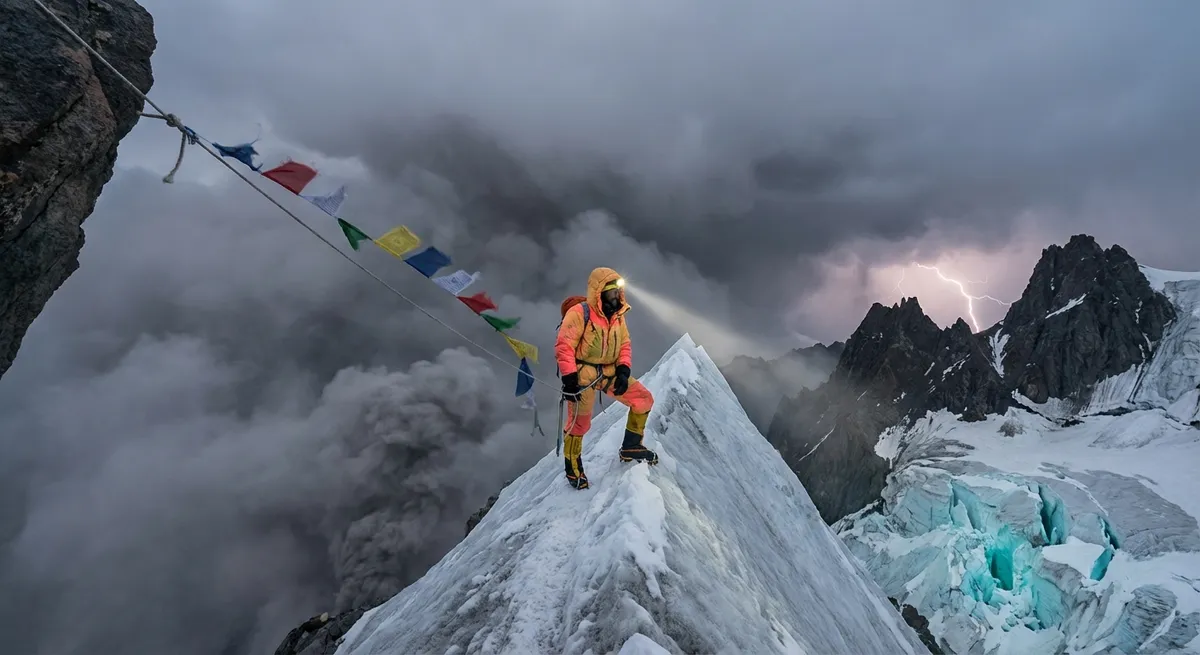
If you think “extreme travel” means zip-lining over a hotel pool, you’re still playing on tutorial mode. The world is full of places that feel one bad decision away from a rescue documentary—and yet, somehow, they’re still accessible to stubborn humans with passports and questionable judgment. This isn’t about collecting danger for Instagram clout; it’s about walking straight into the raw, unpolished version of Earth most people only see in drone footage and disaster movies.
Below are five discoveries for travelers who like their itineraries with a side of existential dread: unstable ice, moodswing volcanoes, meteorite scars, storms you can sleep inside, and caves that swallow light whole.
Riding the Moving Skin of the Earth in Iceland’s Ice Caves
Glaciers are not frozen museum pieces. They creak, shift, crack, and occasionally decide that your carefully planned tour schedule doesn’t matter. Deep below Iceland’s ice caps, meltwater carves liquid halls through blue ice, creating caves that might only exist for one season before collapsing back into glacial mythology.
Stepping inside one of these ice caves feels like entering a cathedral carved by time and entropy. The walls bend light into shades of neon blue and inky teal that don’t look real. You hear the glacier breathing: tiny snaps of shifting ice, the hollow rush of distant meltwater rivers, the muffled thud of your own heartbeat suddenly very loud in your ears. It's beautiful, yes—but also completely unstable. What you’re seeing is climate change in slow violence, sculpted into temporary beauty. Every step is taken with the knowledge that this corridor of frozen light may never exist again.
Adventure here isn’t about charging ahead; it’s about accepting that the glacier sets all the rules. Local guides track weather, temperature swings, and crevasse movements obsessively. You wear a helmet not as a costume piece, but because pieces of ancient ice occasionally decide gravity sounds fun. The extremity isn’t only physical—it’s psychological. You feel the scale of time press in on you: thousands of years of snow stacked above your head, now thinning faster than anyone predicted. You’re not just exploring; you’re trespassing in a dying giant’s lungs.
Volcano All-Nighters: Chasing Lava at Responsible Distances
Some people book spa retreats. Others book front-row seats to the planet’s anger management issues. Volcano travel pushes you into a strange headspace where you’re both thrilled and slightly ashamed to be enjoying the spectacle of potential disaster. You hike up in the dark with a headlamp, lungs burning from the climb and from air that tastes faintly metallic and wrong, and then—suddenly—there it is: a glowing crater or a river of lava, turning the night horizon into something between hell and a fireworks show.
Extremity, here, is all about edges. How close is safe? How much gas is too much? That red river looks slow until you remember it’s rolling at hundreds of degrees, busy remaking geography like it’s a fun side project. You stand there, jaw slack, watching molten rock casually rewrite the map. The ground vibrates under your boots, and it hits you that you’re basically spectating from the lip of an open wound in the Earth’s crust.
This isn’t “epic B-roll” travel. It’s negotiation. You respect evacuation lines and volatile wind directions. You realize the locals have a different relationship to this fire—they might lose houses, fields, roads. Your adventure is someone else’s threat. The best volcano trips are guided by scientists, rangers, or local experts who read tremors, gas patterns, and eruption history like a second language. They explain how these eruptions feed new soil, how islands were born this way, how our planet is a work in violent progress. You leave smelling like sulfur and humility.
Walking the Scar: Expedition-Style Journeys into Impact Craters
Most landscapes are shaped slowly: wind, rain, erosion. Impact craters are the opposite—instant violence frozen into geography. Standing inside one feels like walking through a time-stamped crime scene. Something big, fast, and extremely not from here slammed into the planet, and the land never forgot.
Traveling to a meteorite crater isn’t extreme in the selfie-on-a-cliff sense; it’s extreme in the existential sense. You’re not chasing height or speed—you’re chasing scale. The sky once threw a punch here hard enough to alter climate, wipe out species, or even end an entire geologic chapter. Knowing that while you hike the rim changes the way your feet land. You look up more. You imagine streaks of fire tearing through the atmosphere. You realize how fragile your entire species is compared with one good rock at the wrong angle.
Many of these craters sit in remote or harsh environments—barren deserts, arctic tundra, regions where weather flips from mild to hostile with zero warning. That’s the physical challenge: navigating isolation, limited resources, and terrain that doesn’t care if you twist an ankle 30 kilometers from the nearest road. The reward isn’t a single postcard view; it’s cumulative: the slow-growing awareness that you’re standing inside evidence that “normal” on this planet has never been guaranteed. You went to see a hole in the ground and came back thinking about extinction events and contingency plans.
Sleeping Inside the Storm: Chasing Extreme Weather as a “Guest”
Some trips are mood-driven; storm-chasing is storm-driven. You don’t set the agenda—the atmosphere does. Whether it’s tracking supercells in the Great Plains, positioning yourself near a landfalling cyclone, or watching entire horizons flicker under constant dry lightning, this form of extreme travel redefines what counts as “good conditions.”
You start to measure days not by sunshine, but by radar signatures and wind shear charts. You learn that what looks catastrophic on TV can feel eerily calm as you park a “safe” distance away under a bruised-green sky. The air gets thick. Birds vanish. Your ears pop slightly. Then the storm reveals its architecture: rotating clouds stacked like a dark wedding cake, or a wall of rain marching across fields with surgical precision. If you’re unlucky or careless, things escalate very quickly: flying debris, sudden flash floods, lightning that strikes too close for comfort.
The extremity here is about proximity and timing. You’re constantly walking the line between awe and idiocy. The responsible version means going out with veteran guides and meteorologists who understand escape routes, wind patterns, and when to just bail. You pivot fast when forecasts change, and they always do. Sleeping in roadside motels or your vehicle, you chase not beaches but pressure gradients. You come home with grainy footage, drenched clothes, and a new understanding that the sky above your hometown is almost offensively boring.
Into the Hunger of the Earth: Technical Caving Beyond the Tourist Paths
The tour caves with installed railings and colored lights are the tutorial levels. Real caving—the kind that stains your clothes, eats your sense of direction, and hands you your own limits—happens far from ticket booths. It’s crawling through tight squeezes, descending vertical shafts on rope, and hearing nothing but your breathing and the occasional drop of water taking centuries to become part of a stalagmite.
Underground, distance stops making sense. You might travel a few hundred meters and feel like you’ve crossed a continent. Your world shrinks to the cone of your headlamp and the scrape of rock against your gloves. There are no horizons here, no sunrises or sunsets—only chambers, crawls, drops, and the gnawing certainty that if every light failed, you would vanish into the kind of darkness your eyes can’t negotiate with. Claustrophobia becomes a physical presence; courage is measured in inches, not miles.
Extreme caving demands more than bravado. It’s logistics, systems, and trust. You double-check knots. You track battery levels like they’re oxygen. You memorize the route out because GPS is useless and your phone is a brick. The real prize is not some postcard vista but the eerie, fragile beauty of formations almost no one has seen: crystal pools reflecting your lamp like a starfield, gypsum flowers twisting from the walls, ancient bones half-buried in calcite. You emerge hours or days later blinking at the sky, suddenly aware of how loud, bright, and ridiculously open the surface world is.
Conclusion
Extreme travel isn’t just risk turned into recreation. It’s a practice in showing up where Earth stops pretending to be gentle—under glaciers, above lava, inside scars, under storm anvils, and deep in the planet’s throat. It punishes lazy planning, rewards stubborn curiosity, and recalibrates your sense of what counts as “drama.”
If you go, go like a respectful intruder: listen to the guides, read the science, acknowledge the locals, and remember that survival is not guaranteed by your gear budget. The goal isn’t to conquer these places; it’s to walk away a little smaller, a lot more awake, and unable to unsee how wild this planet still is when you step beyond the guardrails.
Sources
- Icelandic Meteorological Office – Glaciers and Ice Caves – Overview of glacier dynamics, safety considerations, and seasonal ice cave formation in Iceland
- U.S. Geological Survey – Volcanic Hazards – Scientific background on volcanic activity, common hazards, and risk management near active volcanoes
- NASA – Impact Craters: Windows into Planetary History – Explanation of terrestrial impact craters and their significance for understanding Earth’s past
- National Oceanic and Atmospheric Administration (NOAA) – Storm Chasing Safety – Guidance on severe weather, storm structure, and safety practices for observers
- National Speleological Society – Resources on caving techniques, conservation ethics, and safety standards for exploring wild caves
Key Takeaway
The most important thing to remember from this article is that this information can change how you think about Extreme Travel.