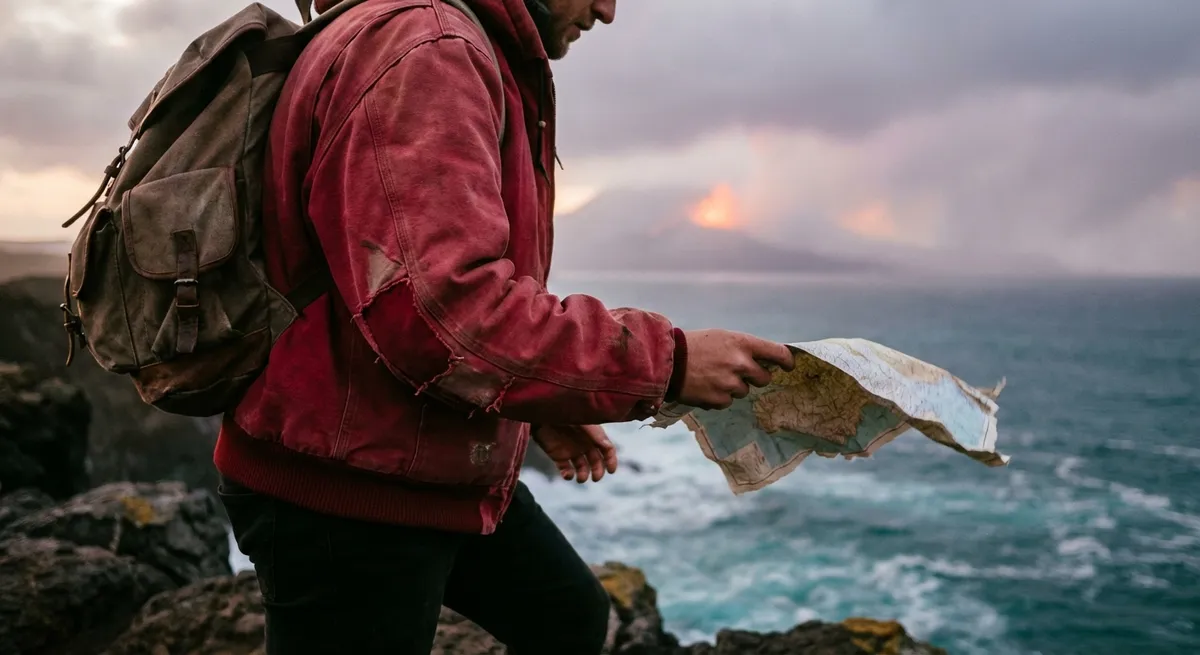
There’s a moment on every real trip where your brain quietly panics and thinks, “This cannot possibly be a good idea.” That’s usually the point where No Way Travel leans in. Extreme travel isn’t just about jumping off tall things or freezing on a glacier; it’s about rewriting the script of what a “trip” is allowed to be. These five discoveries live in that deliciously unstable space where adventure, risk, and story all collide—and where your comfort zone taps out first.
1. Sleeping in the Shadow of an Active Volcano
Most people admire volcanoes from a safe distance, like fireworks you’re not supposed to touch. Extreme travelers book a campsite next to them.
From Indonesia’s rumbling Mount Bromo to Guatemala’s Fuego, there are places on Earth where you can fall asleep to the low growl of the planet itself. Picture this: ash-dusted boots, sulfur in the air, your headlamp beam cutting through smoky darkness as you hike a pre-dawn ridge. Below, molten rock pulses and spits, throwing up sparks into the night sky like a broken furnace. You’re not just looking at geology—you’re inside a live event.
This isn’t a casual “sunset viewpoint” situation. You’ll need guides who know wind patterns, current activity levels, and escape routes if things escalate. You’ll obsessively check local volcanology updates the way other travelers check pool bar menus. In return, you get something most people only see in disaster movies: fire breathing out of the Earth while you sip coffee in a beanie, wondering how your life became this unreal.
Extreme? Absolutely. Reckless? Only if you ditch the science. Volcanic tourism is possible because teams of researchers are constantly monitoring gas levels, tremors, and eruption risks. Your job is simple: respect the hard data, follow the experts, and do exactly nothing heroic.
2. Chasing Storms Instead of Sunsets
Every billboard in travel marketing screams the same lie: perfect blue sky, gentle breeze, not a cloud in sight. Extreme travelers see a clean forecast and think, “Boring.”
Storm chasing has evolved from “that thing in disaster movies” into a very real form of adventure travel, particularly through guided expeditions in the central United States and cyclone-prone coasts around the world. You pile into a van with meteorologists, a trunk of camera gear, and a radar app that looks like a glitching video game. The mission: get close enough to the chaos to feel the air warp, but not close enough to become debris.
There’s a weird, cinematic quiet before a supercell really wakes up—the light goes sideways, the temperature drops, and the sky stacks into dark, rotating layers that look like an alien mothership arriving. Your heart is hammering, but your guides are calmly debating wind shear and hook echoes, deciding how close is “close enough” today.
This version of extreme travel demands a different kind of courage: trusting science over adrenaline. You learn that storms aren’t random monsters but patterns you can read, respect, and briefly dance with on the edge. And when the first crack of thunder hits hard enough to vibrate in your bones, you realize you will never look at a weather forecast the same way again.
3. Diving Under Ice in a Flooded World of Silence
Warm-water diving gets all the glamorous photos. Ice diving is the part of the underwater world that feels like a secret level you weren’t supposed to unlock.
Now imagine this: You’re suited up in a drysuit so thick you move like a slow-motion astronaut. A hole has been cut into a frozen lake or polar sea, a bright portal in an endless white sheet of ice. You drop through that portal and the sound of the surface world dies instantly. Above you, the underside of the ice glows a deep, alien turquoise; below, light filters into a surreal blue gloom that feels more like deep space than planet Earth.
This isn’t the kind of dive where you just wander off. You’re tethered to the surface by a safety line, with strict communication signals and an emergency plan drilled into your brain. Every breath you take fogs your mask slightly, reminding you that the air keeping you alive is limited, controlled, precious. Strange bulbous ice formations hang above your head like frozen chandeliers; sometimes you see columns of trapped bubbles, like entire storms caught mid-roar and turned to glass.
Extreme travel doesn’t always have to be fast and loud. Under the ice, the danger is real, but the experience is almost meditative. You feel the ticking awareness of risk paired with an eerie, cathedral-like calm. When you surface and your face hits frigid air again, the ordinary world feels too noisy, too bright, too easy.
4. Riding the World’s Loneliest Rails
Most travelers chase big cities and famous skylines. Extreme travelers hunt down the long, forgotten lines that seem to exist purely to connect nowhere to more nowhere.
Around the globe, there are still rail routes that feel like you’ve hacked into a transportation system from another century: rattling cargo trains that occasionally accept human stowaways (legal or otherwise), single-track lines through desert emptiness, transcontinental routes where the onboard clock stops meaning anything. Out here, “delay” is just another word for “story.”
You might find yourself wedged between sacks of grain, sharing instant noodles with strangers who don’t speak your language but share your sense of “we’re definitely not supposed to be this far out.” The train stops for reasons no one explains—maybe a goat on the tracks, maybe an unofficial market, maybe just because. You learn fast that timetables are suggestions and that your best resource is the old-timer in the corner who’s clearly done this 500 times.
The landscapes roll past in slow, hypnotic strips: rusted-out industrial relics, empty steppe, mountains that look fake, settlements that barely qualify as towns. You start to understand something critical about extreme travel: the further you get from optimized efficiency, the closer you get to the raw, weird heartbeat of a place. On these rails, the journey is not a delivery system—it’s the entire point.
5. Trekking into the Midnight Sun (and Not Sleeping on Purpose)
Most people plan their trips around “good daylight hours” and then crash at a reasonable bedtime. Extreme travelers aim for places where the sun forgets how to set and then refuse to sleep until something inside them rewires.
In high-latitude regions during summer, the midnight sun turns the idea of “day” into a ridiculous suggestion. It might be 2:37 a.m., and you’re still wide awake, hiking above a fjord in northern Norway, or paddling a glass-still lake in Arctic Canada while the world glows in permanent late-evening gold. Birds keep singing because they’re confused too. Your body insists it’s daytime; your watch insists it’s not.
This is not just beautiful—it’s disorienting in a way most travelers never experience. Time gets slippery. You eat when you remember to, sleep when your brain shuts down, and hike when the sky looks interesting. You’re operating on raw curiosity instead of a schedule. The line between “today” and “tomorrow” dissolves, and with it, all the invisible structure that usually keeps you tethered.
Extreme travel often involves fear or danger, but this version scrambles your reality more quietly. Being awake and moving through a sunlit wilderness at an hour when your home city would be deep in darkness does something to you. It nudges you toward a strange, liberating realization: a lot of the rules you live by are negotiable. Including, apparently, sunrise and sunset.
Conclusion
Extreme travel isn’t just about flirting with disaster; it’s about stepping into environments where the usual rules go missing and seeing who you are when they do. Camping beside living volcanoes, chasing storms with scientists, diving beneath frozen ceilings, riding forgotten rails, wandering through endless daylight—these aren’t vacations; they’re controlled collisions with the unfamiliar.
You come back from trips like these with more than cool photos. You return with a recalibrated sense of risk, wonder, and possibility—and a permanent itch to find the next place on Earth where the map feels less like a guide and more like a dare.
Sources
- U.S. Geological Survey (USGS) Volcano Hazards Program - Monitoring, risk levels, and safety information for active volcanoes worldwide
- National Oceanic and Atmospheric Administration (NOAA) Storm Prediction Center - Authoritative data and outlooks on severe storms and tornado activity
- Divers Alert Network (DAN) - Safety guidelines and medical considerations specifically for ice diving
- The Man in Seat 61 - Extensive, credible information on long-distance and remote train routes around the world
- Norwegian Meteorological Institute – Midnight Sun Guide - Scientific explanation and timing of midnight sun conditions in high-latitude regions
Key Takeaway
The most important thing to remember from this article is that this information can change how you think about Extreme Travel.