Most trips follow the script: airport, taxi, hotel, repeat. This one doesn’t. This is for the traveler who side‑eyes guidebooks, instinctively walks down the unmarked alley, and secretly hopes Google Maps loses signal.
These aren’t “hidden gems” in the Pinterest sense. These are places that feel like you found the backdoor of the planet—strange, overlooked, and perfect for people who’d rather collect stories than loyalty points.
1. The Desert That Floods: Iran’s Lut at Dawn
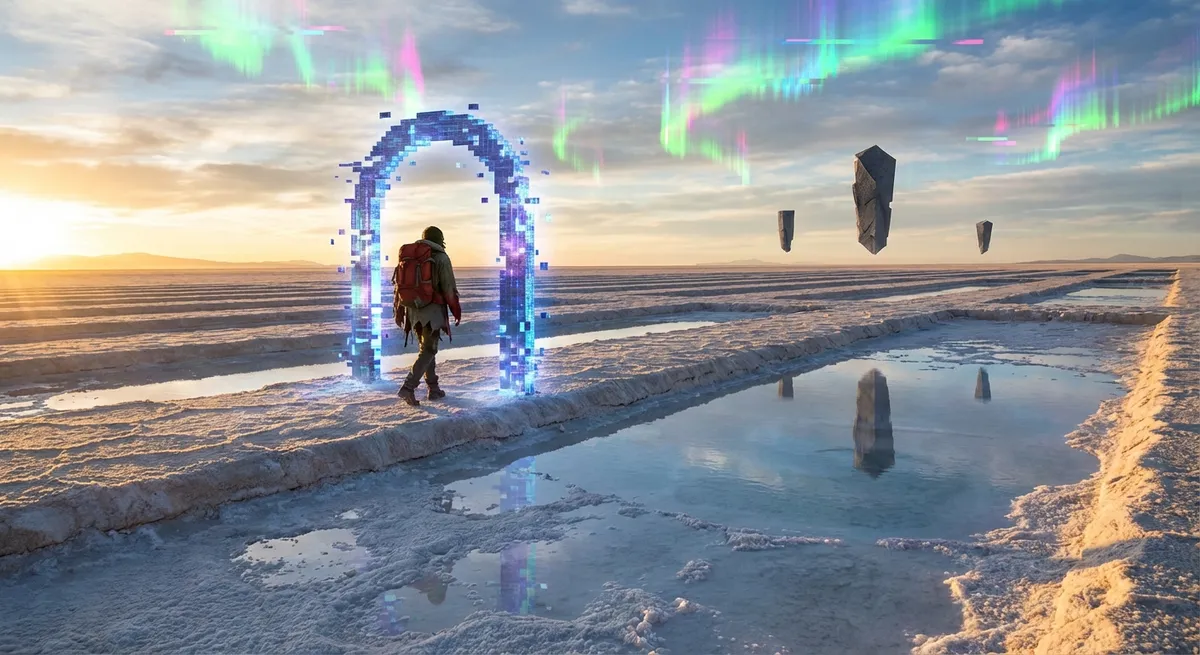
The Dasht-e Lut in southeastern Iran looks like the set of a sci-fi film that never got released. It’s one of the hottest places ever recorded on Earth—NASA satellites have clocked land surface temperatures above 80°C (176°F). On paper, it sounds uninhabitable. In reality, it feels like stepping onto a quiet, sunburnt Mars.
The magic hour isn’t sunset; it’s predawn. Walk out among the towering kaluts—wind-carved ridges that look like the ruins of an ancient alien city—and listen to the silence press against your eardrums. The first light hits the rock formations and the desert briefly looks like it’s flooded with liquid gold. It’s a visual hallucination engineered by geology and your under-caffeinated brain.
Local guides in nearby Kerman and Shahdad will drive you deep into the Lut, where you can sleep under a sky so wide it turns your sense of scale inside out. There are no tiki bars, no infinity pools, no “sunset yoga experiences”—just wind, stars, and a horizon that doesn’t care who you are. This is not a casual detour; this is the trip you take when you’re tired of pretending “resorts” are adventure.
2. The Ghost Highway Under the Ocean: Japan’s Abandoned Seaside Rail
On the Noto Peninsula in Japan, the trains stopped running—but the line never really died. The old Noto Railway (& parts of other regional lines) have been slowly reclaimed by locals, cyclists, and the elements, morphing into a quiet, semi-secret coastal route that feels like you’re trespassing in time rather than space.
You’ll find stretches where tracks have been ripped up and replaced by bike paths that still slice along tunnels, cliffs, and tiny fishing villages. Other sections are intact but overgrown, alongside forgotten platforms with peeling signs and views better than anything sold on a JR tourism poster. It’s part urban exploration, part coastal pilgrimage.
Start from small stations like Anamizu or from coastal towns and follow the old line on foot or bike. Pack light, bring a headlamp for tunnels, and accept that you might get turned around by a dead end or landslide. That’s part of the charm. When you emerge from an abandoned tunnel straight onto an empty shoreline, you’ll understand that sometimes the best “train ride” is the one without a train.
3. The Village That Maps Pretend Is Boring: Georgia’s Cliff-Hugging Outpost
The country of Georgia is full of dramatic landscapes that already look unreal on Instagram: Svan towers, Kazbegi peaks, wine valleys. But some of its most interesting corners barely register as footnotes. That’s where the tiny, cliff-hugging outposts of regions like Tusheti and Khevsureti come in.
Reachable only by terrifying seasonal roads (or on foot/horseback if the road’s closed), these stone villages cling to ridges like a glitch in gravity. The roads themselves feel like a dare—hairpins, river crossings, and drop-offs that make your palms sweat even if you’re just watching from the passenger seat. In summer, clouds roll through below the villages, so you’re drinking tea above your own personal weather system.
Stay in simple guesthouses where the heating is a wood stove and the “tourism infrastructure” is whoever has time to cook for you. Spend your days walking along half-forgotten paths to shrines, ruined towers, and meadows full of more horses than humans. At night, electricity might flicker, the stars won’t, and you’ll realize how loud your normal life actually is.
4. The Wrong-Side-of-the-River City: Europe’s Overlooked Rebel Neighbors
Some cities hoard the spotlight. Their neighbors lurk across rivers, borders, or train tracks, collecting all the weirdness that doesn’t fit in the glossy brochures. These “wrong-side-of-the-river” cities are perfect for travelers who like their urban exploring with a bit of misfit energy.
Think of places like:
- The rougher, rawer districts across the river from postcard centers—industrial husks turned artist squats, informal food markets in parking lots, riverbanks where people barbecue instead of pose.
- Port areas that everyone told you to avoid, now slowly morphing into chaotic mixes of shipyards, street art, and pop-up bars in old warehouses.
- Border-straddling twins where one side is polished EU and the other is still figuring itself out—but both share the same river, history, and insomnia.
The move here is simple: when the guidebook says “old town,” you cross the bridge and walk the other direction. Swap curated streets for whatever the city is doing when it thinks tourists aren’t looking. Ask bartenders where they go after work. If the metro map fades out on that side, you’re probably heading the right way.
5. The Island That Prefers Rumors to Tourists
There are islands that bend over backward for tourism—resorts, curated authenticity, airport billboards—and then there are islands that essentially shrug and say, “Come if you want. Or don’t.” Those are the ones worth chasing.
Picture a place where:
- The ferry schedule looks like a suggestion, not a promise.
- The main “attractions” are unofficial: a half-forgotten fortress, a cliff-jump rock only locals know, a bar that technically doesn’t exist on Google but is everyone’s living room.
- Power cuts happen. So do impromptu oceanfront parties lit only by phones and candles.
- Instead of tour desks, you find someone with a boat, someone with a truck, and someone who knows the tide schedule by heart.
Your day might start with borrowed fins and a questionable map drawn on a napkin, and end on a deserted beach watching storm clouds punch holes in the horizon. You’ll miss connections. You’ll abandon plans. And you’ll leave with the sense that the island let you in a little, but not completely—and that’s exactly how it should be.
Conclusion
Hidden gems aren’t defined by how few people know about them; they’re defined by how much they refuse to behave like products. The desert that feels like another planet, the dead railway reanimated by curiosity, the cliff village beyond the last sane road, the misfit city across the river, the island that doesn’t care about you—all of them demand something more than just showing up with a camera.
They want your time, your patience, and your willingness to get lost without a guarantee of a perfect payoff. In return, they give you something you can’t filter or fake: that rare feeling that you slipped through a crack in the normal world and found the debug menu of Earth.
If that sounds like your kind of itinerary, shut down the “Top 10” tabs, zoom out on the map, and start aiming for the places where the Wi‑Fi is weak and the stories are strong.
Sources
- NASA Earth Observatory – Temperature Extremes in the Lut Desert - Satellite data and analysis on record-breaking land surface temperatures in Iran’s Lut Desert
- Japan National Tourism Organization – Cycling and Rural Rail Trails - Background on converting disused rail lines and rural routes into cycling paths and scenic byways in Japan
- UNESCO – Cultural Heritage of the Highland Regions of Georgia - Context on traditional highland settlements, towers, and remote communities in Georgia
- European Commission – Cross-Border Urban Regions - Information on border-straddling cities and how “twin” urban areas develop on either side of frontiers
- UN World Tourism Organization – Island Tourism and Overtourism Challenges - Research on how islands respond to tourism pressure, including those that intentionally limit or under-develop tourism infrastructure
Key Takeaway
The most important thing to remember from this article is that this information can change how you think about Hidden Gems.