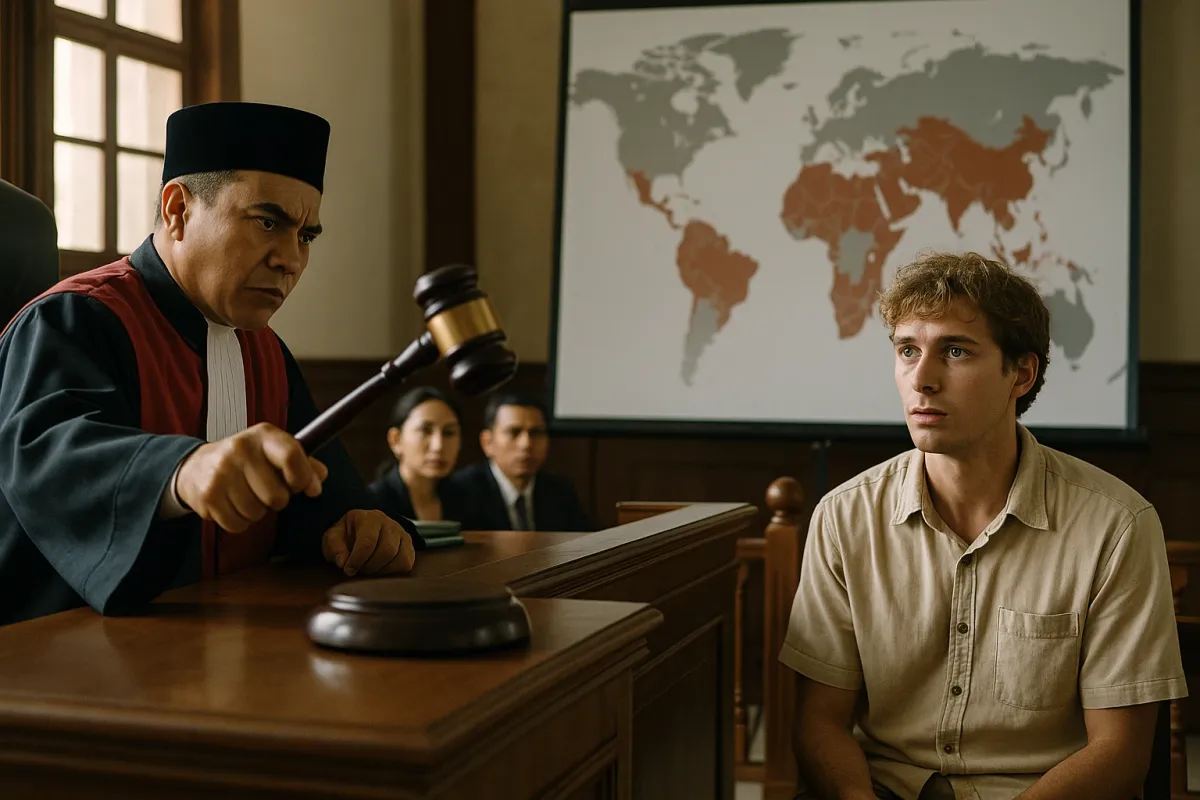
Bali is trending again—and this time it’s not because of smoothie bowls or “finding yourself” on a scooter without a helmet. Adult content creator Bonnie Blue is facing up to 15 years in prison after allegedly filming explicit material on the Indonesian island in violation of local laws. While tabloids chase the scandal, there’s a quieter message for the rest of us: the world is full of places where the real adventure isn’t a hidden beach, but the invisible line between “epic story” and “you’re getting deported at sunrise.”
So let’s use this headline‑grabbing Bali drama as our launchpad into the shadowy side of Weird Places: sacred zones, taboo islands, and destinations where the rules are carved deeper than any TikTok trend. These aren’t your standard “off the beaten path” escapes—they’re the places where the path exists, but the culture guarding it is sharper than barbed wire.
Below are five types of travel discoveries for the thrill‑seeker who’s bored of infinity pools and ready to navigate somewhere far stranger: places where taboo, ritual, law, and landscape collide. Read carefully. This is how you go weird without going viral for all the wrong reasons.
1. The Island That Will Absolutely Not Star in Your Content: Inside Bali’s Taboo Zones
Bali sells itself as the ultimate “do anything” paradise—but Bonnie Blue’s legal nightmare is a reminder that it’s more temple than theme park. Indonesia enforces strict anti‑pornography laws, and Bali in particular is a deeply spiritual island where ceremonies, offerings, and temple protocols run the show. While influencers film thirst traps on rice terraces, locals are navigating a dense calendar of rituals that most visitors barely notice.
The weirdest thing about Bali isn’t a secret waterfall: it’s the coexistence of hedonistic tourism and hyper‑sacred space. There are temples you can’t enter during menstruation, ceremonies where filming is forbidden, and village rules (awig‑awig) that carry real social consequences if you break them. Even beaches can be temporarily closed for religious reasons, and cremation ceremonies wind through streets like something out of a surreal procession movie—only it’s just a Thursday. If you want to travel here like a true edge‑walker, treat every “beautiful backdrop” as possibly someone’s open‑air church. Ask permission, cover up around temples, and never assume what’s allowed just because the last backpacker got away with it. The risk isn’t just fines; it’s becoming the next cautionary headline.
2. The Villages That Don’t Want You (And That’s the Point)
If Bali’s drama shows what happens when tourists crash into local law, there are places on Earth where the welcome mat is never rolled out at all—and that’s weirdly part of the allure. Think of India’s Sentinel Island, one of the world’s most isolated communities, where outsiders are strictly banned for health and safety reasons. Or Japan’s Iya Valley, where some hamlets simply do not want their mountain roads or sacred bridges TikTok‑famous, and locals have quietly pushed back against over‑tourism.
For the unconventional traveler, the temptation is obvious: forbidden village, ultimate flex. But here’s the twist—these places are fascinating because you respect the barrier. Instead of trying to sneak in, orbit them. Visit nearby regions where local guides talk about these communities’ stories and taboos. In places like rural Indonesia, Papua, or remote Himalayan valleys, you’ll hear about villages with spirit‑forests no outsider should enter, cemeteries that locals won’t photograph, and rock formations that are considered inhabited by ancestors. The weird travel move isn’t trespassing; it’s building your itinerary around buffer zones and listening to what people will and won’t show you. The negative space becomes the adventure.
3. Sacred Volcanoes and Angry Mountains That Decide Your Route
Across Indonesia—Bali included—volcanoes are not just geology; they’re characters with opinions. When Mount Agung rumbled in recent years, flights were grounded, villages evacuated, and travelers stranded in a live‑action disaster film. But long before airlines got involved, Balinese Hindus treated Agung as the cosmic axis: offerings, ceremonies, and taboos dictate how you move around it, what you wear during temple climbs, and how you behave near its shrines.
This kind of mountain‑as‑god mentality isn’t unique. In Japan, Mount Ontake is both a pilgrimage site and the scene of a deadly eruption; in Hawaii, visitors now learn that taking lava rocks home is considered an offense to Pele, and people reportedly mail them back in guilt. Weird travel isn’t just climbing volcanoes at sunrise; it’s understanding when a peak is considered closed by something other than a park ranger. Want to trek around Bali’s Agung or Batur, or volcanoes in Java like Merapi? You’ll find guides who talk not only about routes and gradients, but omens, prophecies, and prayer stops. Lean into that. Weirdness lives in the gap between your GPS app and the village priest’s advice.
4. Ritual Spaces Hiding in Plain Sight: The Everyday Elsewhere
You don’t have to hunt deserted islands to find taboo zones—they’re often hiding right inside the tourist heartlands. In Bali’s Ubud, for example, a yoga studio might share a wall with a family compound shrine where someone is conducting a quiet ceremony you never noticed. In cities across Southeast Asia, “spirit houses” sit on street corners, quietly receiving offerings; in Bangkok, there’s a whole shrine covered in phallic symbols (the Chao Mae Tubtim shrine) dedicated to fertility, tucked near modern high‑rises.
Design your next trip as a hunt for these everyday elsewhere spaces. Ask a local in Bali to explain the different shrines in their family compound. In Vietnam, wander morning markets and look for tiny altars set up on plastic stools. In Japan, slip off the main drag into pocket‑sized Shinto shrines wedged between office buildings. The trick is to treat the world like an iceberg: Instagram shows you the 10% above the waterline. The weird 90% is ritual, superstition, and social rules that shape how people actually move through their cities—exactly the stuff you’ll miss if you’re too busy staging a shot.
5. The Invisible Map: Laws, Morality Codes, and Soft Borders You Can’t See on Google Maps
Bonnie Blue’s Bali case isn’t an outlier—it’s a symptom of a bigger travel blind spot: ignoring the invisible map. Indonesia’s anti‑pornography laws, Saudi Arabia’s morality codes, Singapore’s famously strict rules, Qatar’s regulations on public behavior, Japan’s quiet but intense expectations of politeness—all of these form a second world layered over the physical one. You can stand in the middle of a beach club and a temple zone at the same time; the difference is which set of rules you think you’re under.
If you’re chasing weird places, you need to be fluent in this invisible cartography. Before you land, scan local news in the country’s own media, not just English‑language travel blogs. Right now, Bali’s government is openly talking about cracking down on “disrespectful tourists,” and they’ve already started deporting people for stunts locals consider offensive—not just explicit filming, but climbing sacred statues or riding scooters half‑naked through villages. Build your route not just around where you can go, but where you shouldn’t go with a camera, a drone, or a particular kind of behavior. The thrill isn’t dodging the rules; it’s navigating right up to the edge of them without stepping over.
Conclusion
The latest Bali scandal is a neon sign flashing over every weird place on the planet: this world is not your content farm. It’s a patchwork of sacred zones, legal tripwires, and communities that have decided—loudly or quietly—where the line is. The adventure isn’t in ignoring that; it’s in reading the room, the mountain, the village, and the law, then threading your way through like a respectful outlaw.
If you’re hungry for stranger places, start by flipping the usual question. Don’t ask, “Where can I get the wildest shot?” Ask, “Where is the world already wild—with rules, rituals, and taboos I don’t yet understand?” Then go there humbly, ask better questions, and let the weirdness come to you. The most unforgettable stories are the ones you walk away from without a court date.
Key Takeaway
The most important thing to remember from this article is that this information can change how you think about Weird Places.