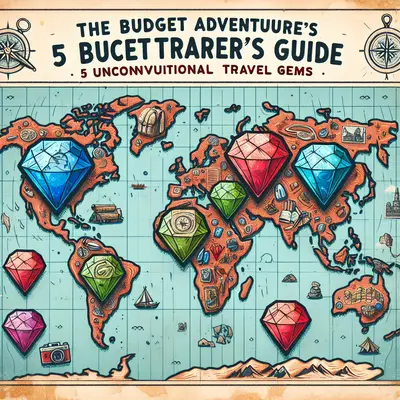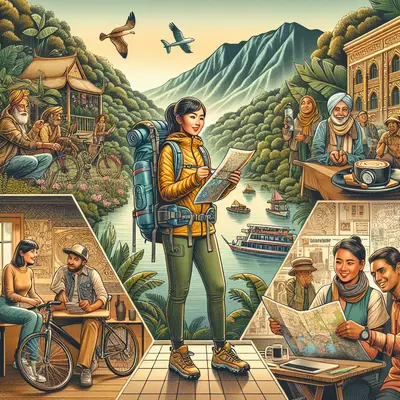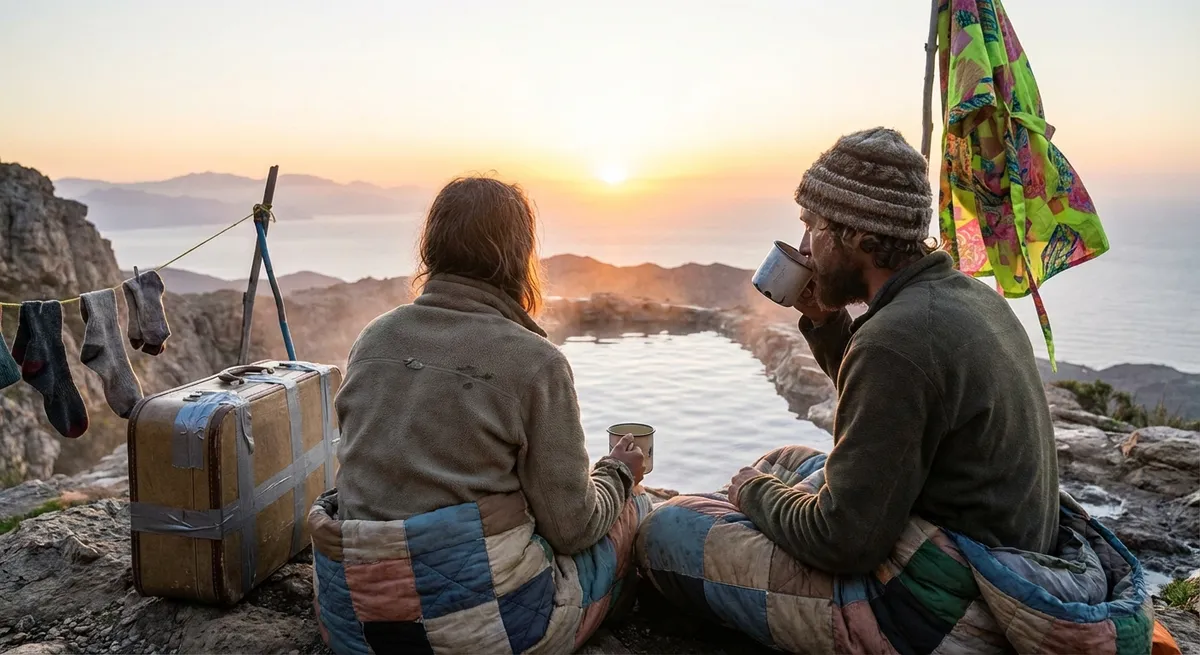
Travel doesn’t have to wait for your “one day” savings account. You don’t need a trust fund, a ring light, or a spiritual awakening in Bali. What you need is nerve, curiosity, and a willingness to treat the world like an open‑source playground. This is your field guide to five very real, very weird, and very cheap ways to travel harder than people spending ten times more.
Welcome to budget adventures for people who don’t just want to see the world—they want to collide with it.
Night Trains and Ghost Stations: Riding the Rails Like a Local Fugitive
Overnight trains are the closest thing we have to time travel on a budget: you go to sleep in one world and wake up in another, with no baggage fees, no airport security strip‑tease, and no hotel bill.
Across Europe, India, Southeast Asia, and parts of Africa, night trains are still the arteries of the country—full of families, vendors, soldiers, and people who could write a novel about their life if they ever stopped moving. They’re often cheaper than a flight and a night in a hostel combined, especially if you’re flexible about comfort. You’re paying for a ticket and accidentally buying eight hours of anthropology.
The real adventure isn’t just the destination; it’s the liminal space: the flicker of fluorescent lights in a forgotten station at 3 a.m., chai sellers jogging alongside your train in India, or the quiet snow‑lit platforms in Eastern Europe where you can’t read a single sign but somehow always find your carriage. You learn fast: bring your own lock, your own snacks, and a willingness to share both stories and socket space.
Night trains force you to surrender control in a way airports never do. Delays become plot twists, cabin mates become temporary family, and you discover that “second class sleeper” on a 14‑hour ride is a crash course in how a country really lives. Pay less, see more, sleep weird. That’s the deal.
Temporary Local: House-Sitting, Cat-Sitting, and Life-Swapping for Almost Free
Imagine spending a month in Lisbon, a week in the Scottish Highlands, or three weeks in a Mexican beach town—and paying less than you’d drop on a weekend city break. The catch? You’re responsible for someone else’s cat, plants, or beloved aging greyhound. In other words: you’re fake‑moving in.
House‑sitting, pet‑sitting, and home‑swapping platforms let you slide into a full local life without rent. You cook in a real kitchen, neighbor‑watch from a regular balcony, and shop at markets where no one is pretending to enjoy avocado toast for Instagram. Your “payment” is reliability: feed the animals, water the plants, don’t burn the place down.
This kind of travel nukes one of the biggest costs—accommodation—so your budget can go toward genuinely surreal experiences: night markets, tiny live‑music bars, random train rides out of town. You’re not speed‑touring; you’re quietly embedding. You’ll discover the park where dog walkers actually gossip, the bakery that sells out by 9 a.m., and the one bus line that will save you from a 40‑minute uphill walk.
The unconventional part? You’re living a version of someone else’s life, while still being completely anonymous. It feels secretly decadent to read their books, use their spices, and sit at their desk plotting your next days in a city you technically don’t belong to—but that’s exactly what makes it exhilarating.
Invisible Cities: Mining University Towns for Cheap Food and Big Views
University towns are basically cheat codes for broke travelers. They’re built for people with no money and too much curiosity—exactly your demographic. Campus cities everywhere are stuffed with free or dirt‑cheap experiences: art exhibits, live music, film screenings, public lectures, student bars, and cafeterias where you can eat for the price of a bad airport coffee.
The bonus? Those universities often sit on prime land: hilltops, riversides, historic centers. That means you’re getting architecture, viewpoints, parks, and museums that locals actually use, not just tourist funnels. Step into the library courtyard or the main quadrangle and you’re suddenly in a movie set with Wi‑Fi.
Many campuses host events that are open to the public: science talks, theater rehearsals, foreign film nights. If you blend in (read: walk in like you belong, carry something that looks like a notebook), you can mainline culture for free. Grab a cheap student meal, follow the crowd to wherever they’re going at dusk, and you’ve got your evening plan.
Budget travel doesn’t always mean chasing the cheapest destinations; sometimes it means going where infrastructure for the broke but curious has already been built. University towns are imagination factories with subsidized snacks. Exploit that.
Volunteering Without the Savior Complex: Skill Swaps and Micro-Work
Forget the guilt‑soaked “voluntourism” package where you pay thousands to paint a wall that will be repainted next week. There’s a different way to trade your time and skills for a bed, food, and a radically immersive experience: micro‑work exchanges.
Hostels, farms, surf camps, language schools, small guesthouses, and community projects all over the world quietly rely on short‑term volunteers. You clean rooms in the morning, run social media, teach conversational English, help on a farm, or fix websites—and in return, you sleep and eat for almost nothing. Not charity. Just trade.
The magic lies in how fast you stop being “a tourist.” When you’re handing guests their keys, picking tomatoes at sunrise, or translating menus, you’re on the inside. Locals remember your name, other travelers orbit around you, and your understanding of the place deepens beyond any guidebook blurb.
You need boundaries and common sense—clear agreements on hours, tasks, days off, and accommodation—but when it works, the daily cost of travel collapses. Your main expenses shrink to bus tickets, street food, and whatever weird thing you found at the market that you’re absolutely certain is edible. This is budget travel as collaboration, not consumption.
Urban Treasure Hunts: Free Elevators, Rooftop Loopholes, and View Hacks
Panoramic city views are one of the biggest tourist traps: pay $30, wait in line, shuffle to the window, take the same photo as everyone else, leave. Or you can approach the city like a hacker and start hunting “view hacks”—the free or nearly free spots locals use to feel like the main character.
In many cities, tall office buildings, department stores, or cultural centers have public elevators that go absurdly high: observation decks, rooftop gardens, bars with no cover charge as long as you buy something small. Sometimes a subway or tram ticket includes an insane viewpoint if you ride to the very last stop. Sometimes the best view is on top of a parking garage you can just… walk into.
Your tools: satellite view on maps, forums, local blogs, and a willingness to ask, “Hey, what’s your favorite view of the city that tourists don’t know about?” You’ll discover abandoned forts turned into picnic spots, riverside staircases that look designed for film crews, and hilltop cemeteries where the skyline feels oddly intimate and quiet.
The secret thrill isn’t just saving money; it’s the feeling that you’ve broken the script. While the tour groups line up for the official platform, you’re three blocks away, sipping a cheap beer on a rooftop, watching the same sunset from a better angle, with more oxygen and fewer elbows.
Conclusion
You don’t need perfect timing, a digital nomad job, or an airline credit card sorcery degree to travel intensely on a microscopic budget. You just need to stop accepting the default options: trade flights for night trains, hotels for borrowed homes, tourist districts for campus streets, package deals for skill swaps, and overpriced viewpoints for rooftop loopholes.
Budget adventure isn’t about deprivation; it’s about subverting the usual rules. You’re not “missing out” by spending less—you’re buying the parts of travel that can’t be packaged: odd encounters, improvised plans, and that quiet, private satisfaction of knowing you outsmarted the expensive version of the same trip.
Pack light. Spend less. Aim for the weirdest version of every choice. The world gets a lot bigger when you stop paying full price for it.
Sources
- Eurail: Night Trains in Europe - Overview of major European night train routes, reservations, and sleeper options
- Amtrak: Overnight Travel Tips - Practical guidance on preparing for and surviving long-distance night trains in the U.S.
- U.S. Department of State – Volunteer Programs Abroad - Official advice, cautions, and considerations for volunteering internationally
- University of Edinburgh – What’s On - Example of a major university’s public events calendar, showing the range of free or low-cost activities in campus cities
- TrustedHousesitters – How It Works - Explanation of one of the largest global house- and pet-sitting platforms and how travelers can exchange care for accommodation
Key Takeaway
The most important thing to remember from this article is that following these steps can lead to great results.