You don’t need a trust fund, a drone, or a “digital nomad” tattoo to have a wild trip. You just need to stop listening to glossy bucket lists and start treating the world like a living, glitchy marketplace of weird experiences—most of them surprisingly cheap. This is your permission slip to chase five budget adventures that feel a little bit like you slipped through a side door in reality, without ever maxing your card.
The Night Train Hack: Turning Transit into an Adventure Lair
Overnight trains are the closest thing budget travelers get to a teleportation device: you fall asleep with supermarket snacks and half-charged headphones, you wake up in a new city, and your “hotel bill” was your ticket.
Across Europe, Asia, and parts of Africa, night trains are the unsung heroes of broke-but-bold travel. Forget flying—buy the cheapest bunk that still lets you lie down and treat the carriage like your rolling hostel. In Vietnam, the Reunification Express between Hanoi and Ho Chi Minh City lets you drift through coastal towns, misty highlands, and chaos-filled stations for a fraction of the price of flights plus hotels. In Eastern Europe, old sleeper cars rumble through border towns that never show up on Instagram, where the station café sells coffee strong enough to reboot your soul for pocket change.
The trick is to treat the train as the main event, not just a way to get from A to B. Pack a picnic, download offline maps, and actually talk to your cabin mates—no one has better local tips than the guy balancing a tub of pickles and a Nokia brick phone. Night trains give you transport, accommodation, and story fuel all in one budget-friendly, slightly grimy package. That’s a win.
Micro-Nations, Mega Stories: The Art of Visiting Almost-Countries
If regular borders bore you, it’s time to flirt with places that are almost, kind of, sort of countries. Many of these “micro-nations” and self-declared republics are cheap to visit, wildly strange, and come with the kind of stories that make your group chat think you’re making them up.
Think of enclaves, city-states, disputed regions, and semi-recognized territories. Some issue their own novelty passports or stamps. Others have their own flags, currencies, or unofficial “embassies” that look more like someone’s granddad’s office. While places like Vatican City or Monaco are famous (and not exactly budget-friendly), digging deeper turns up oddities that are accessible by regional bus or cheap train from major hubs and offer dirt-cheap food, guesthouses, and genuinely bizarre history.
The budget hack: use a nearby major city as your base, then day-trip or overnighter into these weird liminal spaces. Because they’re not built for mass tourism, prices are often more local than luxury. Just do your homework: check travel advisories, current political conditions, and border requirements before you go. It’s one thing to brag about visiting a place that barely exists on maps; it’s another to get stuck there because you didn’t read the fine print.
Urban Wild Camping (Without Actually Getting Arrested)
Hotels: expensive. Hostels: crowded. Couchsurfing: sometimes awkward. Urban wild camping—sleeping as close as possible to the heartbeat of a city without technically being “in” it—is the chaotic middle ground.
On the fringes of many cities, you’ll find abandoned industrial zones, riverbanks, forested hills, unused football fields, or even legal camping areas that sit wildly underused. In cities with extensive parks or green belts, you can set up a minimalist camp, wake up to a skyline instead of a mountain range, and be on public transit within minutes. Think: camping along the Danube near Budapest, pitching a tent on a legal campsite in the outskirts of Berlin for hostel prices or less, or crashing in municipal camping zones in Latin American cities where you’ll meet traveling cyclists and hitchhikers.
The art is to stay on the right side of the law and the locals: research whether wild camping is legal or tolerated, arrive late and leave early, keep a low profile, and pack in/pack out everything. You’re not out here to be a nuisance; you’re here to prove you can sleep under the stars and still grab a bakery breakfast and museum pass by 10 a.m. It’s the budget traveler’s version of having a cabin in the woods and a downtown loft at the same time—just with more mosquitoes.
Feast Like a Local Ghost: Shadowing Morning Markets
Forget dinner. If you want a budget adventure that rewires how you see a place, chase its early-morning food markets instead.
Reach the market before sunrise, when shopkeepers fuel up and aunties argue over fish prices. In many cities across Asia, Africa, and Latin America, these markets are less “foodie experience” and more “this is where life happens”—and the prices reflect that. Bowls of soup, stacks of fresh bread, grilled skewers, deep-fried mysteries, and fruit that tastes like it got picked 30 seconds ago go for coins instead of bills. In Mexico, dawn tacos and tamales feed workers on their way to construction sites. In Morocco, you’ll find hot bread, olives, and mint tea for the price of that airport water bottle. In Thailand, morning markets overflow with curry, noodles, and coffee you could dissolve a spoon in.
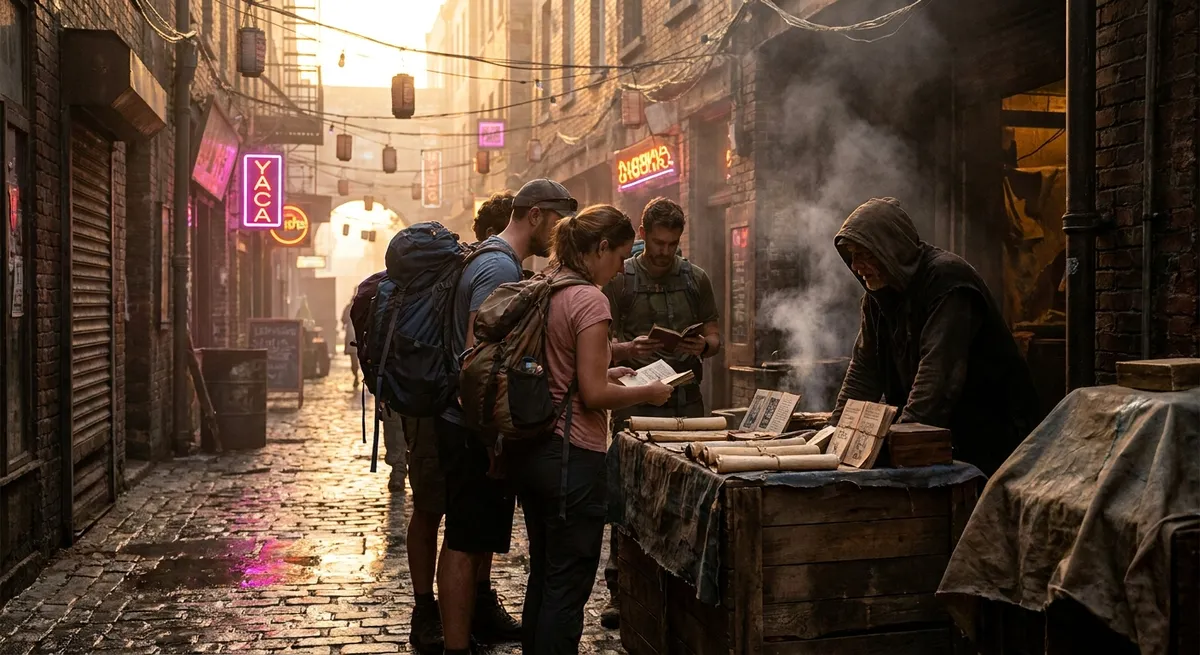
Your goal is to become a ghost: move slowly, buy what locals buy, sit where they sit. Skip the laminated menus. Point, smile, pay cash. You don’t need to speak the language; you’re speaking Food. With one or two meals like this a day, you can shred your food budget while eating better than most tourists—and you get a front-row seat to everyday life instead of curated “experiences.”
The Long Walk Out: Using Borders as a Budget Playground
Some of the world’s most underrated budget adventures happen near borders—not the stressful airport kind, but the lines where two countries glare at each other over rivers, mountains, or dusty roads.
Border zones are often cheaper than capital cities, with cross-border markets, hybrid cultures, and public transport built for locals, not tourists. Think walking across bridges between countries in Europe where your only “checkpoint” is a bored official glancing at your passport, or taking shared taxis that bounce between towns straddling a frontier in Africa or South America. You can sleep in one country, eat in another, and buy your groceries from a third flag’s supermarket—all using buses that cost less than a coffee in your home city.
The adventure is in leaning into the in-between. Cross on foot or by local bus whenever it’s legal and safe, and track how food, language, and architecture shift in real time. Borders are where maps go from theory to reality, and doing it with public transport instead of private tours keeps it cheap and weird. As always, check visa rules, stay updated on safety and political tension, and don’t push your luck. This is a game of agile curiosity, not reckless bravado.
Conclusion
Budget travel stops being “cheap” the moment you treat it like a lesser version of someone else’s luxury trip. It becomes its own high-voltage adventure when you start sleeping on rolling trains, chasing almost-countries, stealth-camping at the city’s edge, ghosting morning markets, and dancing along borders with a backpack and a stubborn sense of curiosity.
The point isn’t to spend nothing. It’s to spend with intent—on experiences that bend your brain, not just your wallet. The world is full of places hiding in plain sight, invisible to people who think adventure requires a resort wristband. It doesn’t. It requires nerve, a little planning, and the willingness to go where the guidebooks get quiet.
Sources
- UNWTO – International Tourism Data - Global tourism statistics and trends that help contextualize budget and overland travel patterns.
- Seat61: The Man in Seat 61 - Detailed, practical information on night trains and overland routes worldwide, including prices and routes.
- European Commission – Schengen Area Rules - Official information on borders, visas, and cross-border travel in Europe.
- FAO – Urban and Peri-Urban Agriculture - Insight into urban and peri-urban land use, relevant to understanding city-edge zones and green belts.
- Harvard T.H. Chan School of Public Health – Global Food Environments - Background on local food environments and markets, useful for understanding the importance of early markets and street food culture.
Key Takeaway
The most important thing to remember from this article is that this information can change how you think about Budget Adventures.