Forget “affordable getaways” and “cheap city breaks.” This isn’t about sipping watered‑down cocktails in a hostel bar while pretending you’re “being spontaneous.” This is about budget adventures that feel slightly wrong in the best way—like you gamed the system and got away with it.
If you’re willing to swap certainty for curiosity, you can crack open parts of the world most travelers never see, without selling a kidney or faking an influencer collab. These five discoveries aren’t about comfort—they’re about high‑voltage experiences at low‑voltage prices.
Hack the Night: Sleeping Where You’re Not Supposed To (But Legally)
The biggest scam in travel is the myth that “you get what you pay for” when it comes to sleep. Usually, you get what booking engines want to sell you. If you’re willing to sidestep the algorithm, you can crash in places that feel absolutely illicit but are totally above board.
Look beyond hotels and hostels to ultra‑cheap, ultra‑weird crash pads: monastery guesthouses, overnight trains, temple stays, rural homestays, and university dorm rentals outside term time. In Italy and Spain, religious guesthouses often rent basic rooms for donations or sub‑hostel prices, especially if you’re okay with a curfew and zero decor. In Japan, some temples host travelers for less than midrange hotel rates, tossing in meditation and vegetarian temple meals that feel like a soft jailbreak from reality. Eastern Europe and parts of Asia still run long‑distance trains with overnight sleepers—buy the cheapest bunk, and your “accommodation” fee also moves you hundreds of miles.
These places feel transgressive, not because they’re illegal, but because you’re infiltrating a parallel system most tourists never touch. You’re inside a working temple at 5 a.m. with monks chanting instead of an alarm clock. You’re brushing your teeth in a narrow train sink while a village rolls past your window at dawn. You’re navigating a monastery corridor by phone light because you missed curfew by ten minutes and a stern nun is side‑eyeing your backpack. None of it looks like “luxury,” but all of it feels like privileged access—at bus‑ticket prices.
Underground Cities on Pocket Change: Free (or Almost Free) Urban Exploration
Cities are designed to siphon cash out of visitors: tickets, tours, view decks, “experiences” with trademark symbols. But every city hides a second version of itself that costs basically nothing—it just charges in courage, curiosity, and comfortable shoes.
Ditch the guided tours and start following the infrastructure: riverside paths, canal towpaths, obsolete rail lines, public staircases, market backstreets. Old industrial neighborhoods are gold mines for low‑budget adventure; think docklands, warehouse districts, and crumbling factory belts now half‑claimed by street artists and food vendors. In port cities, hunt for public ferry routes used by commuters. They’re often priced like buses but deliver cinematic harbor views cruise passengers pay hundreds for. Many global cities also run free or cheap “greeter” programs—locals volunteer to show you their weird, personal version of the city, no tip jar in sight.
Layer in public art maps, free museum days, and city bike‑share systems and you’ve basically built a DIY urban expedition rig. One day might look like: grabbing a day‑old bakery bag for breakfast, riding a nearly empty commuter ferry across the harbor at sunrise, weaving through alleys hunting murals, slipping into a small neighborhood museum during free hours, then climbing some half‑forgotten hillside staircase to a city overlook that only includes laundry lines and rooftop dogs. Your budget barely flinches, but your sense of the city detonates in all directions.
Borderline Wilderness: Micro-Expeditions You Can Afford
You don’t need a helicopter budget to feel properly remote; you just need to aim for the edges where public transport peters out and phone signals get nervy. Micro‑expeditions are short, cheap pushes into wilderness zones close to civilization but psychologically far from it.
Start with national and regional parks reachable by regular buses, minivans, or commuter trains. Many countries offer dirt‑cheap camping permits, public shelters, or both. Scandinavia’s “right to roam” laws (allemannsretten) let you wild-camp in many areas for free if you follow the rules. In parts of Latin America and Southeast Asia, local colectivos or songthaews will dump you near trailheads for the equivalent of lunch money. Once you’re off the main drag, you can pull an overnight hike, sleep under the stars (legally, where allowed), and be back in a city the next day for a shower and street food.
The thrill isn’t just the scenery—it’s the contrast. One morning, you’re bargaining for bananas in a chaotic bus station; by afternoon, you’re wading through cold river water with your boots in your hands because the “trail” forgot to include a bridge. You cook instant noodles on a tiny stove while distant dog barks blend with owl calls. Your tent or shelter feels like a contraband hideout from the wired world, even though you paid less than a hostel dorm bed to exist there for the night.
Shadow Economies: Eating Like You Live There (Not Like You’re Visiting)
Food is where most travelers hemorrhage cash and authenticity at the same time. Restaurant districts and “Top 10 Must‑Try” lists funnel everyone to the same overlit, over‑priced plates. To get under a city’s skin on a budget, you need to plug into its shadow food economy—the one sustaining everyone who actually lives there.
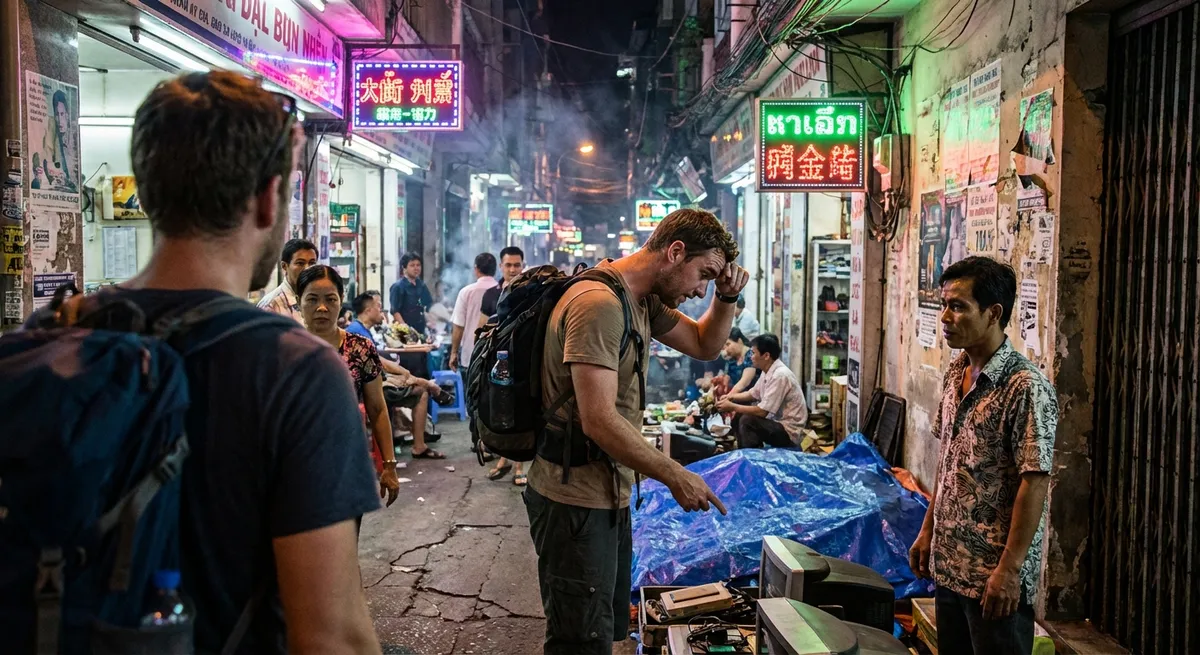
Start with wet markets, morning markets, and night markets: the chaotic, uncurated ones, not the sterilized “heritage experience” versions. Look for tiny cafeterias inside bus stations, workers’ canteens posted with handwritten menus, corner joints where police officers, taxi drivers, or construction crews are eating. These spots rarely show up on English‑language blogs and almost never have websites. You’re paying local prices for local calories, not tourist markups with bilingual menus.
This is where you make tiny, electric gambles: point at whatever looks good, sit on a plastic stool, and accept that you might not fully know what you just ordered until it hits the table. Street food is often cheaper and safer than outsiders assume when you obey one rule: eat where it’s busy and food turns over fast. Your “budget” meals turn into a rolling tasting expedition: soup at 7 a.m. in a market, mystery skewers at a roadside stall, a heaping plate in a steamy workers’ diner under fluorescent lights. Every bite feels like you’ve ducked out of the tourist simulation and into the backstage kitchen of the city itself.
The Art of Cheap Access: Crashing Local Scenes Without Being That Tourist
The most outrageous part of travel isn’t the landscape; it’s the people who live inside it and the micro‑worlds they’ve built. Music scenes, climbing crews, skate communities, book clubs, language exchanges, community theaters—these are live, beating ecosystems you can plug into on a budget, if you approach with respect and a bit of nerve.
Skip the pricey “cultural shows” arranged for visitors. Instead, hunt down community notice boards, indie venues, university events, and public workshops. Many cities have free or low-cost concerts, open mic nights, underground film screenings, or dancing in public squares. Language‑exchange meetups are especially rich: you get conversation, local tips, and sometimes instant invitations to spontaneous side adventures. Climbing gyms, maker spaces, and co‑ops often host cheap introductory nights—walk in, pay a minimal fee (or donate), and suddenly you’re belaying with strangers or soldering something at midnight in a repurposed warehouse.
This is the hack: when you buy access to a scene instead of a “tour,” you stop being a spectator and start being a participant. It’s not curated for you; you’re just another body in the room. You might end up following a ragtag group of strangers to a late‑night food stall you never would have found alone, or riding on the back of someone’s scooter to a rooftop jam session where the sound system barely works and the skyline looks like it’s about to swallow you whole. The entry fee is usually a couple of coins or nothing at all—but the payoff feels like grand larceny.
Conclusion
Budget adventures aren’t about deprivation; they’re about dodging the expensive script that tells you where to sleep, what to see, and how to “make the most” of your trip. When you chase monastery bunks instead of hotels, ferry decks instead of tour boats, worker cafés instead of Instagram darlings, and community events instead of curated spectacles, you’re not just saving cash—you’re sidestepping the whole performance of “proper travel.”
The world is full of back doors, side entrances, and unguarded passages that don’t cost much but demand something rarer: your attention, flexibility, and willingness to feel slightly out of place. Step through enough of those, and you realize the budget isn’t the constraint; it’s the engine.
Sources
- UN World Tourism Organization (UNWTO) - Global tourism data and trends, including information on travel spending and patterns that underpin budget travel insights
- Japan National Tourism Organization – Temple Lodging - Official overview of shukubō (temple stays) as a unique, often affordable accommodation option
- Norwegian Environment Agency – Right to Roam - Explanation of Norway’s “allemannsretten,” a model for low-cost, legal wild access and camping
- U.S. National Park Service – Camping & Fees - Details on low-cost public campgrounds and access in U.S. national parks, relevant to micro‑expedition planning
- UNESCO – Intangible Cultural Heritage - Background on living cultural practices, performances, and community events that travelers can often access cheaply or freely
Key Takeaway
The most important thing to remember from this article is that this information can change how you think about Budget Adventures.