If you think “budget travel” means sad hostels, beige buffets, and fighting strangers for the last outlet at the airport, you’re doing it wrong. The world is wired with weirdness, and most of it is cheap—or free—if you’re willing to ditch the brochure and chase the odd. This isn’t about cutting costs; it’s about trading comfort for stories that sound slightly illegal (but aren’t).
Below are five budget-friendly discoveries you won’t find in a polite guidebook—perfect for travelers who’d rather blow their savings on the next ticket than the last hotel upgrade.
1. Midnight Markets: Where Rent Money Turns Into Street Food
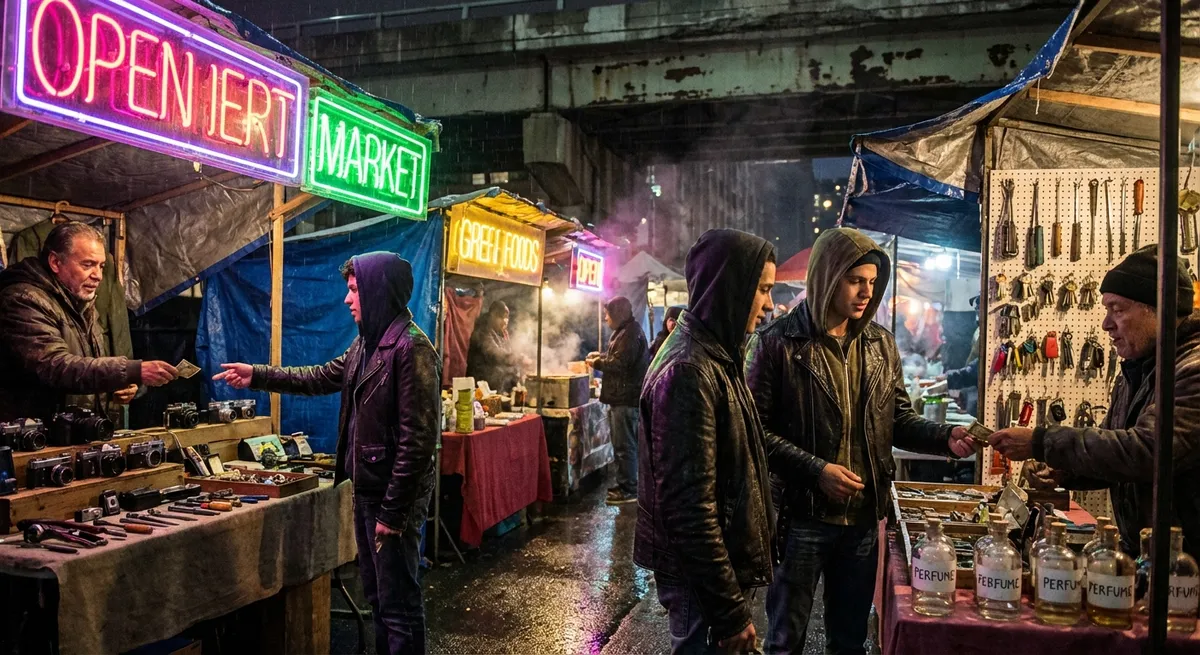
Daytime cities are for errand-running and errands are for civilians. The real economy wakes up after dark, in alleys that smell like frying oil and danger-adjacent adventure.
Across Asia, Latin America, and even parts of Europe, night markets are the cheapest way to mainline a city’s personality. Grab a few dollars, leave your sense of portion control at the hostel, and go stall-hopping until the sun threatens to come back.
You can eat an entire country for less than the cost of a cocktail back home: skewers dripping with unknown sauces, mystery dumplings, desserts that look like alien eggs but taste like heaven. Night markets are also prime territory for knockoff clothes, chaotic buskers, rogue haircuts, and conversations with people who will definitely not remember your name, but might change your trip.
Want this on a budget? Walk, don’t rideshare. Stay in a cheap guesthouse near the local market district instead of the tourist center. Bring cash, trust the stalls with a line, and accept that hygiene is more of a spectrum than a rule.
2. Border Town Layovers: The Cities Everyone’s Just Passing Through
Most travelers treat border towns as obstacles: endure, stamp, escape. But border zones are glitchy in the best way—half one country, half another, and all confusion. They’re also often far cheaper than the big-name cities on either side.
Instead of rushing through, stay a night or two in a border town and watch the flow of humanity: truckers, backpackers, smugglers (probably), gamblers, workers, and families lugging their lives across invisible lines. Prices usually dip outside major capitals, and you can find cheap homestays, bizarre hybrid cuisines, and markets stacked with goods that “fell off the truck” of both countries.
Because everyone assumes there’s “nothing to do,” you’ll have space to wander: forgotten colonial streets, dusty bus stations doubling as social hubs, and riverbanks where people cross in inflatable boats instead of through official checkpoints.
Budget play: take the “slow” bus routes that naturally pass through border towns, then intentionally miss your connection. Use local buses or shared taxis instead of direct tourist transfers, and crash at family-run guesthouses that rarely see foreigners who stick around.
3. Sleeping in Transit: Turning Transportation Into a Nomad Crash Pad
Beds are expensive. Movement is free (or at least, already paid for). The most ruthless budget travelers know this: anywhere you can sit, you can kind-of-sleep.
Overnight buses, ferries, trains, and cargo boats are the undercover hostels of the world. You’re paying for transportation anyway—why also pay for a room that just holds your unconscious body for eight hours?
Overnight trains with reclining seats, second-class sleeper cars, or basic berths are often cheaper than a flight plus accommodation. Same with long-haul buses in South America, Eastern Europe, or Southeast Asia; some even come with Wi-Fi, semi-edible snacks, and suspiciously effective air-conditioning.
Is it glamorous? Absolutely not. Will you wake up with a stiff neck and a new threshold for what counts as “clean”? Definitely. But you’ll also wake up in an entirely different part of the map, having paid half of what tourists dropped on taxis and hotels.
Budget hack: plan routes where “transport days” double as “sleep nights.” Pack a scarf or sarong as a blanket, a hoodie, earplugs, and a cheap eye mask. Choose routes where locals also travel overnight; if it’s used daily by working people, it’s usually more reliable and safer.
4. Ghost-Town Tourism: Renting a Whole Village for Pocket Change
The world is full of places that people left behind: fishing villages emptied by industrialization, mining towns that hit bedrock, countryside hamlets invaded by cities and then forgotten. They’re weird, cheap, and incredibly photogenic.
Instead of paying top dollar to be packed into an over-loved coastal town, seek out an off-season, semi-abandoned, or shrinking village. In parts of Eastern Europe, rural Spain, the Balkans, and Southeast Asia, you can find homestays or simple guesthouses that cost less than your monthly streaming subscriptions combined.
Your “amenities” might be a questionable mattress and a wood stove, but your neighbors will be a handful of grandmothers, cats that own the street, and the occasional local who wants to know why on earth you’re here. You might end up drinking homemade liquor with strangers, helping move goats, or inheriting someone’s life story over cheap beer at the only bar still open.
Budget angle: use regional trains or local rideshares to target towns slightly beyond the Instagram zone. Talk to locals in the nearest city about “quiet villages” or “places nobody visits anymore.” Once there, buy your food at the smallest shop you can find and let curiosity walk you into the rest.
5. Free-Event Surfing: Riding the Underground Calendar
Every city has two calendars: the polished one for tourists and the chaotic underground one for locals. Only one of them is free or nearly free, and only one will get you invited to drink things out of suspicious cups in abandoned warehouses.
Instead of signing up for pricey “experiences,” stalk community boards, university posters, co-working spaces, and local social media for events that never make it to TripAdvisor: punk shows in half-legal bars, open-mic nights in bookshops, outdoor cinema in public squares, pop-up art shows, activist meetings, neighborhood festivals, skate competitions, parkour jams, underground food fairs.
Travelers burn cash trying to buy “authenticity” through curated tours. You can get a rawer version for the price of a metro ticket and a cheap beer. Plus, free or donation-based events attract locals who actually want to be there, not just travelers ticking off a list.
Budget strategy: on arrival, hit a local university campus or arts district and read every poster. Check city Facebook groups, meetup sites, or community-run cultural centers. Say yes to weird flyers. Just keep your exit strategy ready if the vibe flips from “underground” to “crime documentary.”
Conclusion
Budget adventure isn’t about lack—it’s about leverage. You’re trading padded itineraries and climate-controlled experiences for chaos, proximity, and stories that sound like they might violate some municipal code.
Midnight markets instead of Instagram brunch. Border towns instead of capital cities. Sleeper seats instead of hotel suites. Empty villages instead of packed beaches. Underground events instead of staged “cultural shows.”
If you’re willing to endure a little discomfort, the world gets a lot cheaper—and infinitely stranger. That’s the sweet spot where real budget adventure lives.
Sources
- UNWTO – International Tourism Highlights – Data on global tourism flows, including trends in budget and regional travel
- World Bank – Air Transport, Passengers Carried – Provides context on transportation usage worldwide, relevant for planning transit-based travel and sleeper routes
- U.S. Department of State – Travel Advisories – Essential for checking safety conditions in border regions, remote towns, and less-visited areas
- UK National Health Service – Travel Health – Guidance on health and vaccinations for travelers frequenting street food markets and rural locations
- Lonely Planet – Budget Travel Tips – Practical overview of mainstream budget tactics that you can combine with more unconventional approaches described above
Key Takeaway
The most important thing to remember from this article is that this information can change how you think about Budget Adventures.