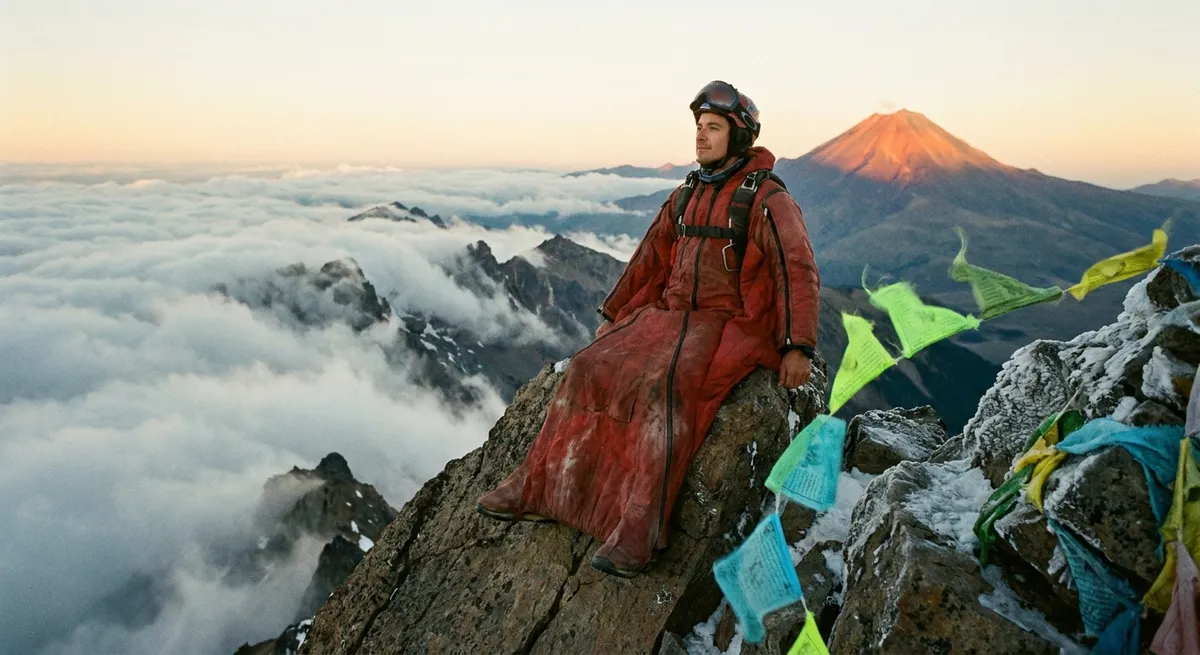
There’s regular adventure—then there’s the kind you only admit to your insurance company if they absolutely force you. This is for the second category. Extreme travel isn’t just about going farther, higher, or colder; it’s about stepping into places where the planet drops the safety rails and politely says, “You sure about this?”
These five travel discoveries aren’t Instagram backdrops. They’re commitment. They’re places where your comfort zone has to stay home and wait for postcards. Buckle in.
1. Riding the Edge of the Danakil Depression, Ethiopia’s Alien Furnace
If Mars had a summer resort, it would look like the Danakil Depression.
Here, northern Ethiopia drops into one of the hottest, lowest, and most geologically unhinged places on Earth. The ground bleeds neon yellows and toxic greens around the Dallol hydrothermal area, a place so hostile that scientists use it as an analog for studying life (or the lack of it) on other planets. Salt plains crackle under your boots, sulfur fumes sting your lungs, and the horizon looks computer-generated.
Temperatures can soar well above 45°C (113°F), often higher, making this a destination where “hydration strategy” becomes a survival skill, not a wellness trend. Travel usually involves armed escorts due to past regional tensions, plus specialized guides who know which parts of the ground don’t like being stepped on. This is not a solo-backpacker, “we’ll wing it” environment.
Yet, for the extreme traveler, Danakil is a rare kind of clarity: a place where the planet drops its lush decorations and shows you the raw, tectonic machinery underneath. Nights on the salt flats under a star-punched sky are surreal—your bed might be a basic cot, but your backdrop is a billion-dollar sci-fi set that just happens to be real.
2. Volcano-Watching From a Lava Balcony in Vanuatu
On Tanna Island in Vanuatu, Mount Yasur doesn’t really “erupt” in the dramatic-once-a-century way. It just... keeps throwing tantrums. All the time.
Mount Yasur is one of the world’s most consistently active volcanoes, and you can get obscenely close to its crater rim. We’re talking front-row seats to a cauldron that regularly hurls molten rock into the air like it’s auditioning for a heavy-metal album cover. Access is weather- and activity-dependent, and local guides are the gatekeepers—they’ll decide how close is safe-ish on any given day.
This is not the polite, fenced-off viewpoint you get at many volcanic sites. You feel the shockwaves in your chest when it booms. The air tastes like minerals and ash. Your brain quietly reminds you that humans are not meant to stand this near to an open wound in the Earth’s crust.
Add the cultural layer: Tanna’s traditional communities, kava ceremonies, and kastom culture still shape island life. You’re not just visiting a volcano; you’re stepping into a living relationship between people and a mountain that breathes fire. It’s the definition of extreme travel: physically intense, emotionally overwhelming, and absolutely not forgettable.
3. Ice-Locked Nights in Antarctica’s Deep Field Camps
Cruising past icebergs on a comfortable ship is one way to see Antarctica. Living for days at a deep field camp in the interior is something else entirely.
These camps—often accessed by ski-equipped aircraft—drop you into a frozen blank page the size of a continent. Temperatures can plummet below -30°C (-22°F), and windchill toys with numbers your weather app isn’t emotionally ready for. There are no cities, no roads, no trees, no sound except wind and the occasional groaning of ancient ice shifting beneath you.
You’ll sleep in expedition tents or specially designed shelters, learning how to layer clothing properly or pay the price in cold-burned extremities. Simple tasks like brushing your teeth or using the toilet become micro-expeditions. You move deliberately, because you’re acutely aware that this environment doesn’t really care if you exist.
In exchange, you get a sensory experience that rewires your scale of “remote”: skies so clear you can see the Milky Way as an actual river, horizons so flat they look like bad CGI, and a silence so total it becomes its own kind of sound. You walk away understanding that “end of the world” isn’t an exaggeration—it’s a GPS setting.
4. Into the World’s Tightest Dark: Technical Caving in Mexico’s Deep Systems
If you’ve ever looked at a crack in a rock and thought, “I’d like to crawl through that for eight hours with a rope cutting into my hips,” welcome to high-intensity caving.
Mexico is home to some of the deepest and most complex cave systems on Earth, including the legendary Sistema Huautla and the abyssal Sotano de las Golondrinas. This is caving for people who think heights, darkness, and vertical rope descents sound like a fun group activity. You’ll learn techniques like single-rope climbing, chimneying through narrow shafts, and trusting knots with your entire existence.
Rappelling into an enormous pit with hundreds of meters of air below your boots flips your internal altimeter. Your world shrinks to a beam of light, the scrape of your gear on wet limestone, and the echo of your own breathing. Claustrophobes need not apply.
Technical caving isn’t a “try it once for the ‘gram” activity—this is a discipline with real risk and serious training requirements. But for those who commit, the payoff is staggering: underground cathedrals of stone, stalactite forests older than most civilizations, and chasms that feel like secret levels of the planet unlocked just for you.
5. Weathering a Cyclone Season Crossing in the Roaring Forties
You think you’ve met wind. The Roaring Forties would like to introduce themselves.
These notorious latitudes between 40° and 50° south are home to some of the fiercest, most relentless westerly winds on the planet. Historically, they were the stomping grounds of clipper ships and nautical legends; now they’re a playground for extreme sailors and ocean-crossing obsessives who don’t want a gentle cruise—they want to test their nerve against water in full rage mode.
Imagine days—or weeks—of huge swells, gale-force winds, and a horizon that never stops heaving. Sleep comes in short, broken chunks. Everything is damp. Everything moves. You secure every object you own or watch it launch across the cabin at 3 a.m. You learn quickly that “overboard” is not a word you ever want associated with your name.
Crossings in this region demand real seamanship, robust vessels, and respect for the marine forecasts you obsessively refresh. But standing on deck (harnessed in, obviously) with Southern Ocean spray detonating against your foul-weather gear, you’re plugged directly into the wild engine of global weather. It’s not scenery; it’s raw, kinetic atmosphere—and for some travelers, that’s the ultimate hit.
Conclusion
Extreme travel isn’t about bragging rights. It’s about meeting the planet where it’s least edited: in the brutal heat of a toxic salt plain, the shockwave of an erupting crater, the knife-edge chill of Antarctic emptiness, the crushing dark of an underground abyss, or the chaos of an ocean gone feral.
These five discoveries are invitations, not instructions. They demand research, training, local expertise, and a willingness to respect environments that don’t negotiate. But if you’re wired for the kind of adventure that strips life down to its most immediate settings—breathe, move, survive, feel—then these edges of the world aren’t off-limits.
They’re just waiting to see if you’re serious.
Sources
- USGS Volcano Hazards Program – Mount Yasur - Background on Yasur’s activity and volcanic context
- NASA Earth Observatory – Danakil Depression - Satellite imagery and overview of the Danakil region’s extreme environment
- British Antarctic Survey – Living and Working in Antarctica - Details on conditions, logistics, and realities of life in deep-field Antarctic camps
- National Park Service – Caving Safety and Ethics - Guidance on technical caving risks, preparation, and responsible practices
- World Meteorological Organization – Southern Ocean and Roaring Forties - Explanation of the Roaring Forties’ weather systems and why they produce such severe conditions
Key Takeaway
The most important thing to remember from this article is that this information can change how you think about Extreme Travel.