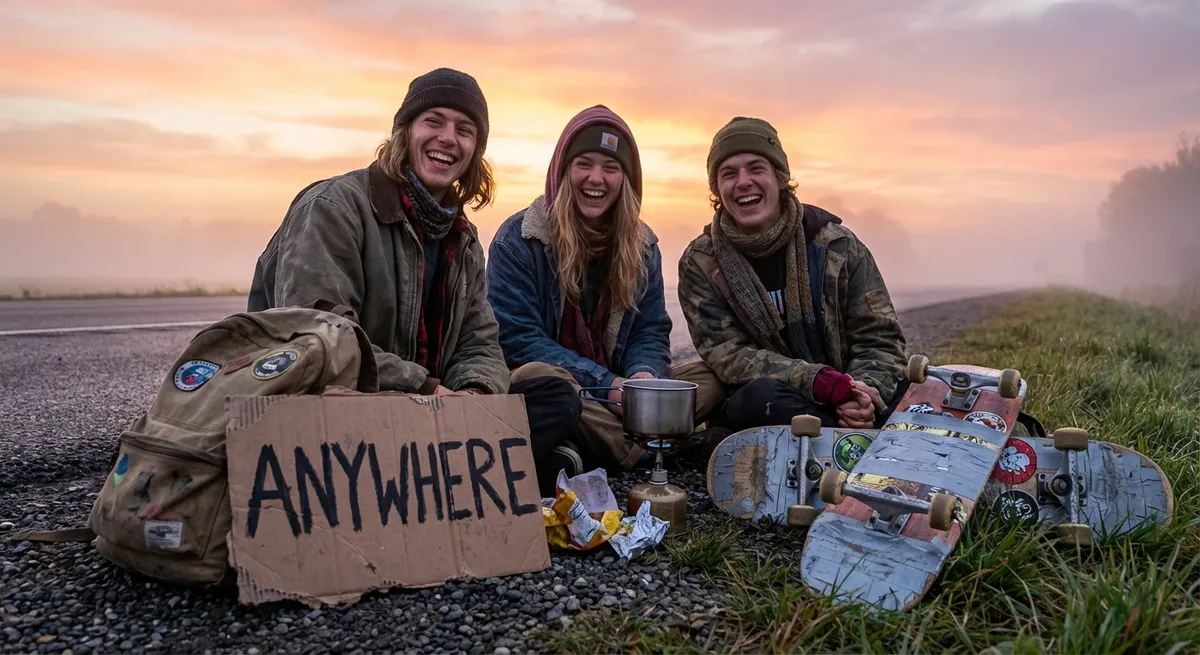
You don’t need a trust fund or a ring light to travel like your life depends on it. You need a beat‑up backpack, an unhealthy tolerance for chaos, and a willingness to say “yes” before you google it. This isn’t about squeezing yourself into tourist traps for less. This is about treating the world like a living laboratory and running your own wild, low‑budget experiments in how far curiosity can go.
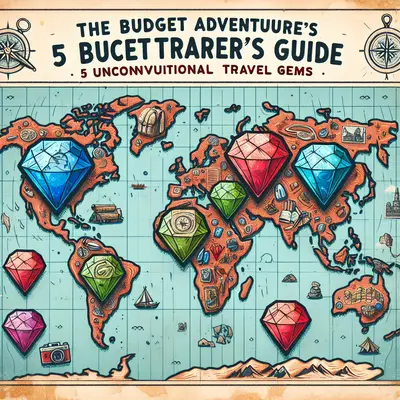
Below are five travel “discoveries” that aren’t really places so much as hacks for reality—ways to bend time, money, and expectation until your cheap trip feels like a glitch in the simulation.
The Night-Shift City: Owning the Hours Nobody Wants
If you’re broke, stop competing for daytime. The world is priced for people who wake up at 9 a.m. and book “peak season.” You’re going to live in the negative space.
Build a trip around night trains, red‑eye buses, and cities after midnight. Overnight transport becomes a rolling hostel: one ticket that’s both bed and distance. In Europe, budget night trains can move you across borders while you sleep; in Southeast Asia, those neon‑lit sleeper buses are moving dorms with questionable suspension but legendary stories. Bring an eye mask, earplugs, and a ruthless ability to pass out anywhere.
When you arrive, make the city your after‑hours playground. Dawn markets, 24‑hour canteens, late‑night bakeries pulling hot bread straight from the oven—this is where locals actually exist. Wander fish markets in the blue hour, hit free viewpoints at sunrise, and walk past the ticket booths that won’t open for hours.
Travel discovery: whole cities flip personality after dark, and almost nobody clocks in for that shift. If you’re willing to feel jet‑lagged on purpose, the world gets cheaper, quieter, and far weirder.
The Borderland Shuffle: Surfing the Edges Between Worlds
Border towns are where maps argue with each other—and that argument is often very affordable.
Instead of obsessing over big capital cities, aim for the seams: places where two countries, cultures, or currencies collide. You’ll often get cheaper accommodation (because most tourists speed through), cross‑border food mashups, and the surreal experience of walking from one reality to another in a single afternoon. Eat breakfast in one country, buy snacks with a different currency, and fall asleep under a flag you didn’t wake up under.
In some regions, border crossings mean wildly different prices for the same vibe. Groceries, SIM cards, and bus tickets can drop or spike the moment you step over a line on the ground. If you’re paying attention, you can play that line: buy what’s cheap in one place, sleep where rent collapses in another, and let your feet exploit what economists politely call “price differentials.”
Travel discovery: borders aren’t just bureaucratic headaches; they’re budget fault lines. Learn where the costs crack, and you can live richly on pocket change while everyone else blows their funds in the nearest capital.
The Festival Drift: Letting Chaos Pick Your Destination
Instead of deciding where to go and then asking, “What’s there?”, flip it. Ask, “Where is something weird happening?” and then go there as cheaply as possible.
Major festivals and cultural events often have free public performances, open‑air rituals, and street parties that cost nothing but sleep. Religious pilgrimages, local harvest festivals, independence days, solstice celebrations—these are your coordinates. Night parades, ceremonial dress, street food set up for locals, and that electric feeling that the whole town agreed to lose its mind for 48 hours.
Yes, accommodation can spike around big events. Your workaround: arrive earlier than everyone else, stay just outside the main chaos zone, or tap into couchsurfing and homestays where hosts are excited to show off the spectacle. Sometimes smaller, local festivals (the ones not trending on Instagram) mean you’re the only outsider, and everyone’s competing to feed you.
Travel discovery: when you chase events instead of landmarks, the world stops being a checklist and starts being a series of shared adrenaline spikes—most of which are free.
The Hyper-Local Skill Swap: Paying in Talent, Not Cash
Money is one currency; skills are another. If your wallet is starving but your brain isn’t, you’re not actually broke—you’re just holding the wrong kind of currency.
Lean into hyper‑local exchanges. Many community centers, language cafés, and cultural associations in cities worldwide host free or donation‑based language meetups where “English practice” is basically your entry ticket to social life. Hostels and small guesthouses often need photography for their website, help with social media, mural art on their walls, or language help with signs—things you might be able to offer in exchange for discounts or, sometimes, a spare bed.
Then there’s the structured side: work‑exchange platforms connecting travelers with farms, eco‑projects, hostels, and families. You trade a few hours a day of your effort—gardening, painting, basic maintenance, teaching kids—in return for food and accommodation. Suddenly your biggest expenses disappear, and your “vacation” quietly becomes a crash course in a completely different way of living.
Travel discovery: when you stop being just a consumer and start being useful, doors open that no credit card could buy through. You stop “staying” in places and start belonging to them, at least for a while.
The Analog Quest: Choosing One Obsession and Letting It Lead
Pick one hyper‑specific, almost ridiculous obsession—and let that be your navigation system for a cheap, long, wandering trip.
Maybe it’s chasing the best street‑side dumplings in every city you hit. Maybe it’s only visiting public libraries, skateparks, second‑hand bookstores, swimming spots, or brutalist concrete monsters you can find via weird online forums. The rule: every move you make must somehow serve your chosen quest.
Why this works for budget travel: your focus shifts from “must see the big things” to hunting hidden, often free places. Public libraries? Free Wi‑Fi, bathrooms, and a snapshot of local life. Skateparks? Zero entry fee and instant subculture. Urban swimming spots, hiking trailheads, community gardens, indie galleries—many of them are free, and all of them exist far away from overpriced “must‑see” attractions.
Your costs shrink because your radius shrinks: instead of racing across town to tick landmarks off a list, you drill deep into neighborhoods on foot or public transit. You walk more, notice more, spend less, and accidentally get to know cities in ways guidebooks never bother to.
Travel discovery: a single, weird obsession can be a compass. Follow it, and you stop being a tourist and start being a hunter—in a world that constantly rewards the curious with free, unexpected treasure.
Conclusion
Travel on a tight budget isn’t about deprivation; it’s about rerouting. You’re not signing up for the “cheap version” of travel—you’re opting out of the overpriced, prepackaged simulation and diving into the underbelly where the stakes feel higher and the stories last longer.
Live in the odd hours. Haunt the borderlands. Follow the festivals. Trade your skills. Let one strange obsession steer you. The less money you throw at the world, the more it has to meet you halfway with serendipity.
If your trip feels a little unstable, a little improvised, and occasionally “What am I even doing?”, you’re doing it right.
Sources
- U.S. Department of State – Country Information - Official safety, visa, and entry info for planning border crossings and night travel
- Interrail / Eurail Official Site - Practical details and examples of night trains in Europe, useful for building overnight transport strategies
- Hostelling International - Tips on budget accommodation, hostel culture, and ways travelers can exchange skills or connect locally
- Workaway - Global work‑exchange platform where travelers trade skills for room and board
- UNESCO – Intangible Cultural Heritage - Database of festivals, traditions, and cultural events that can inspire festival‑based travel routes
Key Takeaway
The most important thing to remember from this article is that this information can change how you think about Budget Adventures.