You don’t need money to travel wildly; you just need to stop playing by the same rules as everyone else. Budget travel isn’t about sleeping in hostels you hate and eating instant noodles in sad train stations. It’s about hacking places, times, and systems so you get maximum chaos, minimum cost, and stories that sound fake in group chats. This is your invitation to travel like the algorithm glitched—five strange, low-cost discoveries for travelers who’d rather collect scars and stories than loyalty points.
1. The Night-Couch Network: Sleeping in Transit Like a Ghost
You can turn the dead zones of travel—overnights, layovers, awkward arrival times—into a stealth accommodation system that quietly deletes 30–50% of your lodging budget.
Instead of paying for a bed every night, stack your journeys so you’re always sleeping while moving. Book overnight buses, trains, and ferries on routes where locals actually use them, not just tourists ticking off a “scenic ride.” Eastern Europe, Southeast Asia, and parts of South America are legendary for this; you pay once for transport and wake up in a new city with zero accommodation cost for that night. The trick is to target routes 6–10 hours long that leave after 9 p.m.—long enough for real sleep, short enough not to feel like purgatory.
Airports can be your backup crash pads when transit fails. Many major airports have quiet zones, 24-hour seating, and sometimes even reclining chairs or sleep pods you can snag in off-hours. You become a ghost: never fully checked in, never officially staying, but always resting somewhere in between. Tools like SeatGuru, airport maps, and traveler forums help you locate hidden corners, power outlets, and benches that don’t have those cursed armrests.
To keep this from turning into an exhaustion spiral, build in “anchor nights” every few days—real beds in cheap guesthouses or homestays, where you shower like a deity and wash your socks in the sink. You’ll spend a fraction of what a daily-room traveler does, while covering more ground than they think is “reasonable.”
2. The Parallel Timeline Trick: Traveling Where It’s Tuesday for Your Wallet
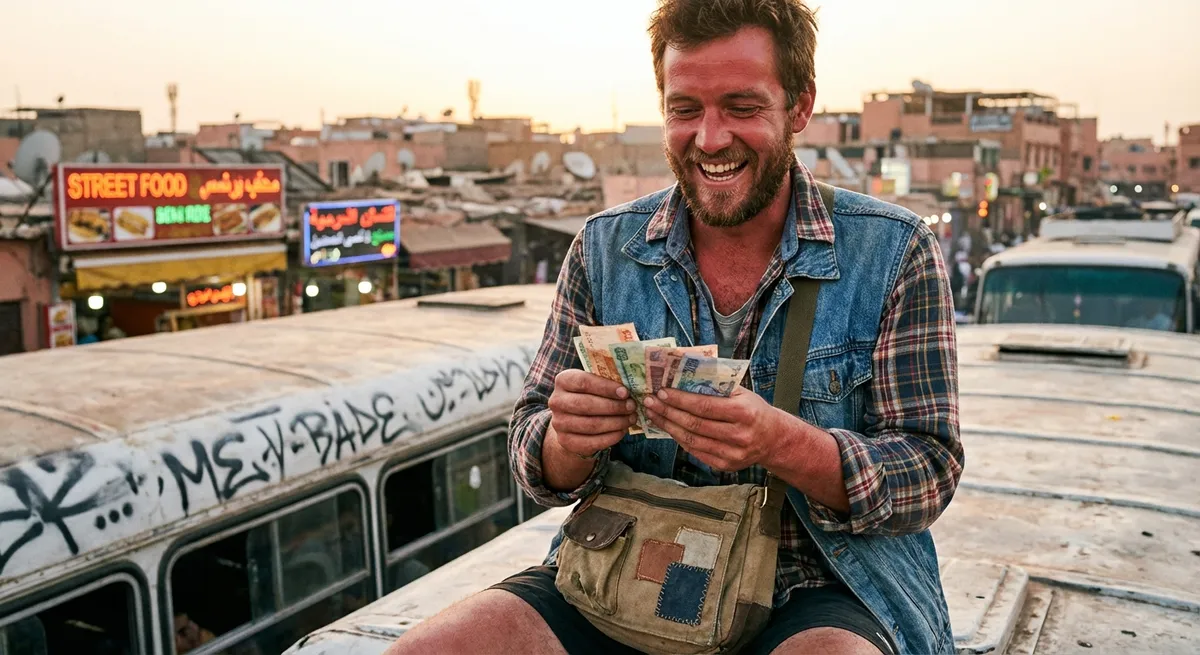
Most people ask, “Where’s cheap?” That’s the wrong question. The right question: “Where is my currency accidentally overpowered right now?” Welcome to parallel-timeline budgeting—chasing favorable exchange rates, off-season dips, and local price distortions instead of generic “budget destinations.”
Currencies go through mood swings. A country that was average-priced five years ago might now be a budget playground thanks to inflation, political shifts, or economic wobbles you had nothing to do with. That’s not disaster tourism; you’re not flying into crises. You’re targeting stable-enough countries where your money suddenly stretches further because timing and economics broke in your favor. Check recent currency charts and travel advisories, then aim for the “cheap window” while it’s still open.
But zoom in further: even inside “expensive” countries, there are micro-worlds that didn’t get the memo. University towns often have student-priced food, transport passes, and bars. Satellite suburbs near big cities rent rooms and apartments for half the downtown price—especially if you’re staying a week or longer. Industrial towns with no postcard views can still be perfect bases with cheap food and trains that shoot you into the “nice” places for day trips.
Combine this with shoulder season—those beautiful few weeks between peak and dead low. Prices are lower, crowds haven’t fully formed (or have just dispersed), and locals still like you. It feels like you slipped into a side reality where the same country is 30% cheaper, friendlier, and less curated for Instagram.
3. The Invisible Festival Hack: Free Culture on a Pirate Signal
You don’t need tickets, VIP passes, or overpriced festival wristbands to mainline culture. Nations accidentally throw free parties constantly; most travelers just don’t notice.
Skip the massive tourist festivals you’ve heard of and target the hyper-local, semi-chaotic ones: harvest celebrations, regional saints’ days, town anniversaries, minority cultural festivals, neighborhood parades. These are usually free, gloriously unpolished, and designed for locals—meaning food is cheap, alcohol flows at human prices, and you’re not paying for branding. Scan city and regional event calendars, tourist board sites, and local Facebook groups, then plan your trip around days when a town is likely to temporarily lose its mind.
Museums, galleries, and attractions also have “invisible free days” baked into their schedules: monthly free-entry evenings, late-night cultural events, student nights, or national holidays when public sites are free or heavily discounted. Time it right, and you can spend a week marinating in art, history, and weird installations without paying more than what you’d blow on a single big-ticket museum in a capital city.
On the ground, move like a signal-hunter. Follow sound: live bands echoing from side streets, chants from a square, fireworks in the distance. Follow signage you don’t fully understand. Follow groups of teenagers dressed slightly too extra for a normal Tuesday. Where they’re going, chaos (and usually free fun) waits.
4. Underpriced Adventure: Local Thrills Hiding Behind Boring Names
Tourism boards love flashy labels: “adventure packages,” “extreme tours,” “bucket-list experiences.” Those cost triple what they should. What you actually want to hunt are “normal” activities that quietly deliver maximum adrenaline while priced for locals, not thrill-seeking foreigners.
Think municipal bike rental systems used for daily commuting—but you turn them into your own multi-hour urban exploration. Think public ferries priced for workers that give you the same harbor views cruise passengers paid a hundred bucks for. Think local hiking clubs that let you tag along on weekend mountain treks for the cost of transport and snacks. None of these will be labeled “adventure” in English. You have to dig.
Search in the local language (with machine translation as backup). Look for words like “association,” “club,” “community group,” “excursion,” and “outing.” Climbing gyms sometimes organize outdoor days. Public sports centers offer kayak rentals and open-water swim meets. City governments quietly map trail systems and free outdoor routes while tour operators scream about their premium “nature escape.”
If you’re comfortable with a little uncertainty, this is where budget travel mutates into pure discovery: getting lost on community-made walking paths, paddling rental kayaks down a river no influencer has butchered yet, or catching a battered train to a nowhere-town with a surprisingly epic canyon forty minutes’ walk out of the center.
5. The Shadow Economy of Kindness: Trading Skills Instead of Cash
When you stop assuming every interaction has a price tag, the world opens into a different economy entirely—one that runs on curiosity, usefulness, and not being a jerk.
Look for ways to trade time and skills instead of money. Volunteer stints where you help on small farms, eco-projects, hostels, or community initiatives can exchange a few hours of work daily for food and housing. The trick is to avoid anything exploitative or opaque: read reviews, check how long projects have existed, and avoid anything that smells like “voluntourism theater” or replaces paid local labor. Short-term, ethical placements are your sweet spot.
If that feels too structured, go micro. Offer to help a small café shoot better phone photos for their menu in exchange for a meal. Help a guesthouse fix their English copy, set up online booking, or improve their map for guests. If you’re musical, offer a short set on a quiet night and see what happens. You’re not begging; you’re proposing fair, specific trades. People can say no. Many will say yes.
Even outside trades, leaning into local generosity stretches your budget in unexpected ways. Accept invitations—to family dinners, neighborhood barbecues, random fishing trips suggested by someone at a bus stop. Bring something small to share: fruit, snacks, a bottle of whatever locals actually drink. Say thank you properly, ask questions, and tell stories from your world. You’ll realize that the richest parts of a “budget trip” usually show up where nobody is charging admission.
Conclusion
Budget travel isn’t the discount aisle version of “real” travel. It’s a different game entirely—one where your currency is flexibility, nerve, and willingness to follow odd signals off the main road. Sleep in motion instead of in hotels. Chase currency anomalies and shoulder seasons. Ride the pirate radio of local festivals. Hunt boring-sounding activities that hit like adventure. Trade skills, not just cash.
Travel like the rules were never written for you in the first place—and your budget stops being a limit and starts being the excuse you needed to travel stranger, longer, and far beyond where the brochures expected you to go.
Sources
- U.S. Bureau of Consular Affairs – Travel Advisories - Up-to-date safety and advisory information for choosing where and when to travel
- XE Currency Converter - Historical and real-time exchange rate data to spot favorable currency situations
- Eurail Night Trains Guide - Overview of overnight train options in Europe useful for “sleep-in-transit” planning
- Hostelling International – Budget Travel Tips - General advice and strategies for low-cost travel, accommodation, and transport
- European Commission – European Capitals of Culture & Events - Example of large-scale cultural events and how cities program free or low-cost cultural activities
Key Takeaway
The most important thing to remember from this article is that this information can change how you think about Budget Adventures.