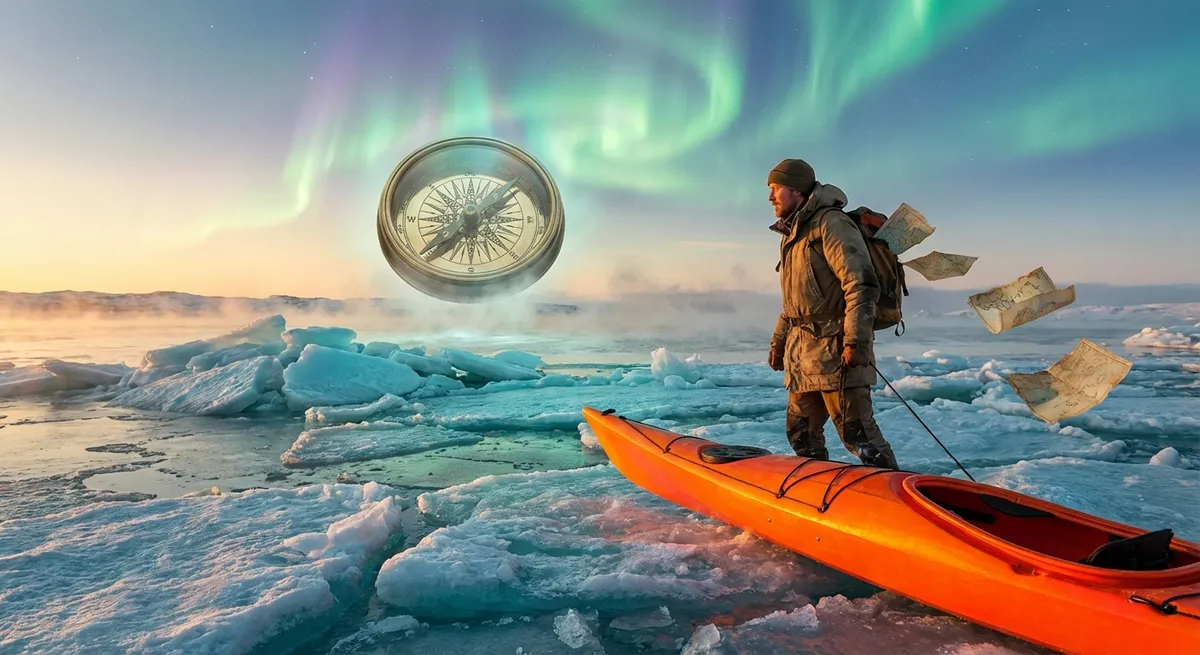
Every map has blank patches where the legends, the warnings, and the Wi-Fi all go missing. That’s where No Way travelers feel most at home. This isn’t about “hidden gems” with cute cocktails and infinity pools. This is about environments that don’t care if you showed up prepared—or at all.
If your idea of a good time involves altitude headaches, volcanic rumbling, or endless horizons of nothing, these five extreme travel discoveries will feel less like vacations and more like voluntary glitches in your comfort zone.
Riding the Sky-River: Trekking Beneath the World’s Wildest Jet Streams
Commercial flights flirt with the jet stream. You, on the other hand, can walk under it while your lungs file complaints and your brain quietly recalculates all its life choices.
Regions like Ladakh in India and Bolivia’s high-altiplano sit at altitudes where the atmosphere thins, UV radiation spikes, and the wind feels like it’s been sharpened. Multi-day treks here put you directly under some of the fastest high-altitude winds on Earth—not that you’ll see them, but your weather app’s confused forecasts will tip you off.
At 3,500–5,000 meters, your body starts rewriting its internal code: more red blood cells, different breathing rhythms, new limits. The terrain looks hostile but strangely clean, stripped of trees, soft edges, and any illusion that you’re in charge. Rivers are clearer, shadows sharper, stars unreasonably bright. You’ll walk along ancient trading routes where caravans once bartered salt and grain, now replaced by trekking poles and questionable energy gels.
Nothing here is subtle. A storm can appear from a clear blue sky. Temperatures drop the moment the sun surrenders. Breathing becomes the main activity; walking is a side quest. It’s an extreme experience not because it’s theatrical and deadly every second, but because it exposes how fragile the “normal” settings of your life really are. Up here, your world shrinks to water, warmth, and how far your legs can push before your head says “enough.”
Lava-Lit Midnights: Sleeping on the Edge of Earth’s Open Wounds
Volcano tourism is cute when you’re taking selfies at a safe overlook. Extreme travel starts when you spend the night listening to a planet exhale fire.
In places like Mount Etna in Italy or Pacaya in Guatemala (when conditions allow and authorities open access), you can hike over cooled lava fields that still radiate heat, past smoking vents and ash-choked craters. Night falls, and the landscape goes from monochrome to metal album cover—embers glowing, plumes rising, the distant hiss of unseen vents reminding you that the ground isn’t as solid as you thought.
Camping near (not on, and never inside) active volcanic zones turns the entire horizon into a living pulse. Gear melts faster, sand becomes glass, and everything smells faintly of sulfur and singed ego. You’ll wake up with ash in places ash should absolutely never be, but your brain will quietly file every moment under “this was worth it.”
These are controlled risks—when done with local guides, up-to-date advisories, and actual respect for geological tantrums, not Instagram bravado. The thrill comes from proximity: feeling the warmth of freshly cooled rock, hearing low, sub-audible rumbles, watching the night sky reflect orange instead of black. It’s not just scenic. It’s an unedited connection to the machinery running under every continent you’ve ever walked on.
The Ocean’s Dark Mirror: Free-Diving Where the Bottom Never Shows Up
Most travelers interact with the ocean from above: ferries, cruises, maybe a snorkel. Free-diving takes that relationship and drowns it—on purpose.
In deep-blue vertical drop-offs like Dean’s Blue Hole in the Bahamas or the walls off Dahab in Egypt, the seafloor simply disappears into pure gradient. There is no comforting bottom, only a shaft of light above you and darker, colder water below. You descend on a single breath, drop by drop, feeling your heartbeat slow and your senses sharpen as surface noise disappears.
This is not scuba. There are no bubbles, no heavy tanks, no artificial soundtrack. The pressure builds, your chest compresses slightly, and the world narrows to equalizing, hydrodynamics, and the line you’re following into the void. It feels uncannily like leaving the planet—a controlled skydive in reverse, except your parachute is your discipline and your training.
The surface looks different when you come back. Waves are no longer just scenery; they’re a membrane you cross through. Free-diving teaches your mind to stay calm while your body insists it absolutely should not be. That psychological reset—the reminder that fear can be negotiated, not just obeyed—is what makes this an extreme travel discovery worth chasing.
The Silence Belt: Crossing Deserts Where Sound Rarely Survives
Deserts don’t roar; they delete. They erase noise, humidity, and your lazy sense of direction. On satellite images, they’re empty beige. On the ground, they’re anything but empty.
In hyper-arid basins like Chile’s Atacama or Namibia’s Skeleton Coast, you can walk for hours with no plant higher than your knee, no permanent water, and no shade that isn’t man-made. The silence is so complete that your own heartbeat becomes background music. Distances fail you—mountains closer than they look, horizons further than you hope.
Extreme desert travel is a negotiation with the sun. You move early and late, rest in the brutal middle, and guard your water like treasure. Temperatures whiplash—scorching days, near-freezing nights—forcing you into a gear strategy that feels more like expedition planning than vacation packing.
The payoff is surreal. No light pollution, just sky: a Milky Way so dense it almost looks fake. Dune fields that shift every night, erasing tracks like nature’s own incognito mode. Cracked salt flats that crunch beneath your boots with the same satisfying menace as walking on thin ice.
Here, remoteness stops being an idea and becomes a physical sensation. Your phone’s “No Service” message isn’t annoying; it’s honest. The desert doesn’t hate you. It simply doesn’t notice you at all—and that’s exactly the kind of indifference some travelers crave.
Parallel Poles: Chasing Midnight Suns and Polar Night in Human Outposts
Most trips stretch your distance. Polar journeys stretch your sense of time.
Head above the Arctic Circle—to Svalbard, northern Greenland, or remote corners of northern Norway—or below the Antarctic Circle on an expedition vessel, and the clock stops making intuitive sense. For weeks, the sun refuses to set… or refuses to rise. That’s not poetic; it’s practical disorientation. You’ll check your watch at what feels like mid-afternoon and discover it’s 2:00 a.m., full daylight outside and your circadian rhythm curled up whimpering in a corner.
These edges of the planet are extreme not just for their temperatures, but for their fragility. Glaciers calve with cannon-like booms. Sea ice rearranges coastlines overnight. Wildlife appears like glitches in the simulation: a lone polar bear dot on the horizon, a penguin highway carved into the snow, or orcas cutting black lines in mirror-slick water.
Human presence here is temporary and obviously so—research stations, small settlements, seasonal ships. Power depends on a handful of generators. Supplies are counted, not assumed. Instead of choosing a new café each day, you’re choosing which pair of socks will forgive you for the most abuse.
Standing under a sky that never really darkens or never truly lightens rewires your internal compass. Days become elastic. Sleep becomes an intentional act, not a reflex. You leave with a rare, unsettling awareness: our entire idea of “normal life” is calibrated for a thin strip of latitudes. Above and below that, the rules are different, and you’re only a careful visitor.
Conclusion
Extreme travel isn’t about collecting brag-worthy danger stories; it’s about deliberately stepping into environments where your default settings stop working. High-altitude wind corridors that reprogram your blood. Volcanoes that breathe beneath your tent. Ocean drop-offs that test your calm. Deserts that erase sound. Polar regions where time itself feels misconfigured.
The point isn’t to prove how fearless you are. It’s to find out how adaptable you can become—how quickly you can learn new rules when the thin bubble of your normal life pops. If your pulse spiked even a little while reading this, you already know: the map you’ve been using is too small.
Now go find the part of it that still scares you.
Sources
- Centers for Disease Control and Prevention – High-Altitude Travel & Altitude Illness - Medical guidance on how high altitude affects the body and how to prepare.
- Smithsonian Magazine – Why Active Volcanoes Attract Tourists - Explores the appeal and risks of visiting active volcanic areas.
- NOAA Ocean Service – What Is a Blue Hole? - Scientific explanation of blue holes and why they are unique underwater environments.
- NASA Earth Observatory – Atacama Desert: The Driest Place on Earth - Background on the Atacama’s extreme dryness and conditions.
- British Antarctic Survey – Living and Working in Antarctica - Insight into human life, logistics, and environmental conditions in polar regions.
Key Takeaway
The most important thing to remember from this article is that this information can change how you think about Extreme Travel.