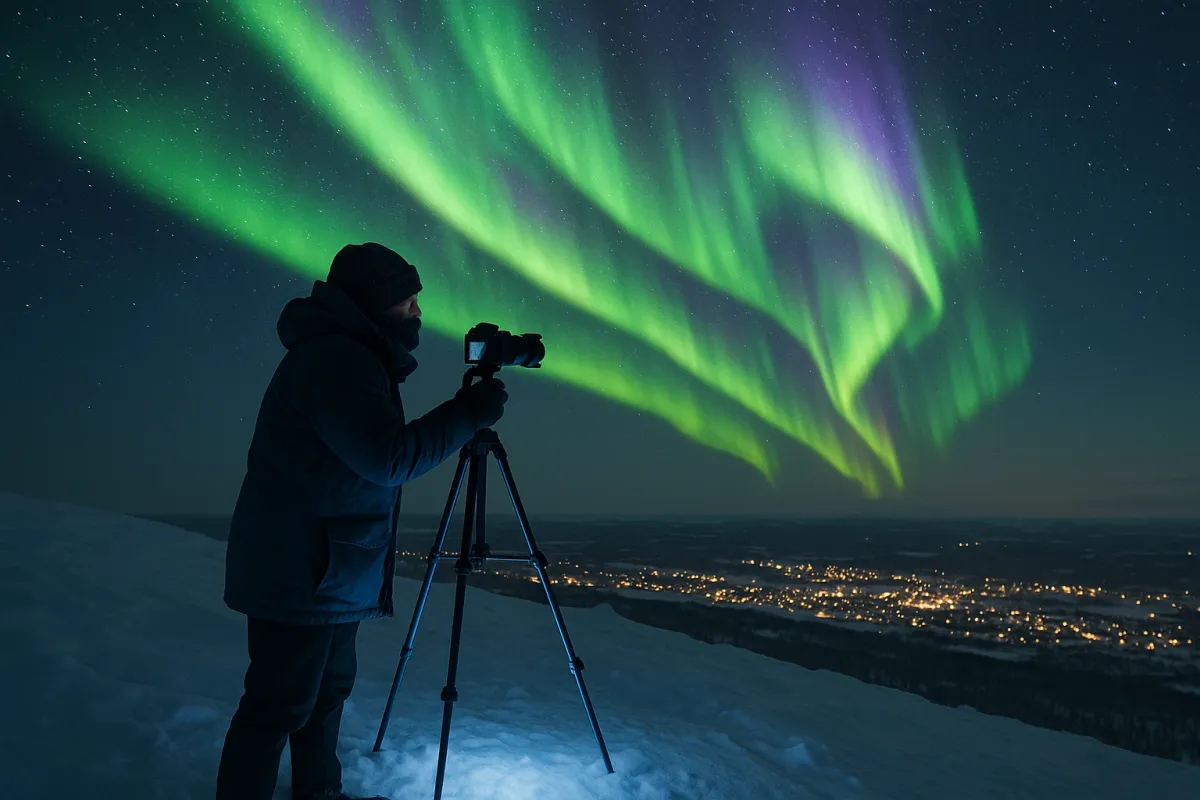
The planet is literally lighting up right now. With solar storms supercharging aurora activity across the north, the Northern Lights aren’t just a bucket‑list item anymore—they’re an extreme sport. While serene Instagram reels show pastel skies and cocoa mugs, the real story is out on frozen seas, in storm‑ripped fjords, and on midnight ice roads where a geomagnetic “Kp index” forecast matters more than your return ticket.
Inspired by today’s surge of Northern Lights coverage—like firsthand reports of when and where to see the aurora blazing over Norway, Finland, and Iceland—we’re cranking the dial past “cozy cabin” to “are you absolutely sure you packed your will?” These are not spa‑robe vibes. These are headlamp‑on, frost‑in‑your-beard, battery‑dies‑at‑minus‑30 adventures for travelers who think sleep is a tourist trap.
Below are five high‑voltage ways to chase the aurora right now—each one a travel discovery that turns a sky show into a full‑contact expedition.
Arctic Ice Road Aurora Runs in Finnish Lapland
Forget curated glass igloos. Today’s real action in Finnish Lapland is on the winter ice roads that appear when the lakes and rivers freeze hard enough to carry truck convoys—and the occasional lunatic traveler with a rental car and a tripod. With Northern Lights articles trending again this week, Finnish Lapland (around Rovaniemi, Inari, and Kilpisjärvi) is in the global spotlight, but few people realize you can leave the warm hotels behind and chase the storm out over frozen water.
Drive the seasonal ice routes near Inari under a Kp 5–7 forecast and the sky isn’t just “green”; it’s an electric ceiling that flares, shreds, and reforms while the ice beneath you snaps and moans. This is not a guided bus tour where you “kindly remain seated.” This is you, a GPS that keeps losing its mind, and an urgent respect for temperatures that can shut down your gear in minutes. Go with locals who know the ice thickness reports, keep a second battery in your inner pocket, and embrace the weird thrill of being completely surrounded by nothing but frozen blackness and atmospheric chaos.
Sleepless Ship Chasing Storm Auroras off Tromsø, Norway
Recent aurora coverage out of Norway leans heavy on cozy fjord photos. That’s cute. If you want extreme, board a small expedition vessel out of Tromsø during peak solar activity and aim straight for the worst weather in the Norwegian Sea. Several operators now run Northern Lights “expeditions” rather than tours—translation: routes bend around incoming geomagnetic storms, not around your desire to be comfortable.
Out at sea, with the city glow obliterated, the aurora doesn’t look like a curtain—it looks like a living organism swallowing the entire dome of the sky. You’ll move from enclosed cabin to frozen deck fifty times a night, fingers numb, lenses frosting, seas rough enough that your tripod tries to commit suicide. On strong nights tied to current solar storms, the show can run straight through until dawn, flickering purple and crimson at the edges. Bring seasickness pills, dry bags, and a willingness to sleep in 20‑minute microsnatches whenever the sky takes a breath.
Volcano‑Edge Aurora Camps on Iceland’s New Lava Fields
Iceland is back in the headlines again and again for its restless volcanoes and near‑constant aurora potential. If you’re reading today’s coverage of Northern Lights hotspots, you’ll see the usual spots—Thingvellir, Jökulsárlón, Snæfellsnes. But the true edge‑walkers are pairing active or recently active volcanic zones with skyfire overhead. That means setting up camp just outside hazard zones near places like Fagradalsfjall and other Reykjanes Peninsula systems when conditions and local regulations allow.
On the right winter night, you can sit on still‑warm, glassy lava fields while green bands ripple over your head, turning the steam vents and jagged rock into an alien set piece. This is not an Airbnb experience; this is “carry in your gear, stay hyper‑aware of gas alerts, check Icelandic Met Office updates every few hours, and understand the word ‘evacuation’ in Icelandic.” You’ll need crampons for frozen moss, a rock‑solid four‑season tent, and the humility to bail if conditions shift. But if it all aligns, you get the most metal combo on Earth: geology in mid‑sentence and space weather on full send.
Midnight Dogsled Expeditions Through Swedish Wilderness Zones
Sweden’s north has been riding the same aurora wave in the news, but most people stop at “pretty photo from Abisko.” Venture beyond the classic sky station into the deeper wilderness—Padjelanta, the far edges of Kiruna, or out toward the Norwegian border—by husky power, and the whole thing tips into survival‑story territory. Extreme travelers now book multi‑day, aurora‑focused dog sled expeditions that leave the comfort of base lodges behind and sleep in barely‑heated cabins or snow shelters.
You’ll learn to harness your team, drive the sled, and read the snowpack while constantly sky‑checking for the next solar flare to hit. On strong geomagnetic nights like the ones making headlines this season, the aurora can pulse so brightly that the snow casts shadows and your dogs’ breath looks radioactive. You’ll battle windchill that laughs at your “winter coat,” discover precisely how loud frozen wood can crack in the night, and realize your phone is just 200 grams of dead weight once the battery taps out. This isn’t a sightseeing tour; it’s a moving, howling, frost‑crusted front‑row seat to charged particles slamming into the atmosphere.
Off‑Grid Aurora Bunkers in Remote Canadian Tundra
Most of the current aurora buzz is Europe‑centric, but the same solar storm cycle that’s lighting up Norway and Finland is supercharging Canada’s vast, almost comically empty north. While casual travelers head to Yellowknife or Whitehorse, a growing underground of extreme chasers are flying even farther: tiny charters into Nunavut, the Northwest Territories, or northern Quebec to off‑grid “bunkers” (think mining camps, research outposts, or ultra‑remote eco‑cabins) that sit squarely beneath the auroral oval.
Out here, there’s no light pollution—because there’s nothing. Just permafrost, taiga, and you. When today’s elevated solar activity hits, the aurora doesn’t appear as a dainty streak; it explodes into multi‑layered folds, racing from horizon to horizon in total silence. You’ll manage generators, share space with scientists or trappers, and learn fast how to work in –35°C where skin exposure is a timed event. Getting in and out depends on bush pilots, weather windows, and your tolerance for “if the river ice isn’t solid, you’re staying an extra week.” It’s the opposite of a resort—unless your idea of a resort is an aluminum door, a diesel drum, and the best sky you’ve ever seen.
Conclusion
Right now, as solar activity surges and Northern Lights reports pop up in headlines almost daily, you’ve got two choices: scroll past another aurora video… or go chase the storm so far into the dark that your comfort zone loses GPS lock.
The extreme version of aurora travel isn’t about hot tubs and prosecco under the glow. It’s about ice roads that creak like whales, volcanic steam that mingles with your breath, huskies yanking you across blank maps, and tundra bunkers vibrating with diesel while the sky detonates above you. The next geomagnetic storm is already on its way. Pack the down, charge the headlamp, back up your camera—and go meet it where the road ends.
Key Takeaway
The most important thing to remember from this article is that this information can change how you think about Extreme Travel.