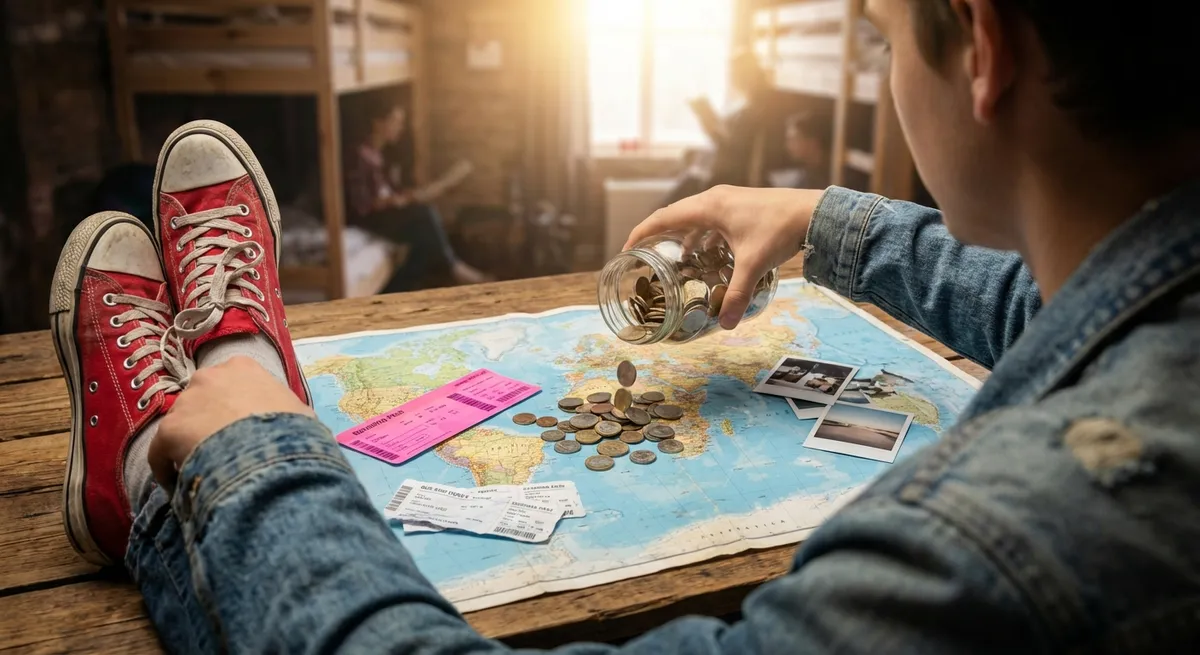
Most people treat “budget travel” like a boring puzzle: cut some costs here, save some pennies there, arrive slightly sad and underfed. Hard pass. Budget adventures don’t exist so you can suffer politely; they exist so you can squeeze every last drop of adrenaline, wonder, and weirdness out of your wallet’s loose change. If you’re willing to ditch the script, sleep odd hours, and say yes more than is strictly reasonable, your bank account stops being a barrier and starts becoming a dare.
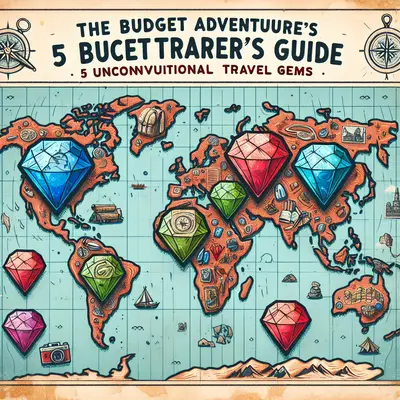
This is your field guide to turning almost-no-money into maximum-story-value—plus five specific travel discoveries that feel wildly expensive but absolutely aren’t if you play them right.
The Art of Weaponizing a Tiny Budget
Most people start planning with the question, “Where can I afford to go?” Flip it: ask, “Where is the world mispriced right now?” Your biggest advantage as a budget adventurer isn’t money; it’s flexibility. Flights are cheaper in shoulder seasons, cities are calmer after huge festivals, and “unfashionable” neighborhoods are often where the real culture is hiding with a cheaper price tag.
Lock in three pillars: transportation, sleeping, and food. Everything else can stay chaos. Transport gets cheap when you’re date-flexible and airport-agnostic; use search tools that show whole-month calendars and nearby airports, then jump on the misfits: red-eyes on Tuesdays, 5 a.m. departures, or “random city you’ve barely heard of” that connects on to where you actually want to be. Sleeping low-cost works when you stop demanding perfection and start rating places by “story potential per dollar.” Think hostels, room rentals, monastery guesthouses, and occasionally the floor of a night train. Food-wise, your best meals on a budget will come from markets, street stalls, and supermarket picnics—go where the local workers eat, not where the tourists congregate.
The golden rule: never pay full price to feel safe and scripted when you could pay half to feel alive and improvised. If it doesn’t slightly scare you, it’s probably overpriced.
Building a Trip Backwards from What Feels Impossible
Instead of picking a destination and forcing your budget to bend, start with something that feels outrageous—then work backwards until it becomes feasible. “I want to cross an international border on foot.” “I want to sleep inside a volcano crater village.” “I want to see bioluminescent water without blowing a month’s rent.” Once the impossible idea is on the table, you can start reverse-engineering.
Research where in the world your idea shows up in less-famous, less-expensive form. The Instagram-famous spot might be a financial disaster—but its scrappy cousin two countries over could be pure budget gold. Check regional flight hubs, night-train routes, or long-distance buses that connect into that under-the-radar version. Hunt for off-season windows when even popular places get desperate for visitors and drop prices on rooms and tours. Mix one big “centerpiece experience” with ultra-cheap days in surrounding areas: walkable towns, free hikes, public beaches, local festivals, and museum free days can stretch your budget while your brain still feels spoiled.
Treat your budget like a puzzle where each piece is measured in “wow-per-dollar.” Scrap the pieces that don’t move the needle emotionally, and overfund the ones that make you say, “There’s no way I’m really doing this… for that price.”
Travel Discovery #1: Night-Train Cities That Double as Budget Hotels
Sleeper trains are basically moving hostels with better window views, and they quietly wreck the assumption that long distances must be expensive. In Europe, Southeast Asia, India, and parts of Africa and South America, night trains are often cheaper than a plane plus hotel—and they give you one of the rarest travel experiences left: waking up in a totally different city without losing a day.
Book a simple bunk or reclining seat in second or third class rather than the luxury cabins tourists gravitate toward. You’re trading some privacy for a front-row seat to how locals actually move around their countries: families unpacking full dinners, strangers sharing snacks, vendors hop on and off at rural stations selling tea, fruit, or hot food through the window. Every hour of mild discomfort is also an hour of not paying for a room. There’s a sweet spot in distance, too: long enough to genuinely replace a night of accommodation, short enough that you’re not zombie-level exhausted the next day.
The game-changer: stacking routes. For example, leap from one country’s capital to a smaller regional city overnight, crash one or two nights in a cheap guesthouse, then hop another night train out. Your “transport budget” quietly gobbles your “accommodation budget” and hands you back dozens of extra waking hours to actually do things. You’re not just saving cash; you’re buying more time to live the weird life in between stations.
Travel Discovery #2: Volcanic Villages Where the View Is Free, but Epic
Volcano tourism sounds expensive and packaged, but some of the most staggering volcanic landscapes on earth are wrapped around dirt-cheap guesthouses, basic buses, and DIY viewpoints that cost exactly zero dollars. Look for villages grown right up against calderas, lava fields, or crater lakes—places where people farm and commute on terrain that looks like science fiction.
Instead of dropping money on a glossy “jeep tour,” try the hyper-local version: ask around for community-run guides, shared pickups leaving at unspeakably early hours, or public minibuses that climb up to viewpoint villages and markets. Many of these places have sunrise or sunset viewpoints that cost little more than your transport, a small entry fee, and the willingness to wake up at 3 a.m. Bring your own food, layers, and a headlamp, and suddenly a “bucket list” volcano watch becomes a budget picnic over active geology.
Stay in simple family homestays instead of hotels branded around the volcano, and you’ll get better intel on which trails are actually open, where the safest viewpoints are that day, and which “secret” ridge everyone in town uses as their casual lookout. Your money goes to people who live with the mountain, not just market it.
Travel Discovery #3: Cross-Border Foot Crossings That Feel Illicit (But Aren’t)
There’s something uniquely electric about walking across an international border. No boarding gate, no cabin pressure, just your feet carrying you from one country’s chaos to another’s—in a matter of steps. And unlike pricey flights, many land borders can be crossed for the cost of a short bus ride or shared taxi on each side.
Hunt for border towns where walking is normal: bridges over rivers, tiny checkpoints between villages, mountain passes used by locals for generations. Often, the border experience includes a micro-economy of street food, money changers, and tiny markets that spring up around the crossing point. It feels edgy, but as long as your visa situation is legit and you check official rules in advance, it’s completely legal and wildly memorable.
Budget-wise, it’s a hack: instead of paying for a long-haul route into a country’s capital, you can target a cheaper airport or city near the frontier, cross by land, then ride domestic buses or trains on the other side. That means more of your money goes into local transport and small-town stays, not into long-jump airline tickets. Plus, your passport stamps come with an actual memory of “I walked into this country,” not just “I exited through Gate 29B.”
Travel Discovery #4: Free Museum Days and Night Openings That Feel Like a Heist
Big museums and galleries are notorious budget assassins—until you realize many of them regularly open their doors for free or at heavy discounts, especially to evening crowds. Suddenly, a place you couldn’t justify paying full price for turns into a slow-motion treasure hunt through world-class art and artifacts, all without lighting your money on fire.
The trick is to plan around their generosity. Before you arrive, check official museum websites for free or reduced-entry days, late-night events, or cultural festivals where multiple sites waive admissions altogether. Build your route and your cheap meals around those windows. During the day, wander neighborhoods, parks, and markets (all free), then slide into priceless collections once the ticket barriers drop.
There’s a particular magic in exploring a museum after dark: fewer school groups, more locals, and often live music or special exhibits that make the whole thing feel like a secret society for those who can handle staying up late. You walk out into the night slightly wired, wallet mostly intact, with a mental museum of your own: the one where significant history coexisted with the knowledge you spent less than a cocktail on it.
Travel Discovery #5: Port Cities Where Cargo Ships and Ferries Replace Flights
Port cities are where time slows down and logistics get weird in your favor. While everyone else frantically price-hunts flights, you can often cross seas on car ferries, slow boats, or cargo-ship-style passenger services for less money—and infinitely more atmosphere. These routes aren’t built for tourists, which is precisely the point.
Look for domestic or regional ferries that connect islands to mainlands, peninsulas to cities, or even run overnight between two countries. Many allow passengers to “camp” on deck with their own sleeping gear or book simple reclining seats or shared cabins. The experience: sharing snacks with families, watching trucks roll on and off, and seeing coastlines slide by at a speed your brain can actually process. On calm seas, it’s meditative; in rough weather, it’s an adventure you’ll be milking for stories for years.
Budget bonus: ports are often fringed with cheap bakeries, worker canteens, and hole-in-the-wall cafés serving big portions for small prices—feeding the crews and dock workers, not the cruise ships. Spend a couple of days based there, hopping local ferries as day trips, and you’ll tap into an entire network of cheap, floating city buses most visitors never think to use.
Conclusion
Budget adventures aren’t about suffering through the discount bin of travel; they’re about realizing the world is full of mispriced magic if you’re willing to move differently. Night trains that double as motels, volcanic villages that cost less than a mediocre resort, border crossings on your own two feet, museum nights that feel like an inside job, and slow ferries sliding between continents—all of it is on the table for the same money you’d blow on one bland, all-inclusive weekend.
Your wallet may be small, but your freedom to improvise is enormous. Pack light, stay flexible, and chase the options that feel suspiciously epic for the price. When the trip is over, you won’t brag about how little you spent—you’ll brag about how much you got away with.
Sources
- Eurail Official: Night Trains in Europe - Overview of major European night train routes and sleeper options
- U.S. Department of State: Crossing U.S. Borders - Official guidance on land border crossings and documentation requirements
- UNESCO World Heritage Centre - Database of significant cultural and natural sites, including volcano landscapes and historic port cities
- Smithsonian Magazine: Why Museums Are Free (or Should Be) - Context on museum access and free-admission policies around the world
- International Maritime Organization (IMO) - Background on global maritime transport systems, including passenger and ferry networks
Key Takeaway
The most important thing to remember from this article is that following these steps can lead to great results.