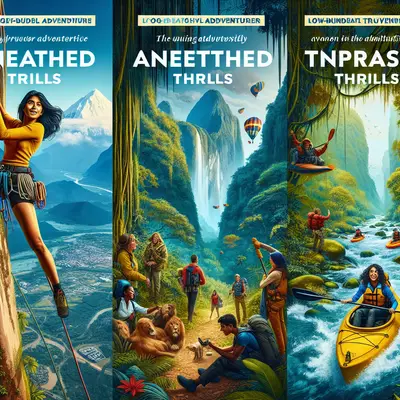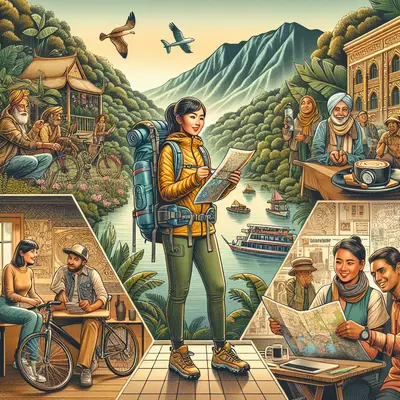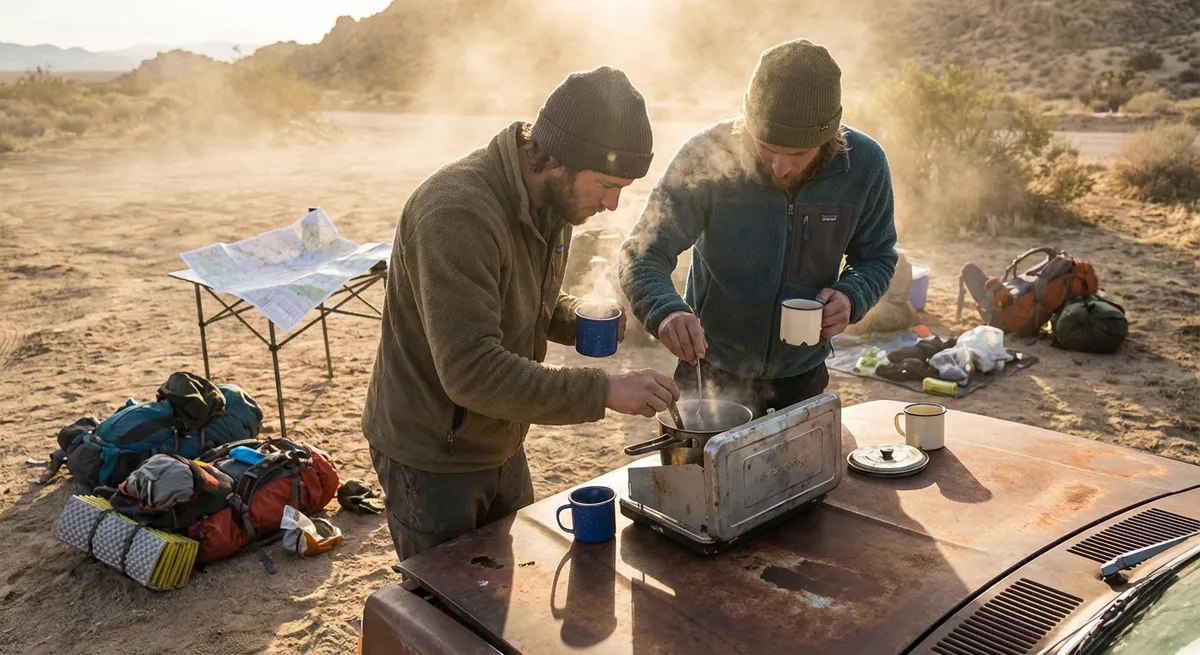
You don’t need a trust fund, a drone, or a $400 backpack to feel the planet tilt under your feet. You need curiosity, stubbornness, and the kind of budget that squeaks when you open your wallet. This is not about “affordable luxury” or “savvy points hacking.” This is about low-cost, high-voltage adventures that feel slightly illegal but absolutely aren’t.
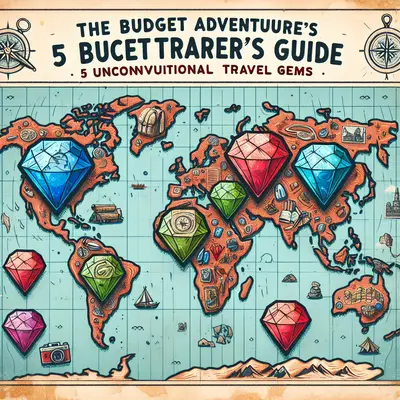
Below are five budget discoveries that prove you can travel like a misfit explorer without nuking your bank account. No infinity pools. No resort bracelets. Just raw, weird, unforgettable stories waiting to happen.
1. Sleeping Above the Tracks: Night Trains as Moving Micro-Adventures
Night trains are chaos-class comfort: noisy, cramped, and somehow still magical. You fall asleep in one reality and wake up in another, with just enough disorientation to feel like you respawned in a different timeline. Better yet, they’re often cheaper than a flight and a hostel bed combined.
In Europe, budget night routes like Berlin–Budapest or Vienna–Venice let you roll multiple countries into one bleary-eyed itinerary, especially if you snag a seat or couchette instead of a private cabin. In Southeast Asia, the Bangkok–Chiang Mai night train is practically a rite of passage: plastic food trays, flickering lights, and the slow reveal of jungle-green mountains at sunrise. Over in India, sleeper-class trains are their own ecosystem—chai wallahs, families with entire kitchens in steel tiffins, and strangers who will absolutely insist you eat their snacks.
The trick is to treat the train as both transport and activity. Bring your own food instead of buying overpriced meals onboard. Download offline maps and watch the tiny GPS dot drag itself across borders. Talk to people—night trains are social experiments on rails. You’re not just going from Point A to Point B; you’re collecting the stories in between.
2. Urban Wilderness: Free Rooftops, Riverfronts, and Midnight City Hikes
You don’t have to flee to the mountains to chase adventure; big cities hide their own feral corners if you’re willing to walk past the shiny parts. With the right pair of shoes and a tolerance for getting slightly lost, cities become zero-cost playgrounds.
Start with altitude. Many cities have free or cheap viewpoints that outclass the crowded observation decks. In Athens, you can hike up Filopappou Hill at sunset and watch the Acropolis light up without paying a ticket fee. In Hong Kong, skip the Peak Tram and hike the Morning Trail or Lugard Road for skyline views that look like a cyberpunk fever dream, completely free. Riverfronts are another hack: in places like Budapest or Porto, just walking the riverbanks at night feels like drifting through an open-air theater of lights, bridges, and buskers.
Then there’s the midnight urban hike—no tours, no tickets, just you mapping your own pilgrimage through neon, alleyways, and late-night bakeries. Hit open-air markets after closing to see how the city exhale looks. Duck into 24-hour cafes or noodle joints. Snap long-exposure shots on bridges. Cities at 2 a.m. feel like backstage passes to the places everyone else only sees on postcards.
3. The Volunteer Trade: Trading Sweat for Bed, Food, and Strange Skills
If your budget is microscopic but your willingness to work is massive, volunteer-for-room deals can stretch your travels from “long weekend” to “I live here now.” This isn’t about short performative voluntourism; it’s about exchanging real labor—garden work, reception help, painting murals, sorting books—for a place to sleep and sometimes meals.
In farm stays, you might end up learning how to plant by the moon phases, chase escaped goats, or cook with whatever actually grows in that climate instead of what the internet told you to eat. Hostels often trade a few hours of cleaning or check-in duty for bunk beds in prime locations. Artist residencies and community projects sometimes want people with niche skills: social media, woodworking, sewing, language teaching. Your random hobby might be actual currency.
The real budget magic is how volunteering changes your relationship to place. You’re not a guest breezing through; you’re part of the daily grind. You learn which bakery hides the best day-old bread, when the bus actually comes (not when the timetable lies to you), and which corner of the garden to sit in to hear the town gossip float over the fence. Yes, you’re saving money. But more importantly, you’re buying depth instead of speed.
4. Wild Swims and Secret Springs: Free Blue Spaces That Feel Illegal to Enter
If there’s water, there’s probably a zero-cost adventure lurking nearby. Lakes, rivers, hot springs, and random cold plunge spots can feel more luxurious than any resort pool precisely because they’re imperfect—too cold, a bit muddy, maybe slightly hard to find.
Across Europe, wild swimming culture is thriving. In the UK, rivers and lakes like the Lake District or parts of the River Wye attract swimmers searching for cold clarity and zero entry fees. In Slovenia, you can float in alpine lakes under peaks that look photoshopped. In Japan, some rural onsen towns still have low-cost or even community baths where you pay pocket change to soak in volcanic heat; they’re not always perfectly Instagrammable, but they’re real.
The hunt is part of the fun. Ask locals where they go “when it’s too hot” or “to clear their head,” not “where tourists swim.” Check satellite view on maps for turquoise stains along rivers or coves that don’t have obvious parking lots next to them. Go early or off-season and you might have the entire place to yourself. Just be obsessive about safety—no jumping into water you can’t see, respect posted signs, and learn the basic rules of wild swimming and thermal springs. You’re here to shock your system, not the rescue services.
5. Food Hunts: Eating Like You Lost a Bet With Your Comfort Zone
If your travel budget is tiny, reroute it from “sightseeing” to “eating weird things in cheap places.” Food stalls, markets, and no-frills local joints are where entire cultures compress themselves into a single mouthful—often for less than what you’d pay for a sad airport sandwich.
In Mexico City, a few coins get you tacos that have no business being that good, eaten standing on a cracked sidewalk while traffic screams past. In Vietnam, you can sit on a plastic stool the size of your dignity and inhale bowls of phở or bún chả that taste like they’ve been in R&D for centuries. In Istanbul, simit sellers, kebab stands, and tiny tea shops turn street corners into slow-motion flavor explosions for a couple of lira.
Your goal isn’t just cheap food; it’s weird-to-you food. Ask for the “special” or “what you eat here” instead of pointing to whatever looks least scary. Hunt for workers’ lunch spots, where menus are short, turnover is fast, and nobody has time to upsell you. Learn a few food words in the local language—“spicy,” “vegetarian,” “no nuts,” “recommended”—and watch doors (and kitchen windows) open. Each small, risky-looking meal becomes a micro-expedition into how people survive, celebrate, and comfort themselves without ever seeing a tasting menu.
Conclusion
Budget travel isn’t a consolation prize; it’s the raw, director’s-cut version of seeing the world. When you can’t pay to smooth out all the edges, you’re forced to notice the texture: the rattling night train window, the rooftop breeze, the dirt under your nails from volunteering, the shock of cold river water, the mystery stew a stranger swears is “the good stuff.”
If you’re willing to sleep above the tracks, hike through cities at midnight, trade labor for a mattress, dive into wild water, and gamble your tastebuds on unknown lunches, you’re already rich in the only currency that matters out there: stories. Pack light, spend less, and let the planet surprise you in all the ways money can’t buy.
Sources
- Seat61 – Worldwide Train Travel Guide – Detailed, up-to-date info on night trains and long-distance rail routes around the world, including prices and routes.
- Lonely Planet – Budget Travel Tips – Practical strategies for low-cost travel, covering transport, accommodation, and food.
- U.S. National Park Service – Water Safety – Guidelines and safety considerations for swimming in natural waters, applicable to wild swims.
- NHS UK – Open Water Swimming Advice – Health and safety tips for cold-water and open-water swimming.
- FAO – Street Foods – Background on global street food culture, safety considerations, and its role in local economies.
Key Takeaway
The most important thing to remember from this article is that this information can change how you think about Budget Adventures.