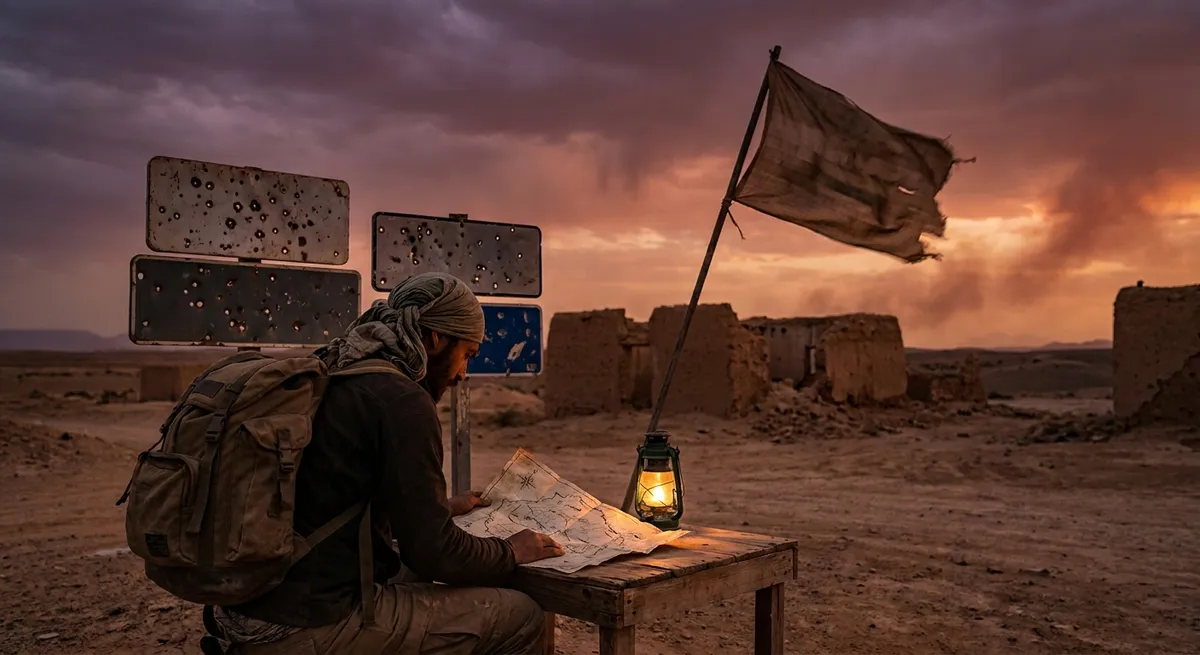
The world you think you know is the safe, padded demo version. Extreme travel starts when you step past the pop‑up windows, past the “Top 10” lists, and into the unlabelled stretches between. This isn’t about ticking off dangerous places for bragging rights—it’s about hunting the places where reality feels badly documented, half‑finished, or slightly illegal in spirit (if not in law). These are five travel discoveries that feel like stepping through a glitch in the global operating system—and then staying there on purpose.
The Sleepless Polar “Day” That Breaks Your Sense of Time
Midnight should be dark. Your brain knows this; your body depends on it. So the first time you walk out of a bar at 2:00 a.m. in the Arctic and it looks like late afternoon, your internal clock panics. This is the hook of polar travel during the Midnight Sun: not just the landscape, but the total collapse of your sense of when you’re supposed to be alive.
Head north of the Arctic Circle—Tromsø in Norway, Svalbard, northern Finland, or remote Arctic Canada—and the sun stops setting for weeks. Your hotel curtains will strain to keep the day out; your schedule dissolves. Hikes start at “whenever,” kayaking sessions sprint across glassy fjords at 11:30 p.m., and locals casually suggest “a quick mountain” after dinner. Night becomes a social construct you can choose to ignore.
The extreme part isn’t the cold or the wildlife—it’s the way your mind unhooks from time. Jet lag becomes a lifestyle. You wake up from a nap with no clue whether you overslept by 20 minutes or 20 hours. Productivity dies; experience wins. This is a trip for travelers who want their concept of a “day” wrecked and rebuilt, not just a few cute photos of snow and reindeer.
Lava, Ash, and Adrenaline: Chasing Earth While It Actively Misbehaves
Most landscapes are the aftermath of drama. Volcano travel is the drama in real time—and you’re standing disturbingly close to the stage. From the lava fields of Iceland to the ash‑coated slopes of Guatemala and Indonesia, volcano trekking is where extreme travel intersects with geological risk management and your questionable life choices.
On Stromboli in Italy, one of the world’s most persistently active volcanoes, you can climb a mountain that coughs fire into the night sky with unnerving regularity. In Guatemala, hikes up Acatenango give you a front‑row seat to Fuego’s eruptions, with glowing lava bursts visible from your campsite like some apocalyptic fireworks show. In Iceland, you can trek across still‑warm lava fields from relatively recent eruptions, the earth literally cooling under your boots.
The catch: responsible volcano travel is choreographed chaos. You’re moving in a space between “this is safe enough today” and “if the planet twitches weirdly, we’re sprinting downhill.” Local guides watch wind directions, gas emissions, seismic readings, and cloud patterns like their lives depend on it—because they do. You, meanwhile, learn to read tiny hints in the rock and sky, suddenly aware that the ground you’ve always treated as stable is, in the long run, just molten impatience with a crust.
If you want more than pretty mountain views—if you want to feel the planet’s heartbeat under your feet, accelerated and angry—this is your arena.
The Vertical World: Sleeping in Places Gravity Clearly Disapproves Of
Most travelers think “accommodation” means four walls and the suggestion of safety. Extreme travelers prefer nights where one wrong move equals “not ideal.” Vertical travel—via ferrata routes, cliff‑side bivouacs, portaledge camps, and glass‑floored skywalks—turns empty air into a key feature, not a background.
In the Alps and Dolomites, via ferrata routes take you along rock faces once reserved for elite climbers, now accessible to anyone willing to clip into fixed cables and trust their harness. The ground falls away into distant valleys; your path is steel rungs hammered into unforgiving rock. For those who want to truly offend gravity, portaledge camping on sheer cliffs—like in parts of Peru or Yosemite—lets you sleep on a hanging platform bolted to a wall, waking up to nothing but air below and sunrise exploding across an entire valley.
Even the “tamer” versions push comfort zones. Glass‑bottom bridges in China or skywalks like Toronto’s CN Tower EdgeWalk or Auckland’s SkyWalk let you lean out over a city like you’re testing the durability of your survival instinct. The thrill isn’t just height—it’s participation in your own risk. You’re choosing to be vulnerable in a way that hotel design normally works very hard to prevent.
Vertical travel is less about chasing fear and more about flirting with it: how high can you go before your instincts start screaming, and what happens when you keep going anyway?
Oceans After Dark: Bioluminescent Water and Black‑Zone Diving
The ocean is unsettling enough in daylight. At night, it becomes pure, unfiltered alien. Slip into a bioluminescent bay or a black‑water dive, and you’re not “snorkeling” or “swimming”—you’re drifting through a living, glowing data stream in near‑total darkness, hyper‑aware that you’re the only species here that can’t breathe underwater.
In bioluminescent bays like Mosquito Bay in Puerto Rico or certain coves in Costa Rica and the Maldives, microscopic organisms called dinoflagellates light up when disturbed. Every stroke of your hand or fin releases electric‑blue streaks that look more like code than water. Kayaks trail galaxies. Fish become comets. You’re basically trespassing in the ocean’s version of a secret rave.
Take it further with black‑water diving: drifting at night in deep water, often tethered to a boat, while strange pelagic creatures migrate vertically from the depths. Jellylike forms, transparent predators, things that look like props rejected from a sci‑fi movie—they rise slowly through the water column, and you’re floating among them with a flashlight and a very optimistic sense of confidence in your gear.
This isn’t about sharks or jump scares. It’s about being swallowed by darkness and realizing how narrow your normal experience of “ocean” actually is. The extreme part is psychological: the surrender of control in an environment where you are so obviously the least adapted thing around.
Abandoned Infrastructure: Trespassing in Humanity’s Half‑Deleted Projects
Some of the wildest “places” aren’t natural at all—they’re human experiments that got canceled halfway through. Failed ski resorts half‑reclaimed by forest, Cold War bunkers, ghost rail lines, derelict theme parks, dried‑up ports: abandoned infrastructure is the world’s patchwork of open‑world glitches. You’re walking through someone else’s big idea that didn’t make it.
Across Eastern Europe, rusting chairlifts sit frozen over now‑overgrown slopes; in Central Asia and the Caucasus, failed grand projects crumble gently while locals repurpose them for barbecues, graffiti, or impromptu soccer fields. In Japan, “haikyo” (urban ruins) dot the country—forgotten amusement parks, hotels, and mining towns slowly dissolving back into moss and silence. Elsewhere, obsolete military installations crouch in deserts, jungles, and coastlines, concrete shells with peeling paint and echoing corridors.
The danger here isn’t obvious and dramatic like a volcano—it’s subtle: unstable floors, hidden holes, bad air, loose metal. You need common sense, local knowledge, and a hard rule against going solo. But for travelers bored by sanitized heritage sites, these places feel raw and unscripted. There are no interpretive plaques, no cordoned‑off sections, no gift shops—just you, the past, and whatever wildlife moved in after the humans moved out.
Extreme travel in abandoned spaces is really an expedition into failed futures. You’re exploring what people thought the world would be, wandering through the ruins of plans that never quite synced with reality.
Conclusion
Extreme travel isn’t about collecting danger like Pokémon. It’s about deliberately stepping into environments that delete your usual settings—time zones, gravity, light, safety, infrastructure—and forcing your brain to improvise. Polar daylight that never ends. Volcanoes that actively edit the landscape beneath you. Nights spent bolted to cliffs or floating through radioactive‑blue water. Ghosts of projects humanity started and then quietly walked away from.
The common thread isn’t risk; it’s intensity. These are the kinds of journeys that don’t just shuffle your perspective—they jailbreak it. If regular travel feels like changing the wallpaper on your life, extreme travel is factory‑resetting the whole device and installing an experimental operating system.
If you’re done with curated experiences and ready to negotiate directly with the raw version of Earth, the edges of the map are still wide open. Bring curiosity, humility, and a healthy respect for the fact that, out there, you’re not the main character—you’re barely even a bug in the system. And that’s exactly the point.
Sources
- Visit Norway – The Midnight Sun - Overview of where and when to experience the Midnight Sun above the Arctic Circle
- U.S. Geological Survey (USGS) – Volcano Hazards Program - Authoritative information on volcanic activity, monitoring, and safety considerations
- UNESCO World Heritage Centre – Vulcanic Landscapes (e.g., Aeolian Islands) - Background on volcanic regions recognized for their geological significance
- National Ocean Service (NOAA) – What is bioluminescence? - Scientific explanation of bioluminescent organisms and where they occur
- Atlas Obscura – Guide to Abandoned Places - Curated collection of notable abandoned and derelict sites around the world
Key Takeaway
The most important thing to remember from this article is that this information can change how you think about Extreme Travel.