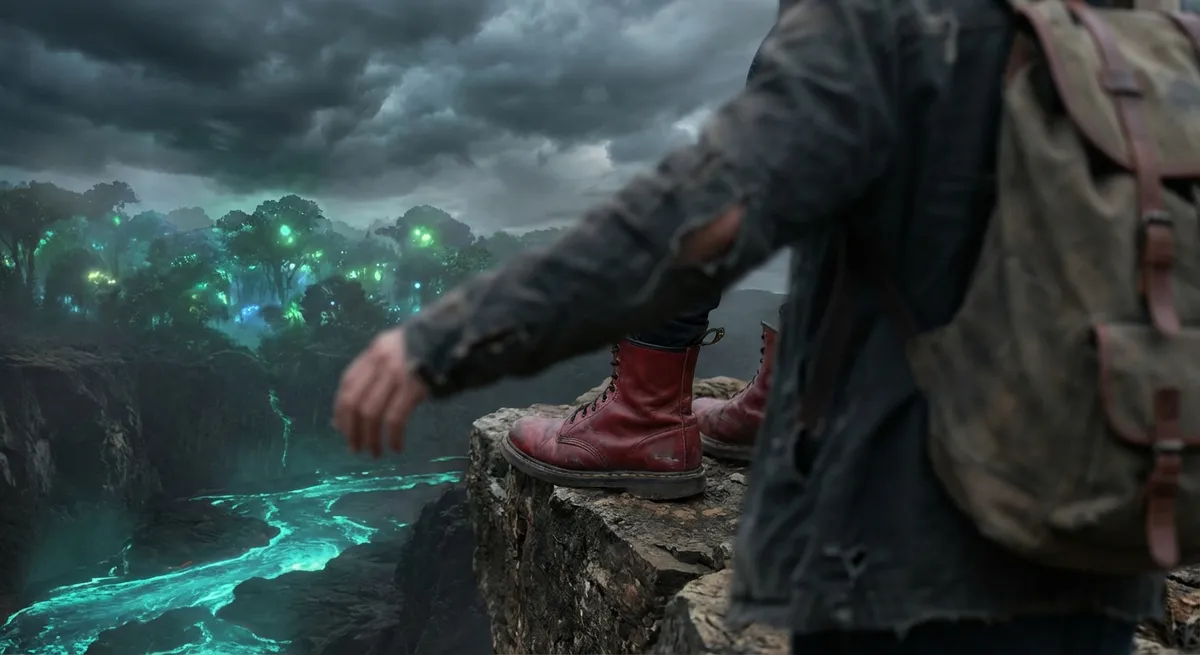
There’s ordinary travel—buffet breakfasts, laminated maps, and a polite 10,000 steps on your fitness tracker. Then there’s the other thing: the kind where you lose phone signal, your heart rate spikes for non-medical reasons, and you come home with stories your insurance company never needs to hear. This is for the second group. These are not “hidden gems” or “top 10 must-sees.” They’re five discoveries that feel like the planet whispering, “Are you brave enough to show up?”
1. Sleeping on a Glacier That’s Actively Moving
Most people visit glaciers, take a photo, and retreat to a heated lodge to post about climate change. You? You can actually sleep on the ice that’s sliding very slowly toward the sea.
In places like Iceland’s Vatnajökull area and Alaska’s glacier country, multi-day expeditions let you haul a sled, strap on crampons, and trek across crevasse-streaked frozen rivers before camping right on top of them. The ground beneath you groans, cracks, and shifts through the night, reminding you this “solid” planet is kind of a lie. Guides teach you self-arrest techniques (how to stop your body from sliding into a crevasse), roped-team travel, and how to read the glacier’s mood by its sounds.
Is it cold? Obviously. Is it dangerous? Managed risk, yes—glaciers are riddled with hidden holes, fast drainage channels, and unstable ice bridges. But you go with professional guides, obey every shouted instruction, and suddenly you’re boiling snow for coffee while the first pink light hits a frozen world that looks pre-human, or maybe post-human. It’s the closest thing to walking on another planet without leaving Earth.
2. Volcano Proximity That Feels Slightly Reckless
Volcano tourism gets a bad rep when people forget that lava does not care about your Instagram. But if you respect the science, follow local regulations, and choose reputable operators, active and recently active volcanoes deliver the kind of adrenaline that makes roller coasters feel like mall rides.
Think of Indonesia’s Mount Bromo at dawn: you’re standing on a rim, sulfur slicing into your lungs, while the crater exhales smoke like the planet chain-smoking. Or Stromboli in Italy, nicknamed the “Lighthouse of the Mediterranean,” where regular eruptions fling glowing ejecta into the dark. In Vanuatu’s Mount Yasur, controlled visits take you close enough to see magma fireworks—but never close enough that you’re improvising your own evacuation route.
The reality-check part: volcanoes are heavily monitored, and hazard levels change. Seismic activity, gas output, and eruptive patterns are tracked by observatories and geological agencies. As an extreme traveler, your job is to listen to those agencies, not try to be more hardcore than molten rock. The thrill lies in feeling deep time under your feet, standing near a hole where the interior of the Earth casually rises to the surface and reminds you who’s boss.
3. Chasing the World’s Most Remote Hot Springs
Forget the spa with pan flutes and cucumber water. The true hot spring flex is emerging from a freezing river canyon or alpine valley, stripping down in a chilly wind, and sliding into a steaming pool that took you hours—or days—to reach.
Remote geothermal pools are scattered across tectonically active regions: Iceland’s hidden rivers, New Zealand’s backcountry springs, Japan’s wild onsen, the U.S. and Canada’s off-grid soaks. The catch? The good ones usually demand a sacrifice: a brutal hike, a sketchy dirt road, or a multi-day pack-in. Sometimes you’re soaking under a sky so dark the Milky Way looks fake. Sometimes a blizzard rages around you while your body floats at 40°C.
The extreme angle isn’t about danger so much as commitment and judgment. Wild hot springs can carry bacteria, have unstable banks, or sit beside scalding vents disguised as puddles. Water temperatures can exceed safe soaking range, rivers can flood without warning, and some areas are culturally sensitive or sacred. The reward, if you do your research and tread with respect, is pure time-warp: your tired body in a volcanic bathtub, steam curling into the sky, while you realize you’ve never actually been relaxed before—just less stressed.
4. Learning to Read a Desert Before It Eats You
Deserts look empty, but that’s just the mirage. They’re full of traps: heat stroke, disorientation, flash floods, sandstorms, and the little voice that tells you, “It’s probably that way.” It’s usually not.
Extreme travelers are rediscovering deserts not as punishment zones, but as living laboratories where you learn to operate with minimal margin for error. That might mean crossing part of the Namib or Atacama with experienced guides, joining a Sahara caravan-style trek, or navigating U.S. Southwest canyons where the rock walls keep secrets and cell service goes to zero. Your pack becomes your lifeline: water strategy, sun management, route-finding, and emergency planning are non-negotiable.
The point isn’t to cosplay survivalist. It’s to develop a different kind of literacy: reading the angle of light, the texture of sand underfoot, the shape of clouds hinting at storms, the plants that appear only near hidden water. You start to understand why so many cultures see deserts as spiritual initiations—the landscape strips away distraction, leaving only choices, consequences, and the drumbeat of your own heart.
5. Rivers That Don’t Care You Can Swim
People underestimate rivers. Lakes are passive. Oceans are big and obvious. Rivers are sneaky—fast, constricted, and engineered by gravity to accelerate exactly where you least want them to.
The extreme tier of river travel isn’t just “go rafting.” It’s committing to long, multi-day runs through remote canyons or jungle corridors where the only way out is downriver. Whitewater in places like the Zambezi, the Futaleufú, or the Grand Canyon combines complex hydraulics—holes, standing waves, sieves, undercuts—with the psychological load of no easy escape. Your raft flips, and you don’t just get “wet”; you get held under, spun, maybe separated from your boat.
With qualified expedition leaders, rescue gear, and proper training, you transform that risk into a controlled dose of terror and triumph. You learn to read current lines, hear the difference between smooth flow and trouble, trust throw bags and teammates, and accept that sometimes the river wins a round. At night, campfires flicker against canyon walls, stars crowd the sky, and the roar of tomorrow’s rapids hums just downstream. It’s not a ride; it’s a moving world that lets you pass—if you respect it.
Conclusion
Extreme travel isn’t about trying to die in a creative way. It’s about showing up in environments where the planet is very obviously alive—and could not care less about your plans. Moving glaciers, breathing volcanoes, boiling springs, deceptive deserts, and ruthless rivers all deliver the same message: you are small, your gear is temporary, and your arrogance is negotiable.
What you get in return is a recalibrated sense of risk, awe, and scale. You bring home more than photos: glacier rope skills, desert navigation instincts, a new respect for river hydraulics, and an understanding that “safety” is something you build with knowledge, not something sold in a package. If your comfort zone has started to feel like a cage, the edges of the map are wide open—they’re just not interested in holding your hand.
Sources
- National Park Service – Glacier Safety - Overview of the hazards and safe practices when traveling on or near glaciers
- United States Geological Survey – Volcano Hazards Program - Current research and monitoring information about volcano risks and safety
- Centers for Disease Control and Prevention – Natural Hot Springs - Health and safety considerations for bathing in wild and developed hot springs
- National Park Service – Desert Hiking Tips - Guidance on staying safe and prepared in desert environments
- American Whitewater – Safety Code - Best practices and risk management principles for river running and whitewater travel
Key Takeaway
The most important thing to remember from this article is that this information can change how you think about Extreme Travel.