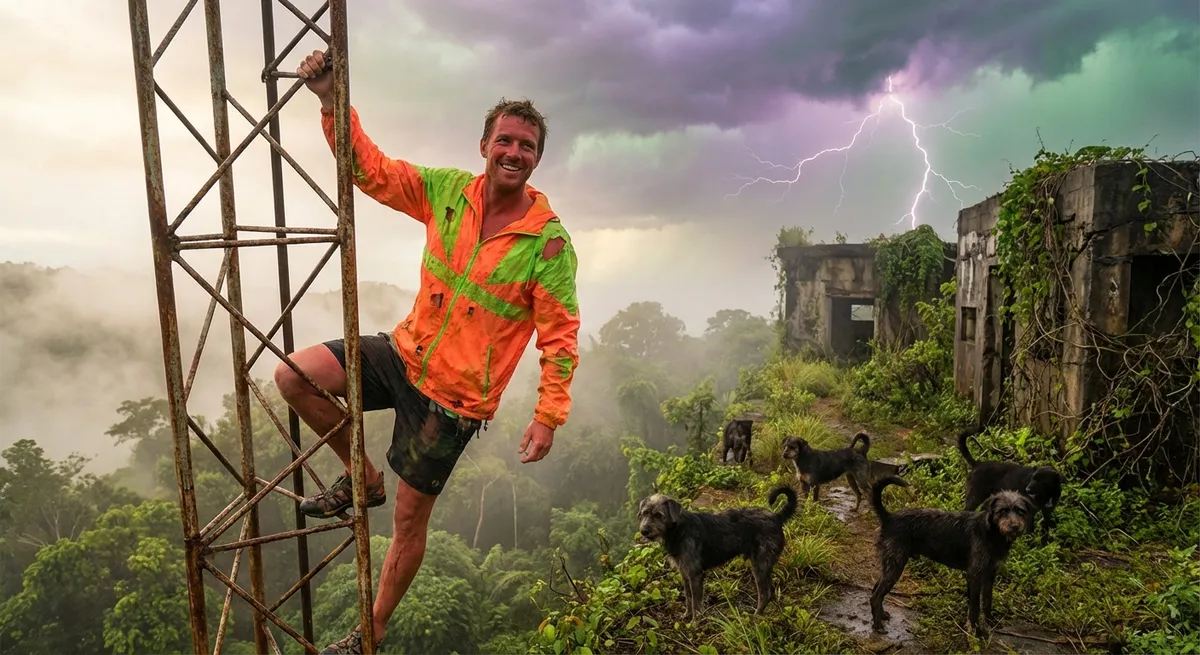
There’s travel, and then there’s the kind of trip you cannot summarize on a postcard without causing a minor workplace incident. Extreme travel isn’t just about jumping off things with a GoPro; it’s about putting your body, sense of comfort, and sometimes your sanity on the edge—and finding out what’s left when the scenery stops being friendly. This is your permission slip to chase the feral corners of the planet where comfort dies and stories are born.
Below are five discoveries for travelers who are bored of “epic views” and want landscapes that feel like they’re actively arguing with human existence.
Ice Labyrinths Beneath a Volcano: Inside Iceland’s Subglacial Worlds
Iceland markets itself with waterfalls and northern lights, but the real chaos is happening under your feet. In winter, the country’s glaciers hollow out into blue tunnels, meltwater rivers, and ice caves that look like someone set the saturation slider to “unbelievable.” Some of the wildest routes start at the base of Vatnajökull and Mýrdalsjökull—glaciers that politely sit on top of active volcanoes, because apparently that’s normal here.
Guides cut and recut routes every season because the cave systems literally melt and reform, meaning the path that existed last year might now be a vertical drop or a rushing underground river. You’ll creep through corridors that groan and pop, with headlamps bouncing off translucent walls that seem ready to swallow light. Claustrophobia? Excellent. Heightened survival instinct? Even better.
Safety here isn’t optional. Caves can collapse, hidden crevasses can swallow you, and surface conditions can flip from “Instagram dream” to “nope” in minutes. You go with glacier guides who live and breathe risk assessment, strap on crampons, and treat the landscape like it’s a sleeping dragon. The payoff: standing inside a living ice organism that’s slowly dragging itself toward the sea, knowing half the shapes you’re seeing will never exist again.
Desert Seas and Ghost Waves: Crossing the Empty Quarter’s Shifting Dunes
The Rub’ al Khali—“Empty Quarter”—is so vast it makes other deserts feel like sandboxes. Spanning Saudi Arabia, Oman, the UAE, and Yemen, it’s a rolling ocean of dunes that move, reshape, and erase human attempts to leave a mark. This isn’t a place to “take a stroll.” This is where you discover how loud silence can get before your brain starts inventing company.
Extreme travelers come here not just for off-road dune bashing, but for multi-day crossings: 4x4 expeditions, sandboarding descents down 200-meter dunes, and nights under star fields that look like the Milky Way finally turned its brightness up to 100%. Your landmarks are ridgelines, wind patterns, and the occasional skeleton of a tough-but-not-tough-enough creature that miscalculated.
Going deep into the Empty Quarter means relearning navigation. GPS helps, but sandstorms can bury tracks in minutes and distort the horizon. You adapt to the idea that your water and fuel are your lifelines; misjudge either and the desert is utterly indifferent to your drama. Heat can flirt with 50°C (122°F), so your gear list pivots around survival: solar chargers, satellite phones, shade rigs, and the best sand-proof goggles you can find.
At night you might hear the dunes sing—real, low-frequency booming caused by sand grains sliding in sync. It feels like the landscape is humming to itself, unconcerned that you’re a temporary intruder. It’s not friendly. That’s the point.
Vertical Jungles: Climbing the Tepuis of the Lost World
In the borderlands of Venezuela, Brazil, and Guyana, massive tabletop mountains—tepuis—tear themselves out of the rainforest like someone forgot to finish a video game render. These are some of the oldest geological formations on Earth, isolated plateaus that created their own micro-worlds of plants, animals, and weather systems. From below, they look unclimbable. From above, they look unearthly.
The extreme draw is getting to, and then up, these vertical jungles. Think multi-day treks through sodden rainforest, river crossings where your boots fill with brown water, and then serious ascents—with ropes, harnesses, and guides who know which routes aren’t suicide missions. Mount Roraima is the most “accessible” of the bunch, and even that feels like someone mixed hiking with a long, wet obstacle course.
On top, things get stranger. The plateau is often shrouded in cloud, with rock formations that resemble broken fortresses and pools that look like other planets. Carnivorous plants, strange endemic species, and sudden weather shifts make the summit feel like a wild laboratory. You camp in rock overhangs to avoid the worst of the wind and rain, then wake to an edge-of-the-world panorama when the clouds finally rip open.
This is not polished adventure tourism. Logistics can be complicated, local conditions can change rapidly, and political and safety situations in the region must be taken seriously. But if “lost world” is more than a movie phrase to you, this is where that fantasy puts on a harness and becomes real.
Storm-Chasing as a Sport: Running Toward the Sky’s Worst Decisions
Most travelers avoid bad weather; storm chasers buy plane tickets for it. Every spring on the Great Plains of the United States, the atmosphere flips into experiment mode and starts stitching together supercell thunderstorms—towering rotating monsters that can produce tornadoes, hail the size of golf balls, and lightning that slashes across the sky like it’s trying to cut it open.
Extreme travelers have begun treating storm chasing as a seasonal pilgrimage. You join professional tours or arrange spots with veteran chasers who read radar maps like sheet music. Your days revolve around atmospheric models, dew points, and last-minute car sprints to get in the storm’s “bear cage”—close enough to see structure, far enough to not die. In return you get horizons stacked with anvil clouds, ominous green skies, and occasionally a tornado carving a trench across the plains in absolute, terrifying silence.
This is adventure with a sharp edge of science. You’ll learn to interpret velocity scans, watch drylines sharpen, and feel the temperature drop as the storm’s outflow hits. You’re moving constantly, fueling up at small-town gas stations while the sky tries to decide if today is the day it eats a grain silo.
Storm chasing is inherently risky, but the professional scene is also highly safety-conscious. You stay out of the core, avoid flooded roads, respect lightning, and always leave an escape route. The adrenaline is real—but so is the humility. There’s nothing like watching the sky assemble a rotating wall of cloud to remind you that Earth does not run on human comfort levels.
Fear-Level Altitude: Sleeping in Cliff-Hanging Pods
Climbing a mountain is one thing. Choosing to sleep halfway up its face in a glass or fabric pod bolted or suspended from the rock is a different personality trait entirely. Portaledge camps and cliff-perched capsules are popping up in high-exposure locations—think the Sacred Valley in Peru or the rugged cliffs of the European Alps—blurring the line between extreme sport and boutique insomnia.
Reaching your “room” is half the test: via ferrata routes with metal rungs and steel cables, technical climbs, or wind-battered hikes that end at a vertical drop. Once clipped in, you access a capsule that hangs like an insect egg from the rock, often with a transparent or semi-transparent wall giving you a front-row view of a several-hundred-meter freefall.
There’s nowhere to run from your own nervous system. The pod creaks softly, the wind pushes against the structure, and every movement feels exaggerated by the abyss beneath you. You cook simple meals, zip your sleeping bag up a little too high, and wonder why gravity suddenly feels like a personality. If you’re afraid of heights, this is not “therapy.” This is exposure therapy with receipts.
Yet dawn from a hanging camp is almost hallucinatory: the first light spilling across valley floors, clouds drifting below you instead of above, and the realization that you willingly paid to clip a bed to a vertical void. It’s one of the most distilled versions of extreme travel: comfort violently minimized, perspective violently expanded.
Conclusion
Extreme travel isn’t about macho points or passport flexing. It’s about stepping into places where your usual tricks—complaining, refreshing an app, ordering a latte—stop working. Glacial underworlds, shifting dune oceans, isolated sky-islands, weaponized weather, and cliff-slung beds all operate on rules that don’t care if you understand them.
If your idea of a vacation is coming home slightly feral, with sand in your teeth, ice bruises on your shins, altitude still in your lungs, and a fresh, humbled respect for physics and weather, the planet is ready to oblige. Just remember: adventure doesn’t owe you comfort; it owes you honesty.
Sources
- Icelandic Tourist Board – Safety in Iceland’s Nature - Official guidance on hazards and safety in Iceland’s extreme landscapes, including glaciers and caves
- National Park Service – Desert Hiking Tips - Practical information on surviving and traveling safely in extreme desert environments
- NASA Earth Observatory – Tepui: Tabletop Mountains of South America - Background on the geology and ecology of tepuis in the Guiana Highlands
- NOAA National Severe Storms Laboratory – Severe Weather 101 - Scientific overview of tornadoes, supercells, and severe storms relevant to storm-chasing travel
- UIAA – International Climbing and Mountaineering Federation Safety Resources - Standards and safety information for climbing and exposure-heavy adventures like cliffside overnights
Key Takeaway
The most important thing to remember from this article is that this information can change how you think about Extreme Travel.