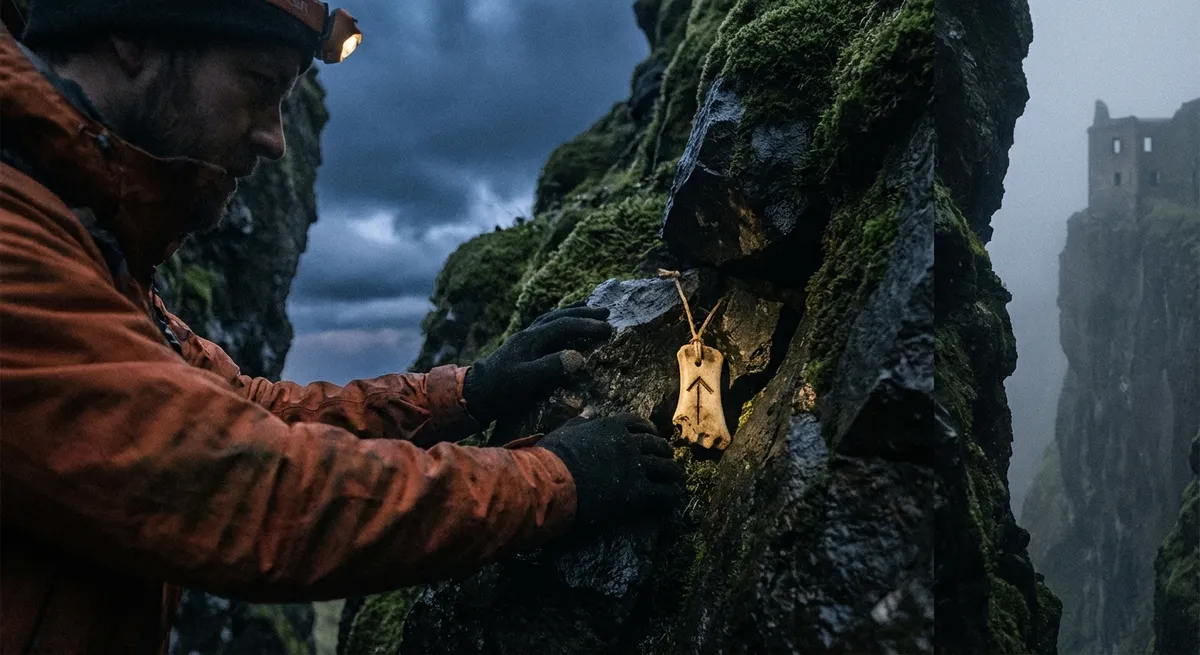
You’ve done the full-moon parties, the “secret” viewpoints that are now TikTok choreography backdrops, and that one canyon everybody geotags to death. Time to graduate. This is a field manual for the travelers who’d rather rip up the brochure than follow it—five extreme-ish journeys where logistics are half the story and comfort is something that happens to other people.
This isn’t a bucket list. It’s a permission slip to go where the map gets blurry, the Wi‑Fi dies, and your sense of self-importance shrinks next to actual geography.
1. Sleeping on Moving Ice: Life Aboard an Arctic Expedition Ship (Svalbard, Norway)
You don’t “visit” Svalbard; you trespass on the edge of a planet that mostly doesn’t care you exist.
An expedition ship pushing through pack ice around Svalbard feels less like a cruise and more like you’ve hijacked a research vessel. The world shrinks to steel hull, polar air, and the crunch of ice beneath you. Days blur into 2 a.m. sunlight and 4 p.m. snow squalls, and the horizon is just…white. A lot of white.
Zodiac landings slam you into reality: walruses stacked like blubbery boulders on a beach, polar bear tracks ghosting over snow, glaciers calving in slow-motion violence. There are no palm-tree cocktails—just survival suits, safety briefings, and a quiet realization that if the engine stopped, you’d be a floating dot in a very hostile emptiness.
What makes it extreme isn’t just the latitude; it’s how the rules reset. Distances mean nothing when ice floes block your route. Plans become “possibilities.” You might stalk the pack ice searching for bears, or you might sit in dense fog listening to the ship’s horn moan into nothing. You aren’t in control. The Arctic is.
This is travel for people who want to feel small on purpose.
2. Riding the Roof of the World: High-Altitude Roads in Ladakh, India
Ladakh doesn’t politely welcome you; it shoves you up to 5,000 meters and dares your lungs to keep up.
The roads here are carved into cliff faces like someone took a butter knife to the Himalayas and called it infrastructure. Every hairpin bend comes with a polite reminder from a roadside sign: “Speed is a knife that cuts life.” No kidding.
The real hit isn’t the danger; it’s the altitude-induced clarity. Past Leh, you’re driving through a stone-and-sky cathedral: monasteries clinging to spines of rock, rivers that look photoshopped, military outposts that feel like the edge of a board game. Prayer flags snap in the wind at passes like Khardung La or Chang La, and your head throbs in time with your heartbeat.
You learn to move slowly and drink water like it’s a religion. You realize your expensive fitness tracker doesn’t matter if your red blood cells haven’t gotten the memo. Yet somewhere between the thin air and the thin margin of error, you unlock a strange calm: nothing is guaranteed, so every clear day, every open road, feels like stolen property.
This isn’t a scenic drive. It’s a slow-motion negotiation with gravity, oxygen, and your own risk tolerance.
3. Volcano Nights: Chasing Lava Glow on the Pacific Ring of Fire (Guatemala)
Guatemala’s volcanic spine is where the planet forgets to seal its seams—and you can hike straight into the glitch.
Above Antigua, volcanoes like Acatenango and Fuego turn the horizon into a live-action geology documentary. The “it can’t be that wild” illusion dies the first time you watch Fuego cough fire into the night, an orange fountain punching through the dark while you stand wrapped in every warm layer you own, pretending your adrenaline spike is just “excitement.”
The trail up Acatenango isn’t technically complex; it’s the slow burn that breaks people. Altitude, ash, and steep dirt that slides backward with every step. Porters stride past in jeans and sneakers while you reconsider all your life choices and half your packing list.
At camp, the world drops away. Cities, emails, and whatever drama you left behind contract into a single task: stay warm and watch the sky explode. Every eruption rolls across the mountains like a distant war drum, and you realize that for all our tech, we still live on a crust of rock over a very angry interior.
Here, “viewpoint” means accepting that the thing you’re admiring could, in theory, eat you.
4. Into the Wet Silence: Packrafting Through Arctic Tundra (Alaska)
The Arctic tundra looks flat and harmless from a plane. Then you land, and it’s frogspawn ponds, lumpy moss, and endless sky—a waterlogged maze that laughs at the idea of “trails.”
Packrafting drops you into this mess with a glorified inflatable bathtub, a dry bag, and the sense that you maybe didn’t read the waiver carefully enough. You hike until your feet hate you, blow up the boat, and float down braided rivers that barely register on most maps. There are no trail markers, no campsites, and definitely no snack kiosks—just caribou tracks, bear prints, and migratory birds that seem confused you’re even here.
The days stretch weirdly; the sun barely sets, so time becomes a loose suggestion. You measure progress in river bends and rehydrated meals. When the wind dies, the silence lands heavy. No engines. No distant highways. Just your paddle strokes and the occasional splash of something you hope is a fish.
The extremity here isn’t cliffs or exposure—it’s isolation. If you pop your boat or twist an ankle, rescue is measured in hours or days, not minutes. That risk slices away the mental noise. Every choice matters. Every safe camp spot you find feels like you hacked the level.
Unplugged is cute. Unreachable is something else entirely.
5. Sand, Salt, and Stars: Hyper-Remote Nights in the Empty Quarter (Saudi Arabia / Oman)
The Rub’ al Khali—the Empty Quarter—is what happens when the Earth goes minimalist: sand, sky, and not much enthusiasm for human life.
Driving into it feels like a sci-fi establishing shot. Dunes rise like frozen waves, highways gradually vanish, and tire tracks thin out until it’s just your vehicle and an ocean of sand that could swallow it whole. Temperatures swing from “oven with anger issues” by day to bone-deep chill at night. Shade is a fantasy. Water is a calculation, not a comfort.
You don’t really walk here; you trudge. Dunes collapse under your feet, and distances warp. That ridge you’ve been aiming for? Two hours away. Minimum. GPS is useful but not invincible when the landscape shapeshifts with every windstorm, and the only landmarks are dunes that will not remember you tomorrow.
Then night hits, and the whole equation changes. The sky detonates with stars so bright they cast faint shadows. Satellites drift overhead. The Milky Way looks indecently obvious. Conversations shrink to whispers, not because anyone is listening, but because the silence is so absolute it feels wrong to punch holes in it.
In a world obsessed with productivity, the Empty Quarter is luxurious waste: a giant, beautiful space that does nothing but exist—and invites you to do the same.
Conclusion
Extreme travel isn’t about collecting scars or flexing on social media. It’s about climbing into environments that could delete you without a second thought—and choosing to go anyway, eyes wide open.
Whether you’re drifting past polar bears on shifting ice, coaxing a motorbike along Himalayan cliffs, or watching lava pulse against the night, the constant is the same: the world is rougher, wilder, and far more indifferent than your feed suggests. That’s not a bug. That’s the feature.
If these five places tug at you, pay attention. The planet still has corners that don’t care about your itinerary—but they might just rewrite everything you thought you wanted from a trip.
Sources
- Visit Svalbard – Practical Information – Official tourism site covering logistics, safety, and climate for Svalbard and Arctic expeditions
- Government of India – Ladakh Tourism Information – Background on the region, altitude conditions, and access routes in Ladakh
- Smithsonian Magazine – The Volcanoes of Guatemala – Overview of Guatemala’s volcanic activity and notable volcanoes near Antigua
- U.S. National Park Service – Arctic Rivers & Packrafting Safety – Guidance on packrafting, river hazards, and backcountry risks in Arctic Alaska
- Saudi Tourism Authority – The Empty Quarter – Official information on Rub’ al Khali, including geography, climate, and travel considerations
Key Takeaway
The most important thing to remember from this article is that this information can change how you think about Extreme Travel.