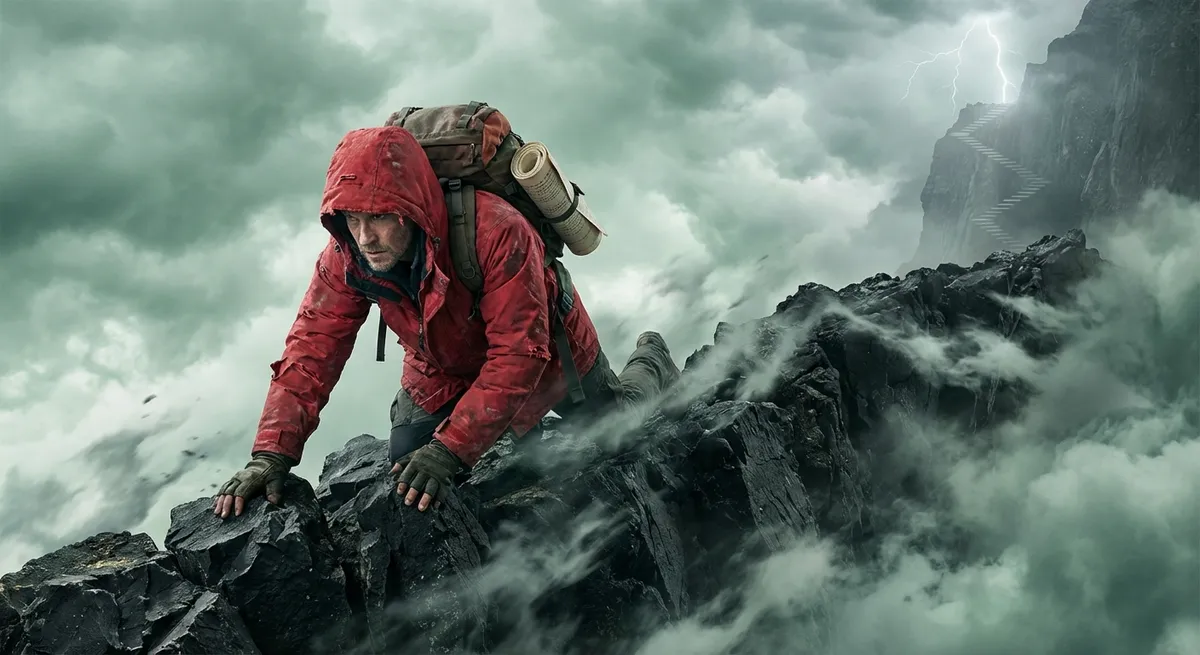
There are trips you book, and trips that ambush you halfway through your search history. This is the second kind. Forget beach loungers and skyline cocktails—these five discoveries are for people who read “not recommended” as “challenge accepted” and think “seasonal closure” sounds like a scheduling puzzle, not a deal-breaker.
Pack curiosity, minor recklessness, and a backup plan your mom never needs to hear about. Let’s go where the brochure ends.
Riding the Skeleton Coast’s Empty Earth (Namibia)
Namibia’s Skeleton Coast looks like someone took the idea of a beach, deleted the fun, and left only the apocalypse. That’s the appeal.
This stretch of Atlantic shoreline is a collision zone: roaring ocean, roaring desert, and a graveyard of shipwrecks scattered like dropped matchsticks. The Himba once called it “The Land God Made in Anger.” You will call it “the place my camera cried.”
Extreme travel here isn’t just about reaching the coast—it’s about how. Go low and slow in a tiny Cessna, skimming fog banks and rusted hulls. Trade asphalt for 4x4-only tracks where the “road” is a suggestion in the sand. Or, if you really like suffering in style, sign onto a multi-day overland expedition where your shower is a wet wipe and your nightlight is the Milky Way.
The danger isn’t drama-level deadly—it’s logistical. Fuel, fog, tire-shredding rocks, and the very real possibility that if something breaks, it stays broken for a while. This is a place that punishes poor planning and rewards respectful stubbornness. You don’t conquer the Skeleton Coast; you negotiate temporary access.
Volcano Wake-Up Calls on Vanuatu’s Fiery Islands
On Vanuatu’s Tanna Island, the earth doesn’t just sit there politely—it snarls. Mount Yasur is one of the world’s most easily accessible active volcanoes, which is a polite way of saying: yes, you can stand terrifyingly close to a lava-spewing crater if you’re willing to sign your comfort away.
Reaching the crater rim feels like walking onto another planet. Ash crunches under your boots. Sulfur stalks your sinuses. The air thrums like a distant drum line. And then it happens: the gut-punch boom of an eruption, lava bombs hurled skyward, molten rock painting the dark in violent orange.
Extreme travel here isn’t bungee-jump quick; it’s slow-burn adrenaline. You’ll ride in the back of a truck through jungle track, climb the final ash slope on foot, then watch the light go down and the lava go up. You measure time not in minutes but in eruptions.
Conditions matter. Activity levels change, weather flips, safety perimeters shift. Listen obsessively to local guides; they know when the volcano is just putting on a show and when it’s in a mood. This is the kind of experience that resets your risk tolerance—and your definition of “front-row seat.”
Ice-Locked Silence on a Frozen Lake Crossing (Mongolia’s Khuvsgul)
Most travelers chase blue water in liquid form. Northern Mongolia offers it as a solid, load-bearing dare.
Lake Khuvsgul—often called Mongolia’s “younger sister” to Siberia’s Lake Baikal—freezes into a glassy highway in winter, thick enough for vehicles, brave cyclists, and hikers who like their tranquility with a side of potential hypothermia. Beneath the ice: one of the planet’s deepest lakes. Above it: you, in a wind that does not care what you did in your last life.
The extreme isn’t fast-paced; it’s endurance-based. Temperatures can knife their way down to -30°C (-22°F) or lower. Your breath crystallizes on your scarf. The ice sings—cracks and echoes like underwater thunder—and your brain politely asks if this was a bad idea. Then the sunset hits the mountains, the ice turns shades of electric blue, and you get your answer.
Travel here means trusting physics (ice thickness), respecting weather windows, and layering like your survival depends on it—because it does. You’ll cross paths with herders on horseback, sturdy Russian vans trundling over frozen waves, and maybe the occasional fellow traveler questioning every life choice that led to this moment.
You’re not just visiting a place; you’re stepping onto a temporary world that melts out of existence every year.
Stairway to Nothing: High-Altitude Isolation in the Cordillera Blanca (Peru)
The Peruvian Andes have plenty of well-trodden treks. This is not about those.
In the Cordillera Blanca, altitude doesn’t politely tap you on the shoulder; it shuts off the oxygen and asks what you’re really doing with your life. Glaciated peaks punch past 6,000 meters, turquoise lakes sit in glacial bowls like spilled paint, and the word “trail” sometimes means “the faintest of intentions across scree.”
Pick a remote multi-day route—think sections of the Huayhuash circuit or lesser-known spurs off the Santa Cruz trek—and commit. Expect altitudes that punish the unacclimatized, river crossings that don’t match the cute blue line on your map, and nights so clear you can see galaxies you never applied for.
This kind of extreme travel is a contract: your legs in exchange for access to empty valleys and amphitheaters of ice. You’ll share space with grazing llamas, distant avalanche rumbles, and a sky that feels a little too close. Altitude sickness isn’t a plot twist; it’s a risk you actively manage with slow ascents, rest days, and a ruthless willingness to turn back.
No crowds, no souvenir stands, no easy exits. Just you, thin air, and mountains that couldn’t care less you showed up.
The Desert That Moves Faster Than You: Chasing Dust Devils in the Empty Quarter
The Rub’ al Khali—“Empty Quarter”—is the kind of name that should deter you and absolutely won’t. Sprawling across parts of Saudi Arabia, Oman, the UAE, and Yemen, this is one of the largest continuous sand deserts on Earth—an ocean of dunes that swallows roads, plans, and your sense of direction if you’re careless.
Extreme travelers come here not to tick a box but to submit to scale. Sand dunes rise like liquid architecture, reshaped daily by wind. The heat can feel weaponized; summer temperatures regularly push into the 40s°C (100s°F). At night, the temperature plummets and the stars arrive in unreasonable quantities.
The “discovery” here is movement. Nothing stays put: dunes migrate, tracks vanish, wind carves fresh patterns in hours. Advanced trips might involve multi-day 4x4 expeditions, sandboarding descents that end in your boots filling with half a dune, and camping far enough from any settlement that silence becomes a physical thing.
This is not a solo playground. You navigate with experienced desert drivers, obsessive water planning, redundant GPS, and a very healthy fear of getting comfortable. The reward: a rare feeling that the horizon is legitimately infinite—and that you are very, very small.
Conclusion
Extreme travel isn’t about chasing danger for bragging rights; it’s about flirting with the edges of what feels sensible, then stepping one inch over the line with intention. Skeleton coasts, lava lungs, frozen lakes, altitude headaches, and deserts that move under your feet—they’re all just different dialects of the same language: “Are you awake yet?”
If you go, go prepared. Take guides seriously, logistics obsessively, and your own limits honestly. The world’s edges are still out there. They’re not waiting for you—but they won’t stop you from showing up, either.
Sources
- Namibia Tourism Board – Skeleton Coast National Park - Official overview of the Skeleton Coast’s environment, access, and regulations
- Smithsonian Magazine – Vanuatu’s Mount Yasur Volcano - Firsthand account and background on visiting Mount Yasur, one of the world’s most accessible active volcanoes
- Mongolian Ministry of Environment and Tourism – Khuvsgul Lake - Government information on Lake Khuvsgul, its climate, and seasonal conditions
- Peru Travel (Official) – Cordillera Blanca & Huascarán National Park - Official details on the Cordillera Blanca region, trekking, and altitude considerations
- [UNESCO World Heritage Centre – Empty Quarter (Cultural Sites in Oman)]https://whc.unesco.org/en/list/1010/ - Context on the Rub’ al Khali region’s geography and cultural significance
Key Takeaway
The most important thing to remember from this article is that this information can change how you think about Extreme Travel.