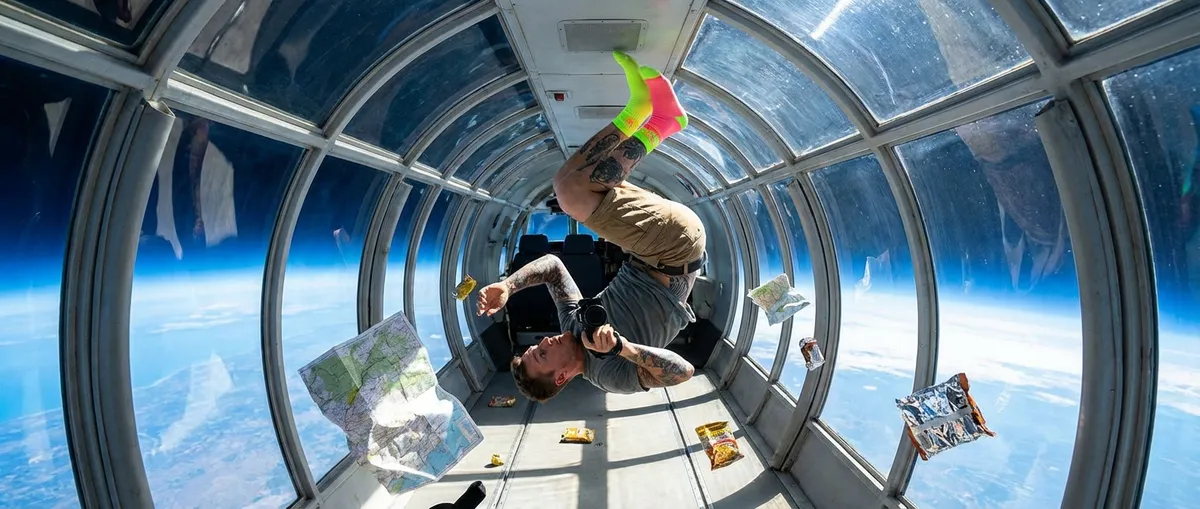
If your idea of a “wild trip” is a rooftop bar and a late checkout, this is not for you. This is for the people who look at a weather warning and think, “Perfect timing.” For travelers who pack a headlamp, a backup headlamp, and then go somewhere the sun barely exists. These are five travel discoveries that don’t just push your comfort zone—they break it, reassemble it, and hand it back with a smirk.
Welcome to the edges of the map, where the planet stops pretending to be safe and sensible.
Riding the Planet’s Heartbeat: Volcano Sleepovers on Active Slopes
Volcano tourism isn’t just “a hike with extra smoke.” Done right, it feels like sleeping on the chest of a restless animal that hasn’t decided whether you’re a guest or a snack.
Across Central America and beyond, you can now camp legally on or near active volcanoes—close enough to feel the deep bass of the earth rumbling under your tent. On Guatemala’s Acatenango, trekkers climb through cloud forest and pine, then pitch camp facing the hyperactive Fuego Volcano, which spits lava into the night like a bored dragon. The show plays all night: glowing eruptions, ash plumes, distant thunder that isn’t weather.
The real mind-bender is how ordinary it starts to feel after a few hours. You’re cooking instant noodles while molten rock is launched into the sky on repeat. Your sleeping bag lightly vibrates with every underground growl. It turns “solid ground” into a suggestion, not a guarantee.
Extreme? Yes. Reckless? Not necessarily—if you go with licensed guides, respect local safety rules, and understand that “active” means “this could change at any time.” The thrill is exactly that: you’re camping on a deadline nature hasn’t shared with you.
This isn’t a sunset viewpoint; it’s an active conversation with geology, and you’re close enough to smell its breath.
The Glacial Cathedrals: Crawling Under Ancient Ice Before It Vanishes
Most people see glaciers from a distance: a postcard, a cruise ship, maybe a viewing platform with a polite railing. Extreme travelers go underneath them.
Glacier and ice cave tours in places like Iceland, Alaska, and the Alps let you walk through cerulean tunnels where the ceiling is compressed centuries of snowfall turned into glassy, blue ice. It looks fake. It feels illegal. Light filters in through cracks and snow-holes, turning the whole world into a slow-motion sapphire.
Some tours include crampon-clad hikes over crevassed glacier fields, where the surface is a maze of ice bridges, hidden holes, and meltwater rivers you can hear but not see. Every step is a test of trust in your guide, your gear, and the ice itself.
The intensity comes from the clock ticking over your head—literally. Climate change is eating these structures alive. Caves that exist this winter might collapse by next. Routes shift constantly as the glacier moves and melts; what’s “safe” is a moving target, reevaluated daily.
You’re not just visiting frozen water; you’re crawling through a disappearing ecosystem that makes you realize how temporary human plans are. It’s not just extreme travel—it’s time travel with a built-in expiration date.
Storm-Chasing as a “Vacation”: Dancing with Supercells in Tornado Alley
While most travelers avoid bad weather, a fringe group of adrenaline addicts now schedule their holidays for peak atmospheric chaos. Storm-chasing tours in the central United States take you straight into the path of supercells—those massive, rotating thunderstorms that can spawn tornadoes, hail, and lightning shows that look straight-up apocalyptic.
You’ll spend long hours driving through flat, hypnotic landscapes, watching the sky mutate. Blue turns sickly green. Anvil-shaped storm tops punch into the stratosphere. Mammatus clouds hang like bruises. Your guide refreshes radar images like a day trader watching a crashing market, except here the volatility is the point.
When you finally intercept a storm, the energy shift is immediate: wind slaps your face, the air smells metallic, and the sky starts stacking in rotating layers you can actually see. Lightning forks horizontally across the horizon, close enough you feel it in your teeth. Sometimes you witness a tornado chewing its way across empty fields, a slow, arrogant spiral of dirt and power.
The weirdest part is the discipline. You’re not some movie extra screaming under flying cows—you’re part of a choreography between radar, roads, storm motion, and escape routes. You keep your distance. You stay ready to move. You watch something truly dangerous from a margin of engineered safety.
It feels like you’ve hacked the weather into an extreme sport, but really you’re just giving it your full attention for once—and realizing we live under a sky that’s never actually calm.
Below the Light: Free-Diving into Silent Blue Nothing
Scuba diving already feels like visiting another planet, but free-diving strips away the tank, the bubbles, and most of your comforting illusions. You take a breath, dive, and negotiate directly with your own biology and the ocean’s pressure. No tech to blame; it’s just you and physics.
Around the world—in places like Dahab in Egypt, Dean’s Blue Hole in the Bahamas, and cenotes in Mexico—free-divers descend into sinkholes, sea walls, and underwater canyons on a single breath, chasing depth, clarity, and that strange moment when your body remembers it’s made mostly of water.
At certain depths, your buoyancy flips—you stop floating up and start sinking without effort. This is called “free fall,” and it feels like flying downward through liquid air. Colors drain away. Sound disappears. Your heart rate slows. The surface becomes a memory you either return to, or you don’t.
Extreme travelers are drawn not only to the athletic challenge but to the mental reset: free-diving is controlled stress management under literal pressure. You learn how panic is optional, how calm can be engineered, and how your limits are more negotiable than you’ve been told—as long as you pair ambition with obsessive safety practices.
A proper free-diving course doesn’t just teach technique; it teaches surrender with seatbelts. Safety divers, strict depth plans, and recovery protocols are non-negotiable. The danger is real, but so is the reward: you experience the ocean on its own terms, not through tourism’s inflatable floaties.
Night on the Edge: Bivouacking on a Cliff Face Above the Abyss
Most people see cliffs as dramatic backgrounds for drone shots. Climbers and high-exposure fanatics see something else: real estate.
Portaledge camping—sleeping in a fabric-and-metal “shelf” bolted or strapped to a vertical rock face hundreds or thousands of feet above the ground—turns gravity into an overnight roommate. You clip in, shuffle onto your suspended platform, and accept that your bedroom is now hanging in the open air.
In places like Yosemite, the Dolomites, Patagonia, and specialized adventure parks, climbers and guided guests let themselves be hoisted or climb their way to a mid-wall sleepover. Once there, the view is absurd. Above: nothing but sky and rock. Below: birds flying under you, tiny cars, rivers, and trees that look like moss.
The physical risk is carefully managed—multiple anchor points, redundancy, gear checks—but your brain doesn’t care about the math. It cares that your “floor” gently flexes in the wind and there’s no “left” or “right,” only “down.” Going to the bathroom becomes a logistical puzzle with existential stakes. Dropping your phone means you now live fully in the moment because there is no scrolling from here.
The payoff is sunrise. Watching the first light claw its way over peaks while you’re still dangling in half-darkness redefines “room with a view.” Hotels sell panoramas; this sells commitment. You didn’t just go check in—you hung in.
Conclusion
Extreme travel isn’t about pain for bragging rights. It’s about choosing environments where your senses have to reboot, where your habits are useless, and where you’re forced into active participation with the planet instead of just spectating it.
Whether you’re listening to a volcano breathe, crawling under endangered ice, hunting storms on highways, sinking into silent blue, or sleeping in a gravity joke bolted to a wall, all of these experiences share one thing: they make Earth feel newly wild again.
Go with experts. Respect local rules and ecosystems. Don’t confuse recklessness with courage. Then, once you’ve done your homework and triple-checked your harness, step into something that scares you just enough to make you feel vividly, defiantly alive.
Sources
- UNESCO – Volcanoes and World Heritage - Background on significant volcanic regions and their geological importance
- [National Park Service – Glaciers and Climate Change](https://www.nps.gov/subjects/climatechange/effects glaciers.htm) - Overview of how glaciers are changing and why many ice formations are disappearing
- NOAA National Severe Storms Laboratory – Storm Chasing FAQ - Explains severe storms, hazards, and considerations relevant to storm-chasing activities
- PADI – What Is Freediving? - Introduction to free-diving, safety principles, and training basics
- Yosemite National Park – Big Wall Climbing - Official guidance on big-wall climbing and overnight ascents in Yosemite, relevant to portaledge-style adventures
Key Takeaway
The most important thing to remember from this article is that this information can change how you think about Extreme Travel.