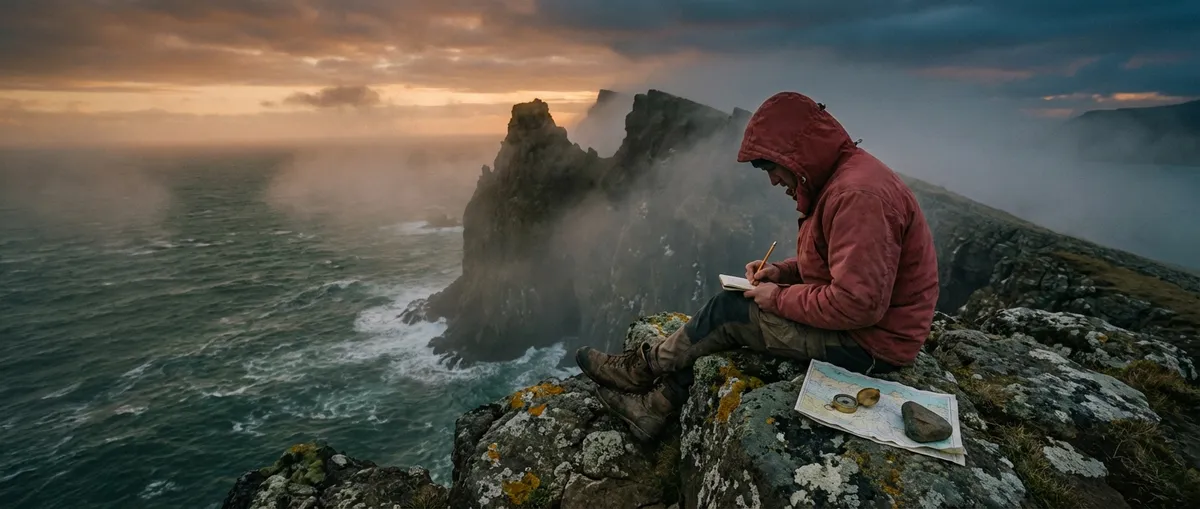
You don’t have to jump out of planes or cling to frozen cliffs to qualify as an extreme traveler. Sometimes “extreme” is simply refusing the script that tourism boards have already written for you. It’s entering landscapes where your phone is useless, your assumptions are wrong, and your comfort zone gets publicly executed at sunrise.
These five travel discoveries aren’t about bragging rights. They’re about rewiring your sense of what a journey is for. Pack curiosity, skepticism, and a willingness to look ridiculous. You’ll need all three.
Volcanic Midnights: Sleeping in the Shadow of a Living Crater
Most people “see” volcanoes from glossy postcards or curated lookout points. The extreme version is staying close enough that you can hear the mountain breathe at night.
In places like Java’s Mount Bromo or Guatemala’s Acatenango, the real experience starts after the day-trippers leave. The air smells like sulfur and cold metal; ash crunches underfoot; the sky turns from purple to ink while the crater glows like a wound. You fall asleep in a tent or a barebones shelter listening to distant rumbling, half convinced you’ll wake up in a lava documentary.
Extreme here does not mean reckless. It means hiking with local guides who grew up reading the mountain’s moods, respecting exclusion zones, and knowing when a plume is photogenic and when it’s a “get your boots moving” situation. It’s learning that volcanic landscapes are living systems, not stage sets—ridges that collapsed last year, new vents that weren’t on last season’s maps.
The payoff is existential, not just visual. Dawn from a volcanic rim doesn’t feel like a sunrise; it feels like eavesdropping on the planet before humans were invited. You leave with a very clear sense that you are small, temporary, and incredibly lucky to have front‑row seats.
Silent Ice: Drifting Through Polar Nowhere
Scrolling past polar photos is easy. Going there and realizing your ears have never heard this much silence is something else entirely.
On small-ship expeditions in Antarctica or the high Arctic, there’s a moment when you step onto the deck and discover the world has been reduced to three colors: white, black, and a blue so sharp it feels illegal. The ship moves slowly through pack ice that sounds like broken glass under pressure. No trees, no roads, no horizon clutter—just a raw, cold emptiness that eats ego for breakfast.
Extreme travel in polar regions is about the surrender of control. Weather can shut you down for days. Ice can block your planned landing site and force the captain to improvise. Wildlife appears when it feels like it, not when your itinerary says “penguin encounter.” You’re not the protagonist; you’re a tolerated extra.
What makes this thrilling is the sense that you’re roaming through Earth’s hard drive—glaciers holding climate records, research stations clinging to the edge of habitable. You come back with a different relationship to maps; huge blank spaces suddenly feel more “real” than the crowded bits.
The danger isn’t just frostbite or rough seas; it’s how easy it is to forget how fragile this entire frozen stage is, and how quickly it’s changing as the planet warms.
Borderlands in Slow Motion: Riding the World’s Uneasy Edges
There are places where the most extreme thing you can do is simply linger—no bungee cords, no zip lines, just time and attention in regions that are used to being photographed, misunderstood, and then ignored.
Think of train rides that crawl along disputed frontiers, buses winding through post-conflict valleys, ferries shuttling between nations that pretend they barely acknowledge each other. These aren’t war-zone thrill rides; they’re quiet, watching journeys through geopolitical fault lines where people still have to get groceries, commute, fall in love, and pay rent.
Extreme here is emotional. You sit in ramshackle cafés where the wall TV flips between opposing news channels, each insisting on its version of reality. Border guards inspect passports with a tired intensity that tells you the drama is old for them but still electrified. You notice where fences are freshly mended and where they’re collapsing into wildflowers.
The discovery is that “dangerous” and “complicated” are not synonyms. Regions written off as unstable often contain some of the most hospitable, vigilant, and community-anchored people you’ll meet. You learn to separate actual risk from sensational headlines, relying on local knowledge instead of adventure gossip.
By the time you leave, the map in your head has acquired depth. Borders stop being simple lines and start feeling like scars, stitches, and question marks.
Urban Ruins and Rogue Futures: Cities Where the Script Broke
Extreme travel doesn’t always mean wild nature. Sometimes it means walking through a city that feels like a sci‑fi future crashed into a half-finished past.
There are urban zones where half the buildings look like background scenery from an abandoned utopia: empty high‑rises, derelict Olympic venues, decaying industrial ports that once powered empires. Around the corner, you’ll find hacker spaces, art squats, and rooftop gardens built from the bones of failed master plans. The official city brochure is useless here; the real action lives in alley murals, pop‑up markets, and half-legal music venues.
Exploring these “rogue futures” is a different kind of extreme. You’re navigating social fault lines: gentrification, displacement, and communities deciding in real time what kind of city they’re willing to become. You might spend one afternoon tracing the shadow of a demolished highway and the evening at a community meeting where residents battle a mega-development.
The risk is subtle but real: it’s easy to slip into ruin‑tourism or poverty voyeurism. Responsible travelers move with humility, support local businesses, take tours led by residents, and ask before pointing a camera at someone’s daily reality.
The reward is perspective. You stop thinking of cities as finished products and start seeing them as messy, living negotiations. Once you’ve walked through a district that’s actively reprogramming itself, themed “revitalization” projects elsewhere start to look suspiciously shallow.
Nightfall Territories: Chasing Darkness in a World of Neon
In an age of permanent glow—billboards, car headlights, the infinite scroll of your phone—seeking real darkness is an extreme act of rebellion.
Dark-sky reserves, remote deserts, unlit coastlines, and sparsely populated highlands are the last refuges of unfiltered night. Traveling there means rearranging your priorities: driving on unpaved roads by day, then staying still when the sun drops and your vision hands the keys to your ears. The Milky Way stops being a poetic phrase and becomes a blazing river overhead. You can literally see your shadow cast by starlight.
The danger is subtle. Your brain, trained by perpetual brightness and noise, initially revolts. Every twig snap sounds like an animal plotting your demise. Every gust of wind becomes an invisible intruder. You realize how addicted you are to illumination as a security blanket.
Once you sit through that discomfort, night rewires you. You start tracking constellations as if they were landmarks, noticing the slight chill as air temperatures drop, understanding why humans invented entire mythologies based on patterns in the sky. Sleep changes, thoughts slow, and “late night” stops meaning Netflix and starts meaning meteor showers.
The most extreme realization? The dazzling night sky is not rare. Our artificial glow is. You’re not going somewhere “special” so much as defecting from a very noisy experiment.
Conclusion
Extreme travel is less about stacking death‑defying stunts and more about choosing environments that demand your full attention. Volcano rims, polar emptiness, contested borders, mutating cities, and primal darkness all share one rule: you don’t get to stay on autopilot.
If your next trip leaves you unchanged, you booked a vacation, not a journey. There’s nothing wrong with that—but if you’re reading No Way Travel, you’re probably hungry for something sharper.
Go where the script gets weird. Travel with enough respect to listen, and enough courage to step past the comfort barrier. The planet is still full of places that don’t care about your expectations.
That’s exactly why you should go.
Sources
- US Geological Survey – Volcano Hazards Program – Scientific background on volcanic activity, risks, and monitoring systems relevant to traveling near active volcanoes.
- British Antarctic Survey – Research and information about Antarctic environments, climate, and logistics that shape polar expeditions.
- International Dark-Sky Association – Details on dark-sky reserves, light pollution, and locations where travelers can experience natural night skies.
- UN World Tourism Organization – Reports and data on global tourism patterns, including responsible travel and visiting sensitive or post-conflict regions.
- National Park Service: Night Skies – Educational resources on the value of dark skies and how protected areas manage light and visitor access.
Key Takeaway
The most important thing to remember from this article is that this information can change how you think about Extreme Travel.