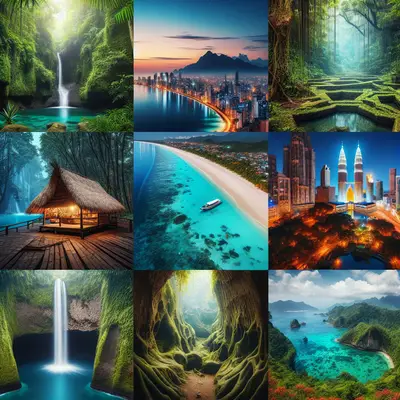
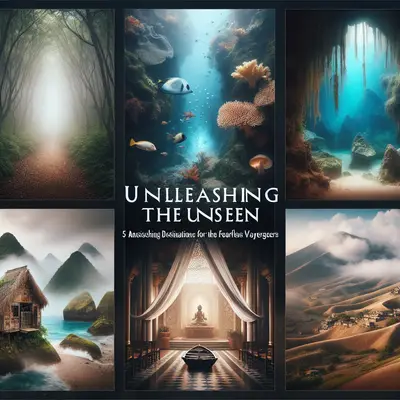
Some places want tourists. They build welcome centers, print glossy brochures, and hand you a branded tote bag at the airport. This is not about those places. This is about the overlooked, the inconvenient, the “why would anyone go there?” corners of the planet that aren’t begging for attention—and are more interesting precisely because of that.
These five hidden gems aren’t for collectors of passport stamps. They’re for travelers who like a bit of friction, who don’t mind getting lost, rained on, or mildly judged by locals who know you’re very far from the main road.
The Volcanic Staircase: Villages Clinging to São Jorge, Azores
Most people flying to the Azores aim straight for São Miguel and its photogenic crater lakes. São Jorge is the sibling island that quietly shrugs and keeps its drama to itself: a long, thin spine of volcanic ridge with villages dropped like pebbles at the base of cliffs.
What makes São Jorge wild isn’t the scenery (though its cliffs and ocean views are ridiculous), but the way you move through it. Ancient “fajã” trails—steep, old paths zigzagging down lava slopes—connect the island’s ridge to little coastal platforms formed by past eruptions. You hike through wet, emerald-green forest, then suddenly emerge onto a flat strip of land where a tiny village, a chapel, and a few cows are basically daring the Atlantic to erase them.
It doesn’t feel curated; it feels stubbornly lived-in. One moment you’re sharing a bar counter with fishermen complaining about the swell, the next you’re gnawing on local São Jorge cheese so sharp it could file your memories. Cell service drops in and out. Weather arrives sideways. And sunsets slam into the ocean like the planet’s closing credits.
If you go, pack rain gear and a willingness to backtrack. Trails can be slick, bus timetables vague, and English patchy outside the larger villages. In other words: perfect.
The Abandoned Border Gateway Turned Open-Air Secret, Nicosia Buffer Zone
Nicosia, the divided capital of Cyprus, looks like a normal Mediterranean city until you reach the United Nations buffer zone—a frozen frontline that slices right through its heart. Most visitors glance at it, take a photo of sandbags and barbed wire, and move on. But linger, and you’ll realize this no-man’s-land is one of the strangest, most compelling urban spaces in Europe.
Behind tall walls and rusting fences, time has stalled. There are abandoned shops with mannequins still in the windows, homes invaded by fig trees, and streets where the road’s cracked but the traffic signs still give orders to no one. From certain viewpoints, it’s like staring into a parallel Nicosia where progress gave up in 1974.
The beauty of this hidden “gem” is how unofficial it feels. Small contemporary art spaces, on both sides of the divide, use the buffer zone as a backdrop for installations and performances, working with the UN when possible, improvising when not. You can walk one side of the Green Line, cross checkpoints with your passport, and view the same deserted alley from two countries at once.
Emotionally, it’s not light travel. You’re standing in a living reminder of conflict, with peace maintained by negotiation and habit more than certainty. But if you want travel that rattles your assumptions instead of just topping up your photo roll, Nicosia’s fractured center is a quiet earthquake.
The Jungle Observatory with No Railings, Minca, Colombia
Minca, a tiny town in the Sierra Nevada mountains above Santa Marta, is what happens when the jungle raids the highlands and wins. Backpackers come here for waterfalls and coffee farms. Then some of them climb higher, past the hostels and hammocks, to makeshift viewpoints that feel like Earth forgot to install safety protocols.
Picture this: a wooden platform, or sometimes just a metal ladder lashed to a tree, sticking out over a plunge of green. From up there, you’re eye-level with clouds, vultures, and the occasional paragliding speck. At dawn, the Caribbean coast glows far below like someone spilled fire on the horizon.
These “observatories” are often attached to family-run fincas and eco-lodges, reached by a combo of moto-taxi, hiking, and mild life choices questioning. Handrails are optional. Mud is guaranteed in rainy season. You drink thick, local coffee while watching troops of howler monkeys become the world’s loudest alarm clocks.
It’s not entirely off-grid—you’ll likely see other travelers—but it still has that improvised, pre-tourism-resort energy. Electricity might flicker. The internet will rage-quit during storms. Your shower may be half an argument with cold mountain water. But when lightning forks over the jungle at night and fireflies start to answer it, you understand why people stay longer than planned.
The Desert Shoreline That Looks Like a Science Fiction Misprint, Socotra’s Coast
Socotra, a Yemeni island adrift in the Arabian Sea, is famous—among those who know it—for dragon’s blood trees and landscapes that look like they were designed during a software glitch. That alone would qualify it as a hidden gem, but the island’s coast is its real quiet masterpiece.
Imagine dunes that roll straight into fluorescent-blue water, with limestone cliffs rearing up behind you and seabirds patrolling the wind like it’s their job (it is). There are coves where the sand is so pale it almost glows, and rocky shelves where the waves detonate with theatrically unnecessary force. The human footprint is minimal: a few fishing villages, goat tracks, and the occasional truck grinding past like it’s astonished to be there.
Camping here isn’t glamping. You’re dealing with wind that wants your tent more than you do, minimal infrastructure, and logistics heavily dependent on local guides and the political situation on the mainland. But that’s what keeps it raw. The night sky is so dense with stars you could navigate by random clusters and probably still hit land. The silence is intrusive; it crowds your thoughts until you run out of small talk with yourself.
This is not a “drop in for the weekend” destination. Geopolitics, conservation concerns, and limited flights mean Socotra demands research, patience, and an appetite for plans that can change last minute. But if you make it here, you’re standing on one of Earth’s least domesticated coastlines.
The River That Treats Colors Like a Glitch, Caño Cristales, Colombia
Most rivers pick a lane: blue, brown, or something in between. Caño Cristales in Colombia’s Serranía de la Macarena region refuses. For a few months each year, this unassuming waterway detonates into streaks of red, yellow, green, blue, and black thanks to an aquatic plant called Macarenia clavigera.
The experience isn’t just visual; it’s logistical. You don’t simply “drop by” Caño Cristales. You fly to a small town like La Macarena, register with park authorities, obey strict conservation rules, and head out with licensed local guides who know which sections are open and which are resting. The river is heavily protected, which means this is one of the rare hidden gems where “unconventional” still coexists with solid environmental management.
Walking along its banks, you realize this isn’t a single rainbow river but a network of rapids, pools, and shallow channels, each section splashing different colors across the rocks. Stand still and you notice dragonflies zipping through shafts of light while the plants ripple beneath crystal-clear water like living stained glass.
You can’t visit year-round, and you can’t go rogue—swimming is allowed only in designated areas, and visitor numbers are capped. That friction is the point. You’re not consuming a spectacle; you’re negotiating your way into it, on the river’s terms. It feels less like a bucket-list item and more like being a very careful guest in someone else’s wildly decorated house.
Conclusion
Hidden gems aren’t defined by distance from Wi-Fi or the number of people who’ve geotagged them. They’re defined by attitude—usually the place’s, not yours. They’re the cliffs that don’t flatten their trails, the cities that don’t smooth over their scars, the landscapes that maintain a healthy suspicion of humans.
If you chase them, don’t expect comfort on demand, or certainty, or clean lines on your itinerary. Expect awkward bus rides, confused directions, permits, weather tantrums, and occasionally wondering, mid-hike, why you do this to yourself.
Then the clouds part, or the river turns scarlet, or the jungle drops away into an ocean you didn’t know was there—and for a few seconds, the world tilts, and you’re exactly where the map stops being useful.
Sources
- Visit Azores – São Jorge Island – Official tourism overview of São Jorge, its geography, and hiking areas
- UNFICYP – United Nations Peacekeeping in Cyprus – Background on the buffer zone and Nicosia’s division
- Colombia Travel – Minca, Sierra Nevada de Santa Marta – Official tourism information on Minca and its mountain/jungle environment
- UNESCO – Socotra Archipelago – Details on Socotra’s unique biodiversity and landscape
- Parques Nacionales Naturales de Colombia – Sierra de la Macarena – Information on Caño Cristales, access rules, and conservation measures
Key Takeaway
The most important thing to remember from this article is that this information can change how you think about Hidden Gems.