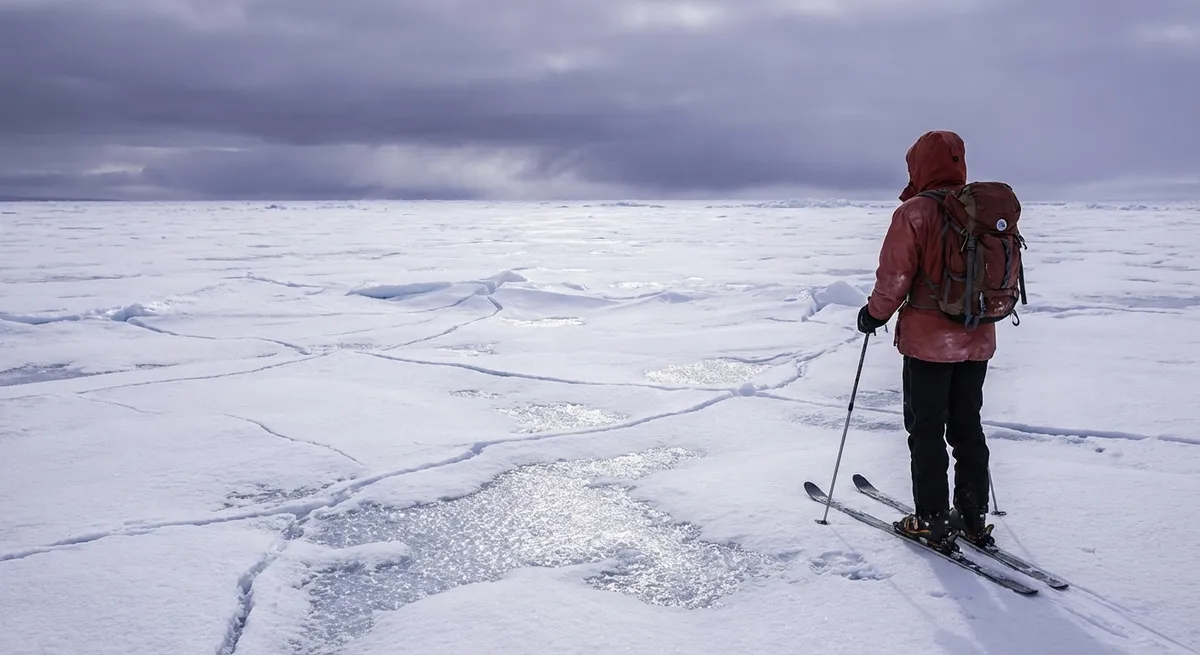
Most people chase adrenaline with bungee cords, helmets, and a waiver. You’re not most people. Extreme travel doesn’t always look like a Red Bull commercial—it can feel like you’ve stepped off the edge of the map into a place where nothing seems to happen… until suddenly everything does. Quiet danger. Slow-burn awe. Situations where there’s no crowd, no lifeguard, and no one to blame but yourself.
This is a field guide to five off-script, high-stakes experiences for travelers who want their comfort zone to file a missing-person report. None of them are packaged tours. All of them demand respect, preparation, and a mildly questionable sense of judgment.
1. Sailing Into the Empty: Long-Distance Ocean Crossings on Small Boats
Forget cruise ships. Picture this: just you, a handful of people you’re not entirely sure you trust, a 40-foot sailboat, and anywhere from two weeks to a month of nothing but water and weather. The nearest help might be hundreds of nautical miles away. If something goes wrong, your “emergency contact” is you.
Trans-ocean passages—like crossing the Atlantic from the Canary Islands to the Caribbean or the Pacific from Mexico to French Polynesia—aren’t for dabblers. The sea doesn’t care if you get seasick, can’t sleep in bad weather, or forgot how radios work. You’ll stand night watches under a full Milky Way sky, surf down waves taller than your apartment building, and learn how loud silence feels when the engine dies and you’re waiting for the wind to come back.
The danger isn’t just storms; it’s fatigue, miscalculation, bad judgment made at 3 a.m. when your brain feels like wet cardboard. You’ll study weather routing, learn to reef sails fast, and discover how many things on a boat can break (hint: all of them). Piracy risk and shipping lanes add another layer of situational awareness—this is chess against the planet, not checkers.
How people usually do it:
- Joining a private boat via crew networks (paying shared expenses or trading skills)
- Signing onto training passages with serious sailing schools or expedition outfits
- Spending months learning coastal sailing before going bluewater
Why it’s extreme: There’s no exit ramp. Once you’re 1,000 miles from land, you finish what you started. Or you don’t.
2. Thin Air Obsession: Non-Touristy High-Altitude Treks That Actually Hurt
Altitude trekking has become Instagram-safe in popular spots, but step sideways from the classic routes and the mountains get feral again. Think remote high passes in Kyrgyzstan, lesser-known circuits in the Indian Himalaya, or Bolivia’s Cordillera Real, where you can hike for days and never see another group.
At 4,000–5,000 meters (13,000–16,500 feet), your body starts to negotiate with gravity. Every incline is a negotiation, every backpack strap feels like an accusation. Altitude sickness doesn’t care how “fit” you think you are—headache, nausea, confusion, or lung issues can hit anyone, anytime, if you gain height too fast. There might be no road, no rescue chopper, and no clinic within multi-day walking distance.
The payoff? You move through geologies that look like they started before the concept of “human” existed: ice-scored ridges, high plateaus where horses outnumber people, villages that still measure time in harvests, not emails. You’ll camp in wind that feels older than history, shiver through nights where the stars look physically closer, and realize your heart is beating hard just to keep the lights on.
An extreme-leaning trek might mean:
- Routes that require you to carry several days of food and all your camping gear
- No cell signal for much (or all) of the journey
- River crossings with no bridges—just you, cold water, and a choice
- Sudden weather swings: snow in what was “supposed” to be the dry season
Why it’s extreme: You’re far from infrastructure, fighting altitude instead of amusement-park gravity. Your exit strategy is your feet.
3. Volcanic Obsession: Sleeping Inside the Blast Radius
Volcano travel gets marketed as “see the lava, buy the T-shirt.” But when you push beyond the gentle, day-hike viewpoint and head for more active, remote, or less-manicured volcanoes, you enter a different league. You’re not just visiting a volcano; you’re camping inside a system that doesn’t care about your tent.
This might mean:
- Trekking multiple days to reach rarely visited craters or lava fields
- Camping on ash slopes that shift under your boots like ball bearings
- Waking at night to the sound of distant eruptions and falling rock
- Dealing with sulfur fumes that sting your lungs and eyes
The ground might be warm or literally hot. Gases can pool in low areas—odorless in some deadly cases—and lava fields can conceal fragile crust. Rain can trigger sudden landslides or lahar flows. Nothing might happen while you’re there. Or the volcano might decide to rearrange itself in real time.
Pair that with nocturnal exploration—long exposures of glowing vents, lightning inside ash clouds, watching entire hillsides pulse red under the stars—and you’ve got a trip that’s half geology lesson, half calmly supervised chaos. Local guides who work with vulcanology institutes or park authorities become your safety line to a landscape still in beta version.
Why it’s extreme: You’re choosing to sleep inside an active geological experiment with limited exit options if it changes its mind.
4. Cold-Water Descent: Freediving in Icy, Alien Water Worlds
Most people think of freediving as a tropical thing: warm seas, coral, dolphins doing PR for nature. Turn the thermostat way down and the experience becomes something else entirely—part meditation, part madness.
Cold-water freediving in places like high-latitude fjords, glacial lakes, or polar coastlines gives you water clarity so sharp it feels like floating in the sky—and temperatures that make your teeth ache through a thick hood. Breath-holding at 2–6°C (35–43°F) is a psychological battle. The mammalian dive reflex kicks in hard: heart rate slows, blood shunts to core organs, your brain has a quiet conversation with your survival instinct.
You might slip through ice cracks into vertical blue shafts, swim along walls sculpted by glaciers, or descend beside towering kelp forests in near-silence. Buoy lines, safety protocols, and surface buddies aren’t optional—they’re non-negotiable. Hypothermia, shallow-water blackout, and disorientation under ice are real risks, not theoretical talking points.
Expect:
- Multiple layers of neoprene or custom suits just to function
- Strict depth progression under the guidance of trained instructors
- Learning to stay calm while your body is yelling about the cold
- Weather and currents that can shut the whole thing down in minutes
Why it’s extreme: Your life depends on your ability to stay calm without air, in water that can end your judgment faster than your breath.
5. Radio Silence Expeditions: Deep Wilderness Where Rescue Isn’t a Plan, It’s a Miracle
Forget “off the beaten path.” There are trips where the path never existed. We’re talking multi-day to multi-week expeditions into wilderness where:
- No cell service, no satellite coverage in some pockets, no roads
- Navigation is map and compass first, GPS second
- Weather can strand you for days beyond your food plan
- The nearest ranger, village, or airstrip is several days’ travel away
These could be winter ski traverses across Arctic plateaus, packrafting through trackless boreal forest, or hiking in rarely visited desert canyons with no marked routes. The environment itself becomes an antagonist: river levels rise or vanish, snow bridges fail, sandstorms re-write the landscape.
You carry everything: food, stove, shelter, first aid, maybe a satellite communicator if you’re sensible. Every decision matters—where you cross a river, where you camp, how much energy you burn on a “shortcut” that might end in a cliff band. A sprained ankle is no longer a minor annoyance; it’s now an expedition-level problem.
Mentally, this hits different. You feel small, exposed, and startlingly free. No app can fix this, no call center can advise you. Your competence—or lack of it—shows up fast. And when you finally walk back into signal, you know you didn’t “do a hike.” You conducted a full-scale field test of who you are when no one is watching.
Why it’s extreme: The margin for error is thin, the rescue options thin-to-none, and the environment does not negotiate.
How to Not Die (Much): Core Safety Mindset for Extreme Travel
You can’t bubble-wrap these experiences, and that’s the point—but you can stop them from being suicidally stupid.
Anchor rules:
- Respect local expertise: Guides, rangers, sailing skippers, high-altitude porters, and local residents know things your browser doesn’t. Listen to them.
- Train on “easy mode” first: Learn basic sailing before a crossing, practice cold-water immersion near shore, do moderate altitude hikes before any mega-pass.
- Understand objective risk vs. vibe risk: Big scary feelings don’t always equal real danger—and quiet, normal-feeling situations can be lethal (altitude, cold water, volcanic gases).
- Redundancy isn’t paranoia: Backup navigation, extra warm layers, spare food, and redundant communication tools aren’t “overkill”; they’re the difference between story and statistic.
- Walk away when you should: The most hardcore move is often to turn around. Volcano acting weird? Wind wrong for a crossing? Altitude symptoms not improving? Bail. Pride doesn’t beat geology or biology.
Extreme travel is not about proving invincibility. It’s about approaching the edge of what’s reasonable, eyes open, and returning with your brain intact and your stories unexaggerated—because reality was wild enough.
Conclusion
If normal travel is a playlist, extreme travel is raw, unedited field recordings: wind in the rigging at 3 a.m., your heartbeat at 5,000 meters, the deep thump of distant volcanic eruptions, the dull roar of blood in your ears under ice, the absolute silence of a valley that’s never heard traffic.
These five experiences—ocean crossings, high-altitude treks off the tourist grid, sleeping inside volcanic systems, cold-water freediving, and deep wilderness expeditions—aren’t bucket-list trophies. They’re collaborations with the planet, negotiated on its terms. They won’t make sense to everyone. They’re not supposed to.
If you go, go prepared. Go humble. And go ready to come back slightly rearranged.
Sources
- U.S. National Oceanic and Atmospheric Administration (NOAA) – Ocean Facts - Background on open-ocean conditions, hazards, and environmental factors relevant to long-distance sailing
- Centers for Disease Control and Prevention – High Altitude Travel & Altitude Illness - Medical guidance on acclimatization, recognizing altitude sickness, and prevention strategies
- U.S. Geological Survey (USGS) – Volcano Hazards - Detailed overview of volcanic risks including gases, ash, and eruption dynamics for travelers near active volcanoes
- Divers Alert Network (DAN) – Freediving Safety - Evidence-based safety practices, risks, and training considerations for breath-hold diving
- National Park Service – Wilderness & Backcountry Trip Planning - Official guidance on preparation, risk management, and self-reliance in remote backcountry and wilderness areas
Key Takeaway
The most important thing to remember from this article is that this information can change how you think about Extreme Travel.