You don’t need another “top 10 bucket list” article. You need the kind of trip that scares your group chat, makes your parents question your life choices, and forces you to ask, “Am I actually going to do this?”
Welcome to the deep end of travel: not just extreme sports, but extreme environments and bizarre, beautiful human-made experiences that flirt with the edge of comfort—and sometimes sanity. These five discoveries aren’t just destinations; they’re environments that rewire your sense of what’s possible on Planet Earth.
Riding the Mantle’s Breath: Volcano Camping on Active Fire Mountains
There’s camping, and then there’s sleeping within sight of a living, breathing volcano—where the planet is visibly exhaling molten rock and sulfurous steam.
On islands like Vanuatu’s Tanna or Guatemala’s volcanic spine, you can trek to camps where the night is lit not by your headlamp, but by the dim red heartbeat of lava far below. You fall asleep to low rumbles instead of white-noise apps. It’s Earth in debug mode, and you’re sitting in the developer console.
Extreme travelers hike steep volcanic scree, zigzagging around fissures that radiate heat and whiffs of sulfur. Guides teach you how to read the volcano like a moody animal: the crack of rockfall, the rhythm of eruptions, the wind patterns that can turn vapor from “cool photo” to “respiratory nightmare” in seconds.
The madness is obvious: hot gas, unstable ground, razor-sharp lava rock. But the payoff is primal. You witness a world in constant creation and destruction, with your tent staked just far enough from the edge to count as “acceptable risk” instead of “last known photo.” For people who are bored of beaches and bungalows, a glowing crater rim at midnight is the new luxury suite.
Drowning on Purpose: Freediving into Underwater Caves and Blue Holes
Most travelers flirt with water from the surface—snorkel, swim, maybe a casual scuba certification. Extreme travelers go the other way: down, quiet, and deep… on a single breath.
Freediving into underwater caves and blue holes is nearly meditative—if your idea of meditation involves squeezing your body through rock tunnels in total silence with your lungs burning like small suns. Places like the Blue Hole in Dahab, the cenotes of Mexico’s Yucatán, and submerged cave networks in Europe and the Pacific are underwater cathedrals that require absolute focus.
There’s no tank. Just your lungs, your mind, and an almost religious control of panic. You learn to equalize pressure, slow your heart rate, and trust your training as light fades and rock walls close in. Instead of the loud hiss of scuba gear, you get the soundtrack of your own pulse and the faint crackle of unseen life.
This sort of trip is not a casual add-on. It requires serious instruction and a respect for physics and physiology. But for travelers who feel most alive when they’re toeing the line between mastery and mayhem, sinking into the blue feels like visiting another planet with no spaceship—just lungs and nerve.
Sleeping in Gravity’s Teeth: Cliff-Hanging Portaledges and Vertical Nights
What if your hotel room had no floor, just a thin piece of fabric bolted to a cliff face and 500 meters of air below? That’s the allure of big wall sleeping—nights spent in portaledges pinned to vertical rock.
In climbing meccas like Yosemite, the Dolomites, or remote walls in Patagonia and Baffin Island, climbers turn vertical faces into overnight neighborhoods. For adventurous non-climbers, some outfitters now offer guided “cliff camping” experiences where you can spend a night suspended in space, even if you’re not ready for multi-day ascents.
You haul yourself up the rock with a harness, clip into the ledge, and sit there as the sun dies over empty valleys. Cooking becomes a high-stakes balancing act. Bathroom breaks are logistical puzzles. Rolling over in your sleep? Sudden, adrenaline-filled wake-up call.
Is it dangerous? It can be. Is it ridiculous? Absolutely. But dangling in mid-air with nothing beneath you but exposure and nothing above you but stars resets your nervous system. After a night in gravity’s teeth, hotel balconies feel boring and safe in all the wrong ways.
Hostile Frontiers: Overland Through Hyper-Remote Cold and Heat
Comfortable adventure chases nice weather. Extreme travel goes hunting where climate tries to kill you.
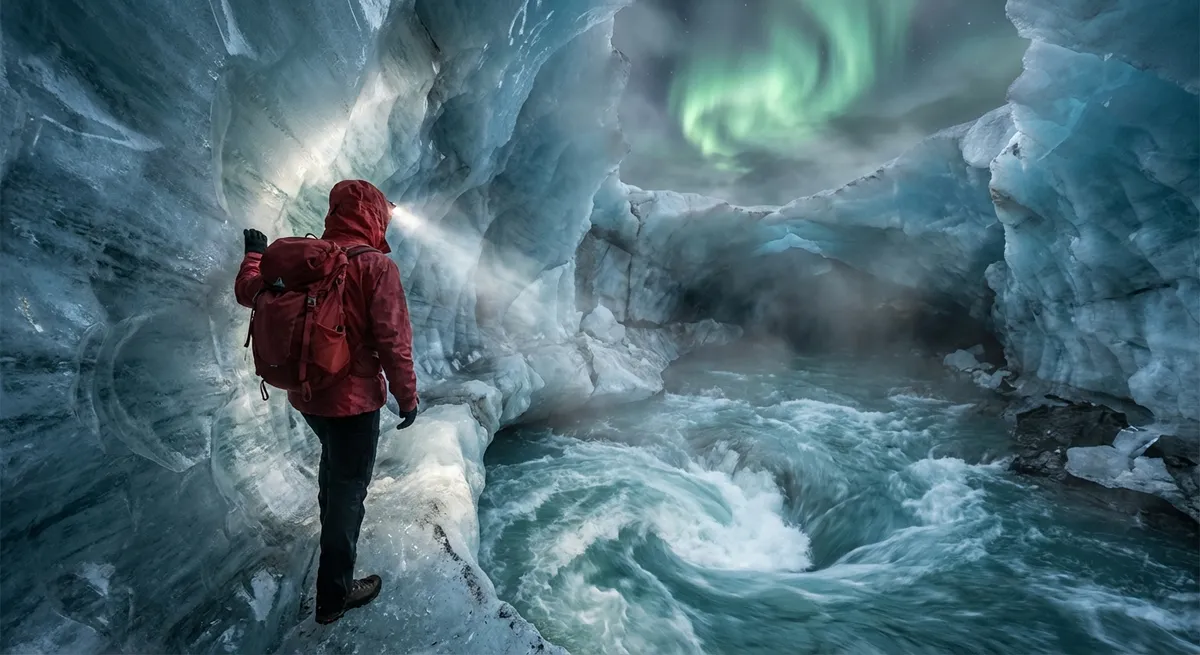
Arctic overland routes across Svalbard or northern Scandinavia can mean moving by snowmobile, dogsled, or even skis through whiteouts that erase the horizon. You learn to navigate by GPS, instinct, and trust in guides who speak fluent blizzard. The cold isn’t “chilly”; it’s an adversary that punishes every mistake in layers and minutes.
At the other extreme, desert expeditions in places like Namibia’s Skeleton Coast or parts of the Empty Quarter turn heat into a full-body opponent. Vehicles have to be self-sufficient. Water is math, not luxury. Sandstorms can strip visibility and rearrange entire landscapes in hours. You get intimate with the mechanics of dehydration, sun, and wind.
These journeys demand a different traveler mindset: less “I want a picture” and more “I want to survive this competently.” You’re part of a roving micro-society—guides, mechanics, fixers, drivers—where everyone’s knowledge keeps everyone else above the survival threshold. The bragging rights aren’t about selfies; they’re in the quiet knowing that you crossed a place most humans will never even see from a window.
Full-Sensory Overload: Storm Chasing and Extreme Weather Pilgrimages
While most tourists delay trips to avoid “bad weather,” some travelers build entire itineraries around chasing the sky while it’s in meltdown.
In the U.S. Great Plains, storm chasers track supercells that bloom into colossal rotating monsters, birthing lightning webs and tornadoes. Travelers ride along in reinforced vans equipped with radar screens and radio chatter, sprinting across county lines ahead of storms that can spawn funnels in minutes. The air goes still, greenish light pours across fields, and every hair on your arms stands up as the atmosphere decides what mood it’s in.
Elsewhere, monsoon pilgrimages, typhoon-watching (from safe vantage points), or even controlled hurricane-hunting flights turn “bad weather” into the main event. You learn how storm systems function, how forecasters read satellite loops like oracles, and how fragile human infrastructure looks when sky and ocean decide to collaborate on chaos.
Extreme weather travel is not a dare to the universe; done right, it threads the needle between witnessing and respecting. You’re there not to conquer, but to watch forces too big to fit into any human story, rolling over the landscape like slow-moving gods.
Conclusion
Extreme travel isn’t just about going farther or faster; it’s about stepping into situations where nature, physics, and your own fear are all louder than your phone. Volcano rims, flooded caves, hanging cliffs, lethal climates, and raging skies aren’t for casual wanderlust—they’re for people who want their trips to leave a permanent mark on how they see risk, beauty, and what a human body can handle.
If your vacations have started to feel like variations of the same safe script, maybe it’s time to go off-genre. Pack your curiosity, your humility, and a signed waiver. The world still has places that don’t care who you are, how many followers you have, or what you think you’re capable of.
Go find them—and let them answer that for you.
Sources
- U.S. Geological Survey (USGS) – Volcano Hazards Program - Technical background on volcanic activity, hazards, and monitoring, relevant for understanding risks around active volcano travel.
- Smithsonian Global Volcanism Program - Comprehensive database of active and dormant volcanoes worldwide, used by travelers and researchers to track current volcanic conditions.
- Divers Alert Network (DAN) - Medical and safety information on freediving and underwater activities, including risks, training, and best practices.
- National Snow and Ice Data Center (NSIDC) - Authoritative overview of Arctic climate, conditions, and associated hazards, useful context for cold-region expeditions.
- NOAA National Severe Storms Laboratory - Detailed explanations of severe weather phenomena like supercells and tornadoes, crucial for understanding storm chasing environments and risks.
Key Takeaway
The most important thing to remember from this article is that this information can change how you think about Extreme Travel.