Maps lie. Or at least, they simplify—and right now, thanks to viral quizzes like Bored Panda’s “25 Geography Mistakes Most People Won’t Spot,” the internet is realizing just how much our mental map of the planet is… wildly wrong. Flags swapped, borders misplaced, islands mysteriously missing—if the online cartography chaos has taught us anything, it’s this: the world is far stranger (and more glorious) than we think.
So let’s ride that geography-nerd wave straight into the field. Forget the textbook destinations and algorithm-approved city breaks. These are real places where borders bend, rivers misbehave, countries overlap, and your GPS quietly panics while you grin like a maniac.
Here are five hidden geographic glitches you can actually visit—no quiz required.
The Village That Forgets What Country It’s In: Baarle-Hertog / Baarle-Nassau (Belgium / Netherlands)
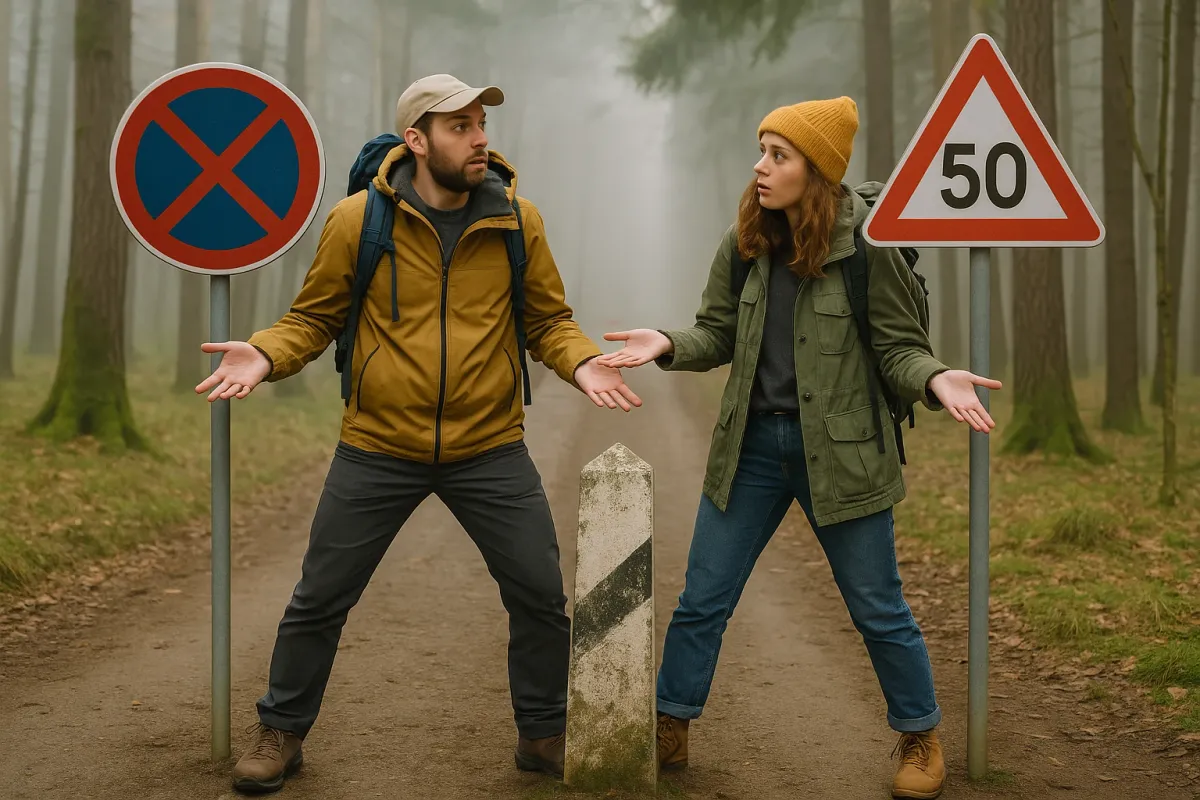
If the internet is currently arguing about where borders go on a quiz map, Baarle is out here saying, “Hold my beer.” This tiny town, split between Belgium (Baarle-Hertog) and the Netherlands (Baarle-Nassau), is carved up into dozens of microscopic enclaves and counter‑enclaves—little puzzle pieces of sovereignty that look like someone let a toddler edit Europe in Photoshop.
You’ll find front doors that are Dutch while the kitchen is Belgian, cafes where one half is under different tax laws than the other, and border markers literally snaking across living room floors. The border is painted on the streets with white X’s and plaques, so you can straddle two countries mid‑espresso and watch your phone’s roaming settings spin out. Restaurants switch which holiday calendar they follow depending on where the front door officially sits. It’s a live‑action geography error, and you can sleep right inside it.
Go for: wandering with a printed border map, sitting on a terrace that technically spans two nations, and the deliciously nerdy joy of watching Google Maps try to keep up as you cross “countries” every few steps.
The River That Refuses to Pick a Side: The Mistaken Border Islands of the Danube (Hungary / Slovakia / Serbia)
Online geography quizzes love to mess with river borders, and the Danube is their chaotic poster child. This grand European river has shifted and meandered so much over centuries that entire islands ended up claimed by the “wrong” country—or by no one, depending who you ask. Cartographers argue. Governments shrug. Adventurous travelers quietly rent kayaks.
One of the most intriguing stretches is between Hungary and Slovakia, where old channels and new channels don’t fully agree on where the border really runs. There are overgrown sandbars and forested mid‑river islands that feel like they’ve slipped between jurisdictions—a real‑world glitch where you can camp with the subtle thrill that nobody is entirely sure whose patch of earth you’re lying on. Further south, between Croatia and Serbia, you enter the realm of disputed pockets and nearly‑micronations like Liberland, which appeared because of leftover “unclaimed” land from river shifts.
Go for: low‑key river expeditions, hammock camping on scruffy, unnamed islands, and the sense that you’re drifting through legal gray space where the only authority is the current.
The Beach That Plays Border Roulette: Point Roberts, Washington (USA / Canada)
Those viral geography questions that ask, “Which US place is only reachable by driving through Canada?”—they’re talking about Point Roberts. This tiny chunk of the United States dangles beneath Vancouver, British Columbia, chopped off from the rest of Washington State by the ruthless straight line of the 49th parallel.
On a map, it looks like someone mis‑dragged the border layer and forgot to fix it. In real life, it’s a fascinating, slightly surreal border town that feels like a cartographic in‑joke. To get there by land, you have to cross into Canada, drive around, then cross back into the US—twice. The community is small, quiet, and wrapped in water and regulations. In summer, it feels like a secret Pacific Northwest island; in winter, it’s a misty limbo with bald eagles instead of tourists.
Go for: cycling dead‑end roads that technically lead “into” your own country but require an international border check, wandering lonely beaches where you can look at Canada across a few hundred meters of water, and experiencing how a single line of latitude can rewrite an entire town’s identity.
The Courtyard That Holds Multiverse Passports: Fuggerei, Augsburg (Germany)
The internet is currently obsessed with “obsolete things” and how fast the world is changing—rotary phones, floppy disks, and maps that still show countries that no longer exist. In Augsburg’s Fuggerei, you walk straight into a time warp that geography forgot to update.
Founded in 1521, the Fuggerei is the world’s oldest social housing complex still in use. It’s a walled, self‑contained neighborhood with its own rules, gates, and rhythms. Residents pay an annual symbolic rent that hasn’t changed in centuries, and the architecture feels like a Renaissance stage set accidentally dropped into modern Germany. It’s not a separate country, but it feels like one: quiet cobbled lanes, hidden chapels, green courtyards, and a palpable sense that the outside world is just… optional.
The twist for the adventurous traveler? You can stay here—there’s a guest apartment. At night, when the tourist groups vanish and the gates close, walking the alleys feels like trespassing in a functioning historical glitch, a living footnote where economics, urban planning, and geography froze in time but never died.
Go for: sleeping inside a 500‑year‑old social experiment, exploring lanes that blur museum and neighborhood, and feeling like you’ve slipped into a forgotten, self‑contained micro‑realm inside a modern city.
The Forest That Erases the Map: Białowieża, Europe’s Last Primeval Wilderness (Poland / Belarus)
Those viral “nature in focus” photo contests showcase wild landscapes, but almost all of them are managed, mapped, and carved up by straight lines. Białowieża Forest—the last major remnant of the primeval forest that once covered much of Europe—doesn’t fully care where humans put their borders.
Straddling Poland and Belarus, this forest is thick, tangled, and unapologetically alive. Officially, the border slices through it; on the ground, moss, bison, and wolves ignore the passport regime. Parts of the Belarusian side are restricted, making the Polish side feel like a viewing portal into a deeper, even less accessible wilderness just beyond the fence. Fallen trees are left to rot. Paths vanish into undergrowth. It’s as close as Europe gets to the “here be dragons” edge of an old map.
For travelers bored of perfectly groomed national parks, Białowieża is a corrective. It’s not a backdrop; it’s a protagonist. You come here not to “conquer” a hike, but to feel just how messy, layered, and indifferent real nature is to our clean little borders—and to all those quiz maps now crowding your feed.
Go for: guided walks where your ranger points out wolf tracks instead of Instagram spots, seeing European bison moving through mist‑soaked clearings, and the unsettling thrill of knowing the forest would reclaim everything if we blinked for too long.
Conclusion
While the internet geeks out over geography quizzes and map fails, these places are out there quietly breaking the rules in real time. Border‑shredding villages. Rogue rivers. Detached districts. Time‑warped housing projects. Forests that laugh at lines.
If your idea of adventure is less “another famous viewpoint” and more “stand where the map gets confused and your instincts switch on,” this is your moment. The world’s hidden gems aren’t always remote—they’re often right where the atlas glitches and reality gets interesting.
Close the quiz tab. Open an actual map. Then go visit the mistakes.
Key Takeaway
The most important thing to remember from this article is that this information can change how you think about Hidden Gems.