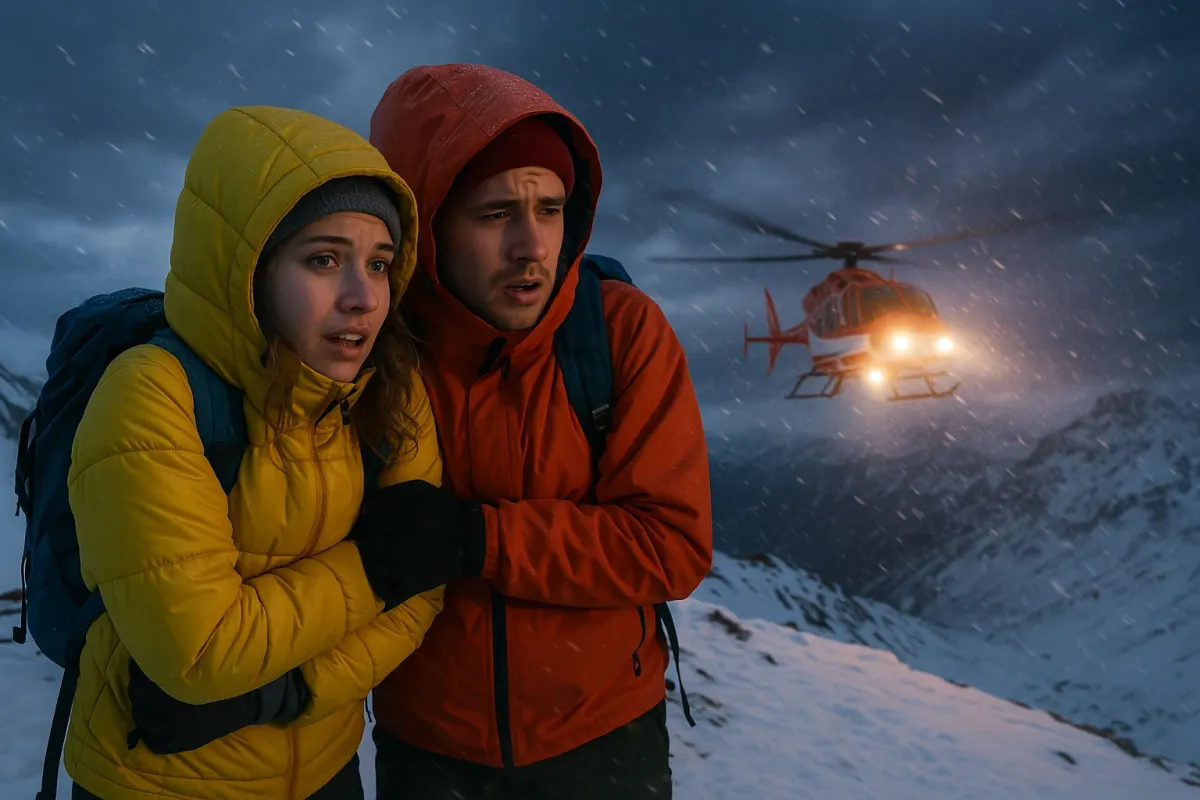
If you’ve opened a news app this week, you’ve probably seen it: the story of 33‑year‑old Kerstin Gurtner, finally identified after being abandoned by her boyfriend on Austria’s highest peak and freezing to death. He’s now facing negligent homicide charges. It’s a brutal headline, but buried inside it is a hard truth most “epic adventure” Instagram accounts never mention: mountains do not care how in love you are, how fit you look, or how many summit selfies you’ve posted.
At No Way Travel, we live for risk—but calculated risk, not chaos. So instead of turning away from this story, let’s mine it for what it really is: a harsh reminder that “extreme travel” isn’t about reckless bravado. It’s about walking the razor‑thin edge between awe and oblivion—and walking it with eyes wide open.
Below are five wild, real‑world discoveries for travelers who crave the sharp end of the experience—but who also want to come back with all ten toes and a semi‑functional relationship.
1. “Summit or Die” Culture Is Actually Killing People
The Kerstin Gurtner case is not some alpine anomaly; it’s just the latest headline in a growing stack of mountain disasters where ego outruns judgment. From overcrowded queues on Everest’s Hillary Step to inexperienced climbers paying for guided ascents up dangerously technical peaks, a toxic “summit at all costs” culture has crept from hardcore mountaineering circles into basic bucket lists.
Here’s the twist you won’t see in glossy ads: the most hardcore alpinists are often the quickest to turn back. They obsess over weather windows, bail plans, avalanche reports, and their partner’s mental state. Abandoning a hypothermic partner above the treeline is not “a terrible mistake made under pressure”—it’s a total rupture of the one rule real climbers hold sacred: the rope team returns together. If you’re drawn to big peaks, build your adventure around that code, not around a summit photo. Choose routes where you can self‑rescue. Train brutally more than you post. And pick partners who would rather crawl down a storm‑blasted ridge with you than tag the summit alone.
2. The Most Extreme Trip Might Be Learning To Say “Turn Around”
Kerstin’s death spotlights one of the most under‑rated survival skills in extreme travel: the “hell no” moment. The ability to hit brakes on a dream you’ve planned, paid for, and bragged about is rare—and that rarity gets people killed. In the high Alps, guides cancel climbs for “vibes” that sound ridiculous to casual tourists: clouds building too fast, winds picking up a little earlier than forecast, one client looking just a bit too glassy‑eyed at 3,000 meters.
If you want a real adrenaline upgrade, reframe “turning back” as an extreme sport in itself. Practice it on lower‑stakes adventures: bail on a canyoning mission when river levels jump overnight; reroute a winter road trip when black ice hits; abandon a via ferrata when your gut screams no, even if everyone else clips in. The advantage isn’t just safety; you’ll start to travel with a different kind of intensity. Every decision becomes a deliberate choice instead of a default drift into trouble. That’s the kind of edge that keeps you alive on exposed ridges, crevasse‑riddled glaciers, and remote deserts where rescue is a rumor, not a guarantee.
3. Extreme Romance Is Overrated—Extreme Buddy Systems Are Not
The Austrian case makes one thing painfully obvious: the mountain doesn’t care if this is your soulmate. Relationship status isn’t a safety system. Skill, communication, and mutual responsibility are. Many of the world’s most respected expedition teams are built less like couples and more like small, ruthlessly honest survival cults. They pre‑fight before the climb: Who decides when we turn around? What if one of us gets altitude sickness? Will we bivouac together or will someone go for help? Where is the line we absolutely will not cross?
You can build your own hardcore buddy system without being a pro alpinist. Before you chase storms in Patagonia, camp on Icelandic glaciers, or push a motorcycle across remote desert tracks, script your worst‑case scenarios out loud. Decide right now that leaving someone behind for convenience or comfort is off the table. If that conversation feels awkward or “too intense,” that’s a red flag. The more your team is willing to say the ugly thing up front, the safer—and ironically, freer—your adventure becomes. Real extremity isn’t jumping blindly; it’s agreeing that no one gets sacrificed on the altar of someone else’s ego.
4. Your Gear Is Only As Extreme As Your Knowledge
Europe’s highest peaks look deceptively tame in tourist brochures: cable cars, well‑marked trails, sunrise packages with champagne on the summit. The story out of Austria exposes how lethal that illusion can be. Hypothermia is not cinematic. It’s quiet, sneaky, and fast, especially with windchill ripping heat off your body. You can be wearing all the “right” brands and still be dangerously underprepared if you don’t understand what your gear is actually engineered to do—or not do.
Want to travel on the edge without starring in the next grisly headline? Pick one extreme environment—high altitude, deep cold, volcanic heat, open ocean—and get nerdy. Understand layering systems for sub‑zero nights, the difference between “water‑resistant” and “truly waterproof,” how fast sweat turns deadly in alpine winds, or how quickly a river can rise in glacial terrain. Turn every piece of kit into a question: What failure does this prevent? What happens if it fails anyway? Once you start thinking this way, even standard destinations mutate into wilder playgrounds. A winter hut‑to‑hut trek in the Tyrol, a multi‑day trek on the Annapurna Circuit, or a solo ski tour on a “simple” glacier all become arenas where your knowledge—not your jacket label—keeps you alive.
5. The Real Extremes Are Psychological, Not Just Physical
The boyfriend in the Austrian tragedy didn’t just misjudge the weather; he misjudged his own mind under pressure. Extreme travel rewires your brain with cold, hunger, fear, altitude, and exhaustion. You might be kind, rational, and loyal at sea level—and a panicked liability at 3,500 meters in a whiteout. Most of us never get to see that version of ourselves until something goes very, very wrong.
If you’re drawn to edge‑of‑the‑map adventures, treat your own psychology as expedition gear that needs testing. Start smaller and stranger: a solo multi‑day trail in your own country, a silent winter retreat in a remote cabin, a guided ice‑climbing day where you dangle mid‑wall and feel your lizard brain scream. Notice what happens when you’re cold, scared, and tired. Do you shut down? Get reckless? Snap at people? That data is gold. It tells you what kinds of trips you’re actually built for right now, and which ones you need to earn. The wildest discovery you can make this year isn’t a hidden canyon or an unnamed peak; it’s mapping the terrain inside your own skull before that terrain gets someone hurt.
Conclusion
Kerstin Gurtner’s story isn’t clickbait—it’s a warning flare over the entire extreme travel scene. The mountains haven’t changed. We have. Commercialization, social media, and cheap flights have dragged truly dangerous environments into the realm of casual tourism, while the old‑school rules of respect, preparation, and shared responsibility have been quietly edited out of the brochure.
You don’t have to retreat to safe, sanitized trips. You just have to get more radical about how you approach risk. Question summit fever. Train your “turn around” reflex. Build brutal honesty into your travel crew. Learn your gear like a pilot learns their cockpit. And study the way your own mind bends under stress as seriously as you study any map. Do that, and you can still chase ridgelines, storms, ice, and altitude—without becoming the next tragic name in a headline that starts exactly the way Kerstin’s did, and ends exactly the way you swore your adventure never would.
Key Takeaway
The most important thing to remember from this article is that this information can change how you think about Extreme Travel.