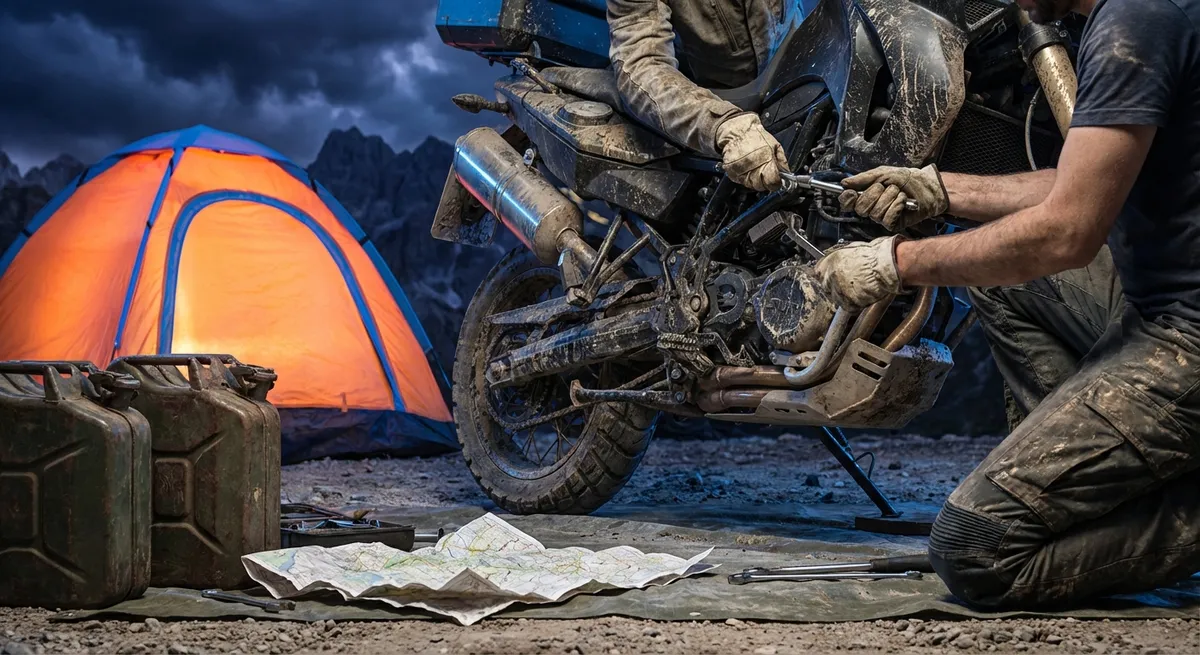
Most people travel to “see the sights.” You’re here because you want to feel something. This is not about pool loungers, predictable sunsets, or another city that looks like an Instagram filter. This is about the weird, wild edges of the planet where your phone signal goes to die and your survival instincts clock in for a full shift.
Below are five travel discoveries that don’t fit neatly on a package tour. They’re not secrets, but they’re definitely not normal. Perfect.
1. Chasing Lightning on Venezuela’s Haunted Lake
There is a place on Earth where the sky basically never turns off.
Over Lake Maracaibo in Venezuela, a phenomenon called the Catatumbo Lightning cracks across the sky up to 260 nights a year, often for hours at a time. No thunderstorm schedule, no curated light show—just nature flipping the breaker and leaving it on. Historically, sailors used these nightly flashes as a natural lighthouse long before GPS and smug smartphone maps.
Getting there isn’t your average “shore excursion.” You’re dealing with wetlands, river canals, stilt villages, and the occasional reminder that you are very much in lightning’s personal playground. The payoff: sitting in a boat or a basic riverside camp at midnight, watching silent forks of electricity tear open the horizon again and again, like the sky is glitching on loop.
This isn’t just a spectacle; it’s a commitment. You’ll navigate political instability, weather, and logistics. But if your idea of a good time is drifting in the dark under a sky that refuses to sleep, Lake Maracaibo feels like a direct plug into the planet’s power grid.
2. Ice-Caving Under a Living Glacier in Iceland
Most people are content to look at glaciers. You are going to walk inside one.
In Iceland’s winter, meltwater carves surreal tunnels through glacial ice. The result: temporary cobalt-blue caves under behemoths like Vatnajökull, the largest ice cap in Europe. These caves are not permanent fixtures—they collapse, reform, shift, and vanish. Every season is different, every passageway is new. It’s less like visiting a landmark and more like stepping into a living creature’s veins.
You go in with crampons strapped to your boots, a helmet, a headlamp, and a quiet little voice in your skull whispering, “This whole roof is frozen water hovering above your face.” Sunlight slants through compressed ice, turning the world around you into glowing, translucent blues more intense than any screen could fake.
This isn’t a casual walk. You’re on moving ice, crossing crevasses, trusting local guides who read the glacier’s mood like a cardiologist reads an EKG. If the thought of walking under thousands of tons of shifting ice makes your heart rattle in your chest—and you still want in—you’re exactly the right kind of reckless.
3. Camping Where Two Continents Rip Apart, Iceland’s Rift Zone
Most campgrounds are about scenery. This one is about tectonic violence happening in slow motion.
In Þingvellir National Park in Iceland, you can literally stroll between the North American and Eurasian tectonic plates. It’s a UNESCO World Heritage Site that happens to sit on the Mid-Atlantic Ridge, where the Earth is actively cracking itself open. Most visitors show up, snap the classic rift valley photo, and bail. But if you stay longer—especially if you camp—you start to feel the weirdness under your feet.
Rifts split the ground. Clear fissure lakes reveal submerged rock walls like someone sliced the planet open with a knife. Pop into the Silfra fissure in a drysuit, and you can snorkel the crack between continents in water so clear it feels like floating in the air. Visibility often exceeds 100 meters, which is both beautiful and deeply unsettling.
At night, when the tour buses are long gone, the park goes whisper-quiet. You might catch northern lights hanging over the divide, a reminder that you’re sleeping on a place where the Earth is still negotiating its shape. Forget borders drawn by people; this is a fault line drawn by the planet itself.
4. Descent Into a Volcano’s Throat in Thrihnukagigur
Most sane people walk away from volcanoes. You are taking an elevator into one.
Near Reykjavík, the dormant volcano Þríhnúkagígur (try saying that three times fast—or once) offers something that sounds like a bad idea but is somehow legal: you descend nearly 400 feet into its empty magma chamber. You don’t stare at lava. You stare at where lava used to live.
You ride down in an open cable lift, suspended in the throat of the volcano like bait on a hook. The walls around you look painted but they’re not—it’s raw geology, iron, sulfur, and mineral graffiti baked into the rock. At the bottom, you stand in a cavern big enough to swallow a city block, feeling very, very small and very, very mortal.
This is not cartoon danger; the volcano is considered dormant, and safety is heavily managed. But the psychological jolt is real. You’re in a space that should not be accessible to humans, a hollowed-out furnace that once held a lake of molten rock. For extreme travelers, it scratches that itch for “I definitely wasn’t meant to be here” without completely ignoring self-preservation.
5. Windchasing on Namibia’s Skeleton Coast
Some beaches are for tanning. This one is for shipwrecks, bones, and sand that behaves like it’s trying to erase the map.
Namibia’s Skeleton Coast has earned its name the hard way. Atlantic swells smash into a desert shoreline where fog rolls in thick and disorienting, and winds reshape the dunes like an endless, looping time-lapse. Scattered along this stretch: abandoned shipwrecks, rusting in slow motion, half-eaten by sand and sea. Whale bones used to litter the coast; now you see more metal than marrow, but the mood hasn’t softened.
Travel here feels less like a holiday and more like trespassing in a place the Earth didn’t plan for you. You might reach it via small plane over roaring surf and rolling dunes, or via grueling 4x4 journeys where the line between “road” and “guess” completely dissolves. Inland, desert-adapted elephants and lions patrol the dry riverbeds—wildlife that figured out how to live on the edge of nothing.
At night, away from any real light pollution, the sky over the Skeleton Coast detonates into stars. The wind never fully shuts up. You lie there and realize this coast isn’t a “destination”; it’s a dramatic argument between ocean and desert that you just happen to be witnessing for a few days.
Conclusion
Extreme travel is not about bragging rights; it’s about recalibrating your sense of what’s normal. Lightning that refuses to stop. Ice caves that melt away like dreams. Rifts where continents disagree. Dead volcanoes that open their chests. Coasts that feel like the end of the world.
None of these places are easy, and that’s the point. They demand preparation, respect, and the ability to sit with a little fear and a lot of awe. If you’re chasing the raw, unedited version of Earth, these are the kinds of trips that will rewrite your internal compass—and maybe your definition of “possible.”
Sources
- NASA Earth Observatory – Catatumbo Lightning - Overview of the persistent lightning storms over Lake Maracaibo in Venezuela
- Vatnajökull National Park (Official Site) - Information on Iceland’s glaciers, safety, and access to ice cave regions
- Þingvellir National Park (Official Site) - Geology, history, and visitor details for Iceland’s tectonic rift area
- Inside the Volcano – Þríhnúkagígur Tour Operator - Technical and safety details about descending into the dormant volcano’s magma chamber
- Namibia Tourism Board – Skeleton Coast - Background on the Skeleton Coast, access, and environmental conditions
Key Takeaway
The most important thing to remember from this article is that this information can change how you think about Extreme Travel.