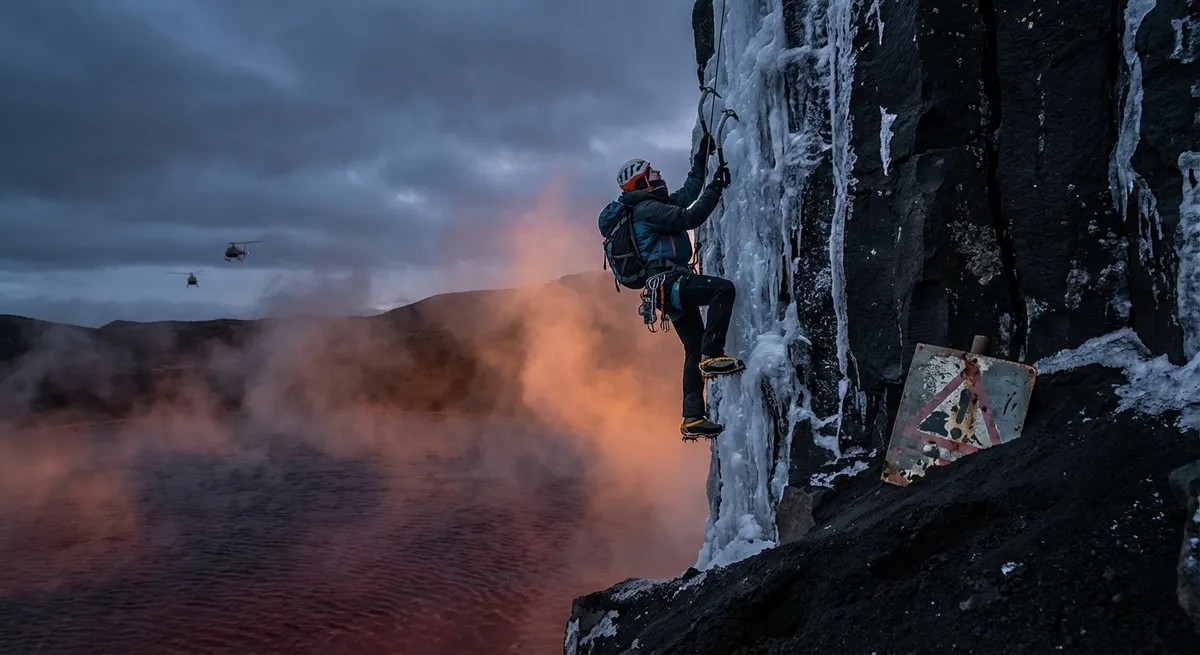
Most trips follow a script: airport, hotel, selfie, repeat. Extreme travel is what happens when you deliberately rip that script in half and wander into places that would really prefer not to be “visited” at all—environments that punish hesitation, test your nerve, and demand that you earn every second of awe.
This isn’t about Instagrammable danger cosplay. It’s about the raw, unsponsored version of Earth: hostile, magnificent, and deeply inconvenient. Below are five travel discoveries that feel less like vacations and more like pacts you make with the planet.
The Glacier Labyrinth: Navigating Moving Ice in Patagonia
If regular hiking trails are polite conversations, glacier travel in Patagonia is an argument with a slowly cracking planet. The Southern Patagonian Ice Field—shared by Chile and Argentina—is one of the largest non-polar ice masses on Earth, and it behaves less like terrain and more like something alive. It creaks, shifts, and breaks under its own weight, and you’re just an ant walking across its back.
Multi-day expeditions out of El Chaltén (Argentina) or Puerto Natales (Chile) hook you up with guides who treat crampons and ice axes like extra limbs. This isn’t a “walk on a glacier and take a photo” outing; it’s roped travel, ice climbing, whiteouts that erase the horizon, and the constant realization that every blue crevasse is a vertical grave. You learn fast that pace is survival: move too slowly and you get cold; move too fast and you ignore the hairline fractures spreading under your boots.
At night you camp on the ice or on rock outcrops, listening to thunderous avalanches echo across invisible walls. The wind can rip tents into modern art. Weather windows are fickle, so your “plan” is more of a strong suggestion that the glacier mostly ignores. Safety means traveling with certified guides, proper glacier gear, sat comms, and the discipline to turn back when the ice starts having opinions.
If the idea of marching across a moving, melting world feels uncomfortably relevant to the 21st century, that’s the point. This is climate reality, and you’re walking right on top of it.
Volcano Nights: Camping on the Edge of a Living Crater
There’s camping, and then there’s sleeping within sight of a lava lake that glows like a portal in the earth. Certain active volcanoes around the world offer guided, heavily regulated access that feels less like tourism and more like an overnight negotiation with geology. Think steep ash slopes, sulphur stench in the air, and a horizon that flickers red after dark.
In places like Mount Nyiragongo (Democratic Republic of Congo, now often restricted due to activity and security), Fuego (Guatemala), and Stromboli (Italy), specialized tours bring you within line-of-sight of churning magma, ash plumes, and incandescent rock bursts. Conditions change constantly—some days you’ll see fireworks, others just rumbling smoke that makes it clear you are very small and very breakable.
The climb is normally brutal: loose volcanic gravel, fast elevation gains, and air that gets thinner just as it gets more toxic. You carry extra water because everything is dry and extra layers because night on a peak feels like punishment. Guides track gas levels and weather; you track how much your survival instinct is screaming. You’ll learn to distinguish the sound of distant rockfalls from the deeper, stomach-level boom of gas explosions.
Extreme doesn’t mean reckless here. You go with licensed volcano guides, wear proper respiratory protection when necessary, and never—and this cannot be overstated—wander off toward “a better view.” The volcano decides what’s safe; you just listen carefully.
The reward: sitting with a headlamp off, watching liquid rock pulse beneath you, like staring into the planet’s open circuitry.
Sea Caves and Silent Tunnels: Subterranean Waterworlds
Some landscapes are vertical. Some are horizontal. Then there are the ones that run underneath everything, hollowing out mountains and coastlines into secret waterways. Extreme cave and cavern diving is one of the most unforgiving forms of travel on Earth, and even if you never strap on a tank, there are places where you can taste that intensity at the edge.
Coastal regions like the Yucatán Peninsula in Mexico, Iceland’s sea caves, and certain Mediterranean karst coastlines hide systems of tunnels, flooded chambers, and narrow rock corridors cut by water over millennia. Guided adventures range from technical cave dives (for trained divers only) to safer but still mind-bending cave swims, rappels, and underground river treks. Sunlight filters in as thin beams that feel more like clues than illumination.
Inside, sound behaves weirdly. Water drips echo like footsteps, and your breathing suddenly feels outrageously loud. You squeeze through rock chimneys, wade chest-deep in underground streams, or lower yourself into blackwater pools where the surface is the only thing separating you from total void. It doesn’t matter if you’re on rope, in a wetsuit, or both—this is an environment where panic has no exit strategy.
Extreme cave environments are zero-tolerance for ego. You follow local experts, respect line protocols if diving, wear helmets and thermal protection, and tell claustrophobia it can have a breakdown later. You also respect conservation rules—many of these caves are fragile ecosystems filled with unique species and cultural artifacts.
Emerging back into daylight after hours underground is one of the strangest highs you can have without drugs. You don’t just “see” the sky. You feel it.
High-Wind Wastelands: Chasing Storms at the Edge of Sanity
Most people avoid storms. Extreme travelers sometimes do the opposite—carefully, scientifically, and with a backup plan that includes not dying. Storm-chasing culture has been quietly evolving from cowboy adrenaline hobby to data-driven, highly specialized adventure, with tornado alleys and typhoon coastlines turning into seasonal pilgrimage sites for weather-obsessed travelers.
In the U.S. Great Plains, for example, guided storm-chasing tours shadow supercells during tornado season, threading the needle between safety and proximity. It’s long days of driving, sudden route changes, checking radar apps like they’re oxygen, and occasionally standing in open fields watching an anvil cloud mutate into something that looks too large to be real. The air goes green, thunder becomes continuous, and your adrenal glands learn new tricks.
Elsewhere, wind playgrounds like Patagonia, Namibia’s Skeleton Coast, and remote capes in New Zealand or Scotland offer less lethal but still extreme weather exposure: katabatic winds, horizontal rain, sandstorms that erase the horizon. Traveling here means building your trip around the weather, not despite it. You become a student of isobars, barometric drops, and wind forecasts.
Ethical storm chasing is non-negotiable: you travel with experienced meteorologists or veteran chasers, avoid interfering with emergency services, and never treat disaster zones like tourist attractions. You’re there to witness the atmosphere in its most unfiltered mood—then get out of the way.
The payoff: realizing that the sky isn’t decorative. It’s an engine, and you just parked yourself next to the pistons.
Cold-Edge Immersion: Polar Plunges Where the Water Wants You Gone
There’s cold water, and then there’s the kind of cold that makes your nervous system briefly forget its password. Extreme cold-water immersion—done correctly, with safety gear and medical oversight—is less about macho bravado and more about confronting the edges of human physiology in some of the starkest places on Earth.
Think Arctic fjords in northern Norway, glacial lakes in Iceland, or Antarctic expedition cruises that coordinate supervised “polar plunges.” The routine is deceptively simple: strip to swimwear (or a thin thermal layer), get clipped to a safety line, and jump into water that could kill you in minutes if you stayed. The temperature shock seizes your lungs, time telescopes down to single seconds, and your body flips every survival switch at once.
Done irresponsibly, this is dangerous. Done properly—with doctors on board, warming tents, rescue staff, and strict time limits—it’s a controlled brush with your limits. You learn about cold shock, afterdrop, and why your fingers feel like they’re buzzing with electricity when you get back out. You also learn exactly how much of your fear is physical versus mental.
Some trips pair plunges with ice hiking, snow camping, or long days in polar twilight. You move from numb extremities to hot drinks in expedition ships or rough cabins, watching bergs pass like ghost architecture while your body metabolizes what you just did.
The extreme discovery here isn’t just geographic—it’s internal. You don’t just visit the polar edges; for a moment, they inhabit you.
Conclusion
Extreme travel isn’t a hobby; it’s a negotiation with places that operate on their own non-human timelines—ice fields carving continents, volcanoes building new land, caves erasing solid ground, storms rewriting coastlines, polar seas quietly thickening and thinning.
These five discoveries aren’t bucket-list items; they’re invitations to step out of the spectator section and onto the raw stage of the planet, under guidance, with humility, and with full awareness that the environment always has veto power. If “vacation” means escaping reality, this is the opposite. This is reality, turned all the way up.
Go where comfort collapses. Go where the map isn’t the main character. And when you come back, don’t just tell people where you went—tell them what the planet said to you when you finally shut up and listened.
Sources
- National Park Service – Glacier Safety – Overview of glacier hazards and safe travel principles, relevant to understanding risks in glacier expeditions.
- U.S. Geological Survey – Volcano Hazards Program – Authoritative information on volcano activity, hazards, and safety considerations for visiting active volcanic regions.
- NOAA National Severe Storms Laboratory – Severe Weather 101 – Explains supercells, tornado formation, and storm dynamics, foundational for storm-chasing awareness.
- Centers for Disease Control and Prevention – Cold Water Immersion & Hypothermia – Details physiological risks of cold exposure, including guidance relevant to polar plunges.
- British Cave Research Association – Provides research, safety insights, and educational resources on caves and cave exploration, supporting the section on subterranean environments.
Key Takeaway
The most important thing to remember from this article is that this information can change how you think about Extreme Travel.