You don’t need another “hidden gem” that’s actually just a crowded beach with better branding. This is for the traveler who reads safety advisories as suggestions, packs more curiosity than common sense, and thinks “unreachable” is just a dare. These five extreme travel discoveries are less about photo ops and more about rewiring your brain: raw, uncomfortable, occasionally hostile, and absolutely unforgettable.
Proceed at your own risk—and with a healthy respect for the planet, the people who live there, and your own very breakable body.
Riding the Edge of Ice: Greenland’s Moving Frontier
Greenland isn’t a backdrop; it’s a living, shifting monster of ice that doesn’t care you flew 12 hours to see it. The world’s second-largest ice sheet is melting, cracking, calving, and roaring its way into the ocean—and you can literally stand on the edge of that change. Base yourself in Ilulissat on the west coast, where hulking slabs of ice break off the Sermeq Kujalleq glacier and grind through the fjord like a slow-motion avalanche.
Extreme travelers come here for the chaos of the elements: midnight hikes along the UNESCO-listed Ilulissat Icefjord in subzero wind, kayaking between icebergs that snap and groan like tectonic bones, and boat trips where you feel the ocean tilt under your feet as ice giants roll and flip. In winter, temperatures plummet and the sky becomes a battlefield of auroras and razor-cold stars. This isn’t a neat, “eco-chic” polar fantasy; it’s a front-row seat to planetary upheaval, where your gear, judgment, and tolerance for cold are constantly tested.
Respect is non-negotiable. Local Inuit communities have survived here for millennia, reading ice and weather the way most of us scroll screens. If you’re lucky, you’ll share coffee in a small kitchen and hear what climate change sounds like from those living on the fault line. Come prepared with proper cold-weather kit, hire local guides, and accept that nature has absolutely no obligation to cooperate with your itinerary.
Volcano Vigil: Sleeping in the Shadow of Active Fire
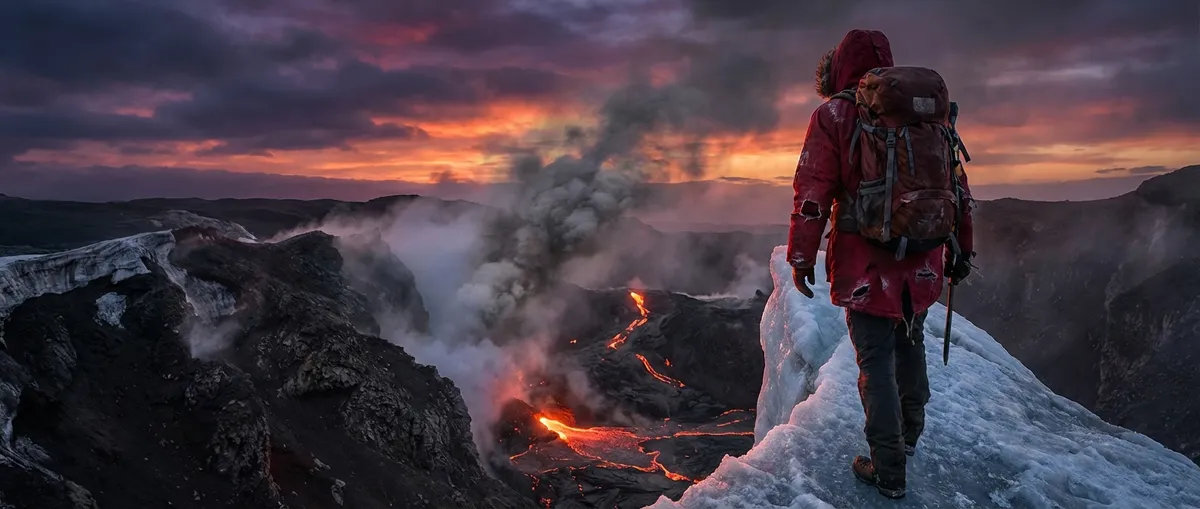
There’s a special kind of thrill in falling asleep with an active volcano humming nearby—like camping beside a god with questionable anger management. Around the world, a handful of places let you feel the Earth’s fury without crossing fully into “this is definitely a death wish” territory. Think Guatemala’s Pacaya, Italy’s Stromboli, or Vanuatu’s Mount Yasur: all volatile, all very, very alive.
Guatemala offers a particularly intense combo. Base in Antigua, then head out with a seasoned guide to Pacaya or the more brutal Acatenango. On a clear night, you can watch neighboring Fuego spit lava into the sky like a deranged fireworks show. The ash underfoot is unstable, the air thinner than your excuses, and the temperature swings from furnace to freezer in hours. You’ll feel your lungs complain, your legs stage a coup, and your risk tolerance get a hard reality check.
Extreme doesn’t mean stupid. Volcanic activity is unpredictable, and local authorities and guides track conditions obsessively for good reason. You don’t outrun pyroclastic flows; you avoid them entirely. Gear up with layered clothing, a proper headlamp, gloves, and more water than you think you need. When the ground trembles under your boots and the sky glows red, you’ll understand why humans once built entire religions around these mountains—and why you never, ever ignore evacuation orders.
Desert Silence Missions: Crossing Seas of Sand at Human Speed
Most travelers flirt with deserts from the safety of a dune buggy or a resort rooftop. You’re here because you want to walk into the emptiness and hear how loud silence can really get. From the Sahara’s endless dunes to Oman’s Rub’ al Khali (the Empty Quarter) and Chile’s surreal Atacama, the true desert experience isn’t about speed; it’s about slowness, exposure, and your brain melting as the horizon refuses to move.
A multi-day trek with camels or pack support turns the desert from a day trip into a full-on psychological experiment. You measure progress in mirages, blisters, and the angle of the sun. Your world shrinks to water rations, the crunch of your boots in the sand, and the nightly ritual of pitching camp under a sky so dense with stars it feels fake. The temperature swing can be savage—scorching heat by day, numbing cold at night—so gear discipline becomes survival, not style.
The danger here is deceptively boring: dehydration, getting lost, underestimating how far your body can go before it quits. That’s why you travel with experienced desert guides who read dunes the way sailors read waves. They know where the wells are, how to time travel with wind and shade, and when to call it. If you listen, you’ll learn more about minimalism, patience, and your own mental limits than any meditation retreat could ever teach you.
Cold Water Shock Therapy: Diving in the Planet’s Harshest Seas
Warm, turquoise water is for honeymooners. If you want an extreme upgrade, you go where the ocean is dark, freezing, and full of creatures that look like failed science experiments: think Arctic fjords, Icelandic silfra fissures, or the subpolar reaches off Norway and British Columbia. These are places where “just falling in” can knock the breath out of your lungs in seconds—and yet people willingly dive here for fun.
Cold-water diving is type-two fun at its finest. The visibility can be otherworldly: crystal-clear glacial melt revealing underwater cliffs that seem to fall into infinity, or kelp forests that sway like alien cities. Dry suits replace the easy comfort of tropical wetsuits; you waddle into the water feeling like a clumsy astronaut, then slip below the surface into an eerie, filtered-blue quiet. Every breath is deliberate. Every movement costs energy. You’re constantly negotiating with the cold.
Training and preparation aren’t optional. Hypothermia, dry-suit blow-ups, and rapid exhaustion are real risks, so you need proper certification and guides who know local conditions intimately. But the payoff is enormous: you’ll see a side of the planet almost no one bothers to visit—wolf eels peering from rocky dens, ice formations glowing from within, and the unsettling realization that the ocean isn’t a beach accessory; it’s a wild, indifferent force that just barely tolerates us.
Edge-of-the-World Rail: Remote Trains Through Hostile Landscapes
Planes skip over the chaos. Trains cut straight through it. Some of the world’s most extreme rail routes turn “getting there” into the main event: thin steel lines threading across permafrost, climbing into oxygen-starved mountains, or slicing over fragile bridges that make you question your life choices. You’re signing up not for punctuality, but for exposure.
Think of routes like the Qinghai–Tibet Railway in China, Arctic-adjacent lines in Norway and Sweden, or remote freight-turned-passenger tracks ferrying people through wild parts of Central Asia and Siberia. At high altitudes, the air gets thin enough that oxygen masks or pressurized cars become part of the experience. Outside your window: tundra, frozen rivers, bare mountain spines, and the occasional lonely settlement that looks like it was dropped there by mistake.
Long-haul, remote rail is its own mental endurance test. Sleep gets weird, especially at altitude or during polar day or night. Delays are normal, temperature swings can be brutal, and creature comforts vanish somewhere around hour 20. But if you’re chasing the romance of true remoteness, nothing beats watching entire ecosystems scroll by while you drink bad coffee in a rattling carriage. Obey local rules, respect restricted areas, don’t treat workers or residents as “scenery,” and remember: this is their lifeline, not your theme-park ride.
Conclusion
Extreme travel isn’t about danger for danger’s sake; it’s about proximity—to wild systems, unstable edges, and your own limits. Greenland’s cracking ice, volcanic fire, brutal deserts, freezing seas, and lonely rail lines all force the same question: how much uncertainty are you willing to hold for the sake of feeling fully, painfully alive?
If you go, go with humility. Hire local guides, respect regulations, pack like your life depends on it (because it might), and leave the “main character” attitude at home. The planet is still full of places that won’t bend to your plans—and that’s exactly why you should meet them on their own terms.
Sources
- U.S. Geological Survey – Glacier and Ice Sheet Monitoring - Background on glacier dynamics and ice sheet behavior, relevant to understanding Greenland’s changing environment.
- Global Volcanism Program – Smithsonian Institution - Comprehensive data on active volcanoes worldwide, including eruption histories and current activity.
- U.S. National Park Service – Desert Safety Guidelines - Practical advice on safely traveling and hiking in desert environments.
- Divers Alert Network (DAN) – Cold Water Diving Safety Tips - Medical and safety considerations for diving in cold-water conditions.
- World Health Organization – Travel and Altitude Sickness - Official guidance on traveling at high altitude, including risks relevant to high-mountain rail and trekking.
Key Takeaway
The most important thing to remember from this article is that this information can change how you think about Extreme Travel.