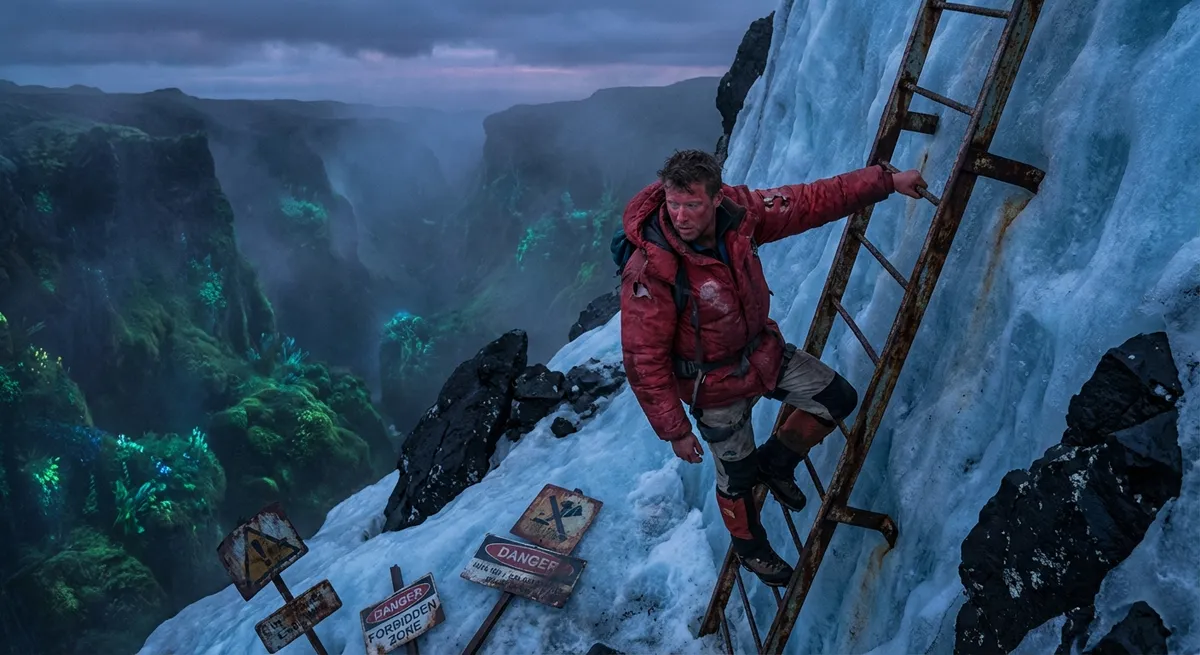
You can keep your infinity pools and “hidden gem” rooftop bars. Extreme travel doesn’t care about your resort wristband; it wants your pulse, your curiosity, and just enough recklessness to sign the waiver without reading it. These are not TikTok-friendly day trips. These are the places you stumble into once you’ve ditched the guidebook, switched off your comfort settings, and followed the weirdest line on the map.
Below are five travel discoveries that don’t fit neatly into brochures. They’re part geography, part myth, and part “are we actually allowed to be here?” Perfect.
A Desert That Eats Time: The Empty Quarter’s Moving Maze
The Rub’ al Khali—better known as the Empty Quarter—is what happens when the planet decides, “Let’s see what humans are really made of.” This is one of the largest sand deserts on Earth, a shape-shifting ocean of dunes that obliterates footprints, tire tracks, and any illusion that you’re in control. GPS glitches, horizons shimmer, and distances lie to your eyes. You don’t walk here. You negotiate.
For extreme travelers, the hook is that nothing about the Empty Quarter feels finalized. The dunes are constantly migrating, erasing yesterday’s landscape. One sand mountain might be the height of a skyscraper; another might collapse in a single season. Expeditions range from guided 4x4 crossings to multi-day camel treks that feel like time travel into pre-infrastructure history. Nights under the stars are brutal and majestic—thermometers drop, the sky explodes with constellations, and the silence hits a volume you didn’t know existed.
It’s not just emptiness, either. Hidden within this desert are fossil beds, abandoned oil exploration sites, and rare oases that appear like glitches in the simulation. Crossing here demands serious planning: water logistics, satellite communication, and guides who know how to read sand like a second language. The reward isn’t a perfect photo; it’s the raw sensation that modern life lost track of you somewhere around dune 600.
Under the Volcano’s Skin: Ice Caves and Lava Tubes in Fire Country
There are caves, and then there are the places where the planet has clearly been experimenting. In volcanic regions like Iceland or parts of the Pacific Northwest, you can drop below the surface into a layered underworld: frozen cathedrals of blue ice, and black lava tunnels that look like the inside of a dragon’s throat.
Ice caves form in glaciers that are very much alive—melting, shifting, creaking. Step inside and the world turns electric blue, lit by filtered sunlight and carved by flowing meltwater. You’re moving through a body of ice that is quietly relocating itself downhill. Roofs can collapse, tunnels can flood, and routes can change from one season to the next, turning every entry into a limited-time-only expedition.
Lava tubes are the fire cousin to all that frozen drama. These tunnels were once rivers of molten rock that drained and hardened, leaving behind corridors that can stretch for kilometers underground. Some are wide enough to drive through; others are tight, claustrophobic crawls with razor-sharp rock and absolute darkness once the headlamp flicks off. In certain regions, these tubes become survival routes for wildlife—or smugglers, or ancient travelers—leaving behind graffiti, bones, or artifacts.
Guides in these places aren’t just safety staff; they’re translators between human nerves and non-human geology. Expect helmets, crampons, harnesses, and a sudden new respect for gravity. This is the kind of extreme travel where your biggest souvenir is the echo of your own heartbeat in the dark.
The Kingdom in the Cliffs: Vertical Villages and Sky Roads
Some communities looked at sheer cliffs and said, “Yes, we live here now.” High-altitude cliffside settlements—carved into rock faces, stacked along vertical ridges, or perched on improbable ledges—offer a form of extreme travel where the adrenaline comes from everyday life: walking to the market means flirting with a 300-meter drop.
Reaching these places often involves “roads” that feel like afterthoughts. Think loose gravel tracks carved into the side of mountains, single-lane cliff highways where passing oncoming traffic requires delicate negotiation, or footpaths reinforced with wooden planks bolted directly into the rock. Guardrails are optional; faith and balance are mandatory. Weather can turn a regular transfer into an epic: fog that swallows entire valleys, sudden rockfall, or winds that shove at you like an impatient crowd.
Once you’re there, the world reconfigures itself. Oxygen is thinner, movement slows, and every errand feels deliberate. You might find monasteries clinging to ledges, houses with windows facing nothing but void, or entire communities connected by staircases and switchback paths instead of streets. Modern life drops away—no rideshares, no easy exits, no quick supply runs.
For adventurers, the reward isn’t just the view (though those are savage and cinematic). It’s the way your body recalibrates. You become acutely aware of your footing, your breathing, and your gear. Every step reminds you that humans were not meant to float safely through life on padded surfaces.
Where the Map Lies: Shifting Ice Highways and Temporal Coastlines
Head far enough north or south, and the solid ground under your feet starts editing itself. Polar and subpolar regions offer a special kind of extreme travel: landscapes that change between seasons so radically that your winter route literally cannot exist in summer. You aren’t just visiting a place; you’re visiting a version of it.
In the coldest months, rivers freeze into highways, sea ice bridges gaps between islands, and temporary overland routes knit regions together. Locals drive, dogsled, or snowmobile across surfaces that will be open water or fractured ice fields just weeks later. What shows up as void on the map can transform into a usable road network, complete with wayfinding markers built specifically for one season’s reality.
Then thaw hits, and those same routes become dangerous or impossible. Ice fractures into drifting puzzles, cracks open into leads of black water, and once-stable crossings turn into traps. Navigation switches from reading tire tracks on snow to interpreting currents, weather, and fast-changing shorelines. Extreme travelers who enter these realms with respect—and the right local knowledge—learn just how elastic geography truly is.
This kind of journey demands more adaptability than bravado. Plans are probabilities, not guarantees. Safety depends on listening to people who grew up reading this landscape: which ice “talks” before it fails, which bays turn treacherous with certain winds, which routes vanish by the week. It’s not about conquering the cold; it’s about moving through a reality that refuses to hold still.
The Unfinished Planet: Places Where the Ground Is Still Becoming
Most destinations are finished products—mountains weathered down, rivers tamed, coastlines stabilized. But there are regions where the planet is visibly, audibly under construction, and extreme travel there feels like stepping onto a worksite without hard hats big enough for the job.
Think active rift valleys where continents are literally pulling apart, or volcanic archipelagos that didn’t exist a few decades ago. You might trek across fresh lava fields still cooling beneath the surface, hike through steaming ground where hot springs and geysers erupt with zero warning, or sail around new coastlines still being sculpted by eruptions and landslides. The ground hisses, bubbles, and sometimes shakes—reminding you that tectonics doesn’t care about your travel insurance.
In some places, you can witness brand-new land forming: pumice rafts drifting on the sea after undersea eruptions, ash-choked skies turning noon into dusk, or smoking vents emerging where last year’s map showed calm terrain. Research stations, evacuation routes, and exclusion zones become part of the mental landscape; hazard maps share equal billing with trail maps.
The appeal for extreme travelers is raw creation energy. You’re not walking through the past; you’re standing in the middle of a geological sentence that hasn’t finished yet. Every route is provisional. Trails get rerouted, access closes & opens, and entire viewpoints appear or disappear as the Earth edits itself in real time. It’s less “been there, done that” and more “was there when that became this.”
Conclusion
Extreme travel isn’t about chasing danger for bragging rights; it’s about visiting the edges where reality glitches a little—where deserts move, ice builds roads, villages defy gravity, and the ground hasn’t decided what shape it wants to be. These five discoveries are invitations, not instructions: you don’t just go, you prepare, research, and partner with people who speak the language of these hostile, stunning landscapes.
If all-inclusive resorts are the planet on safe mode, these places are what happens when you switch off the guardrails and wander into the developer settings. Just remember: the world doesn’t owe you a smooth storyline. Out here, the adventure is very real, and the save button doesn’t always work.
Sources
- National Geographic – Rub’ al Khali (Empty Quarter) - Background on the Empty Quarter desert and its extreme environment
- Icelandic Meteorological Office – Volcanic Activity & Lava Fields - Official information on Iceland’s volcanic systems, lava fields, and safety advisories
- U.S. National Park Service – Lava Tubes and Caves - Overview of lava tubes, formation, and safety considerations
- NASA Earth Observatory – Polar Sea Ice and Seasonal Change - Explains how sea ice forms, melts, and affects navigation and travel in polar regions
- United States Geological Survey (USGS) – Plate Tectonics and Rift Zones - Scientific context on rift valleys, volcanic land formation, and ongoing geological change
Key Takeaway
The most important thing to remember from this article is that this information can change how you think about Extreme Travel.