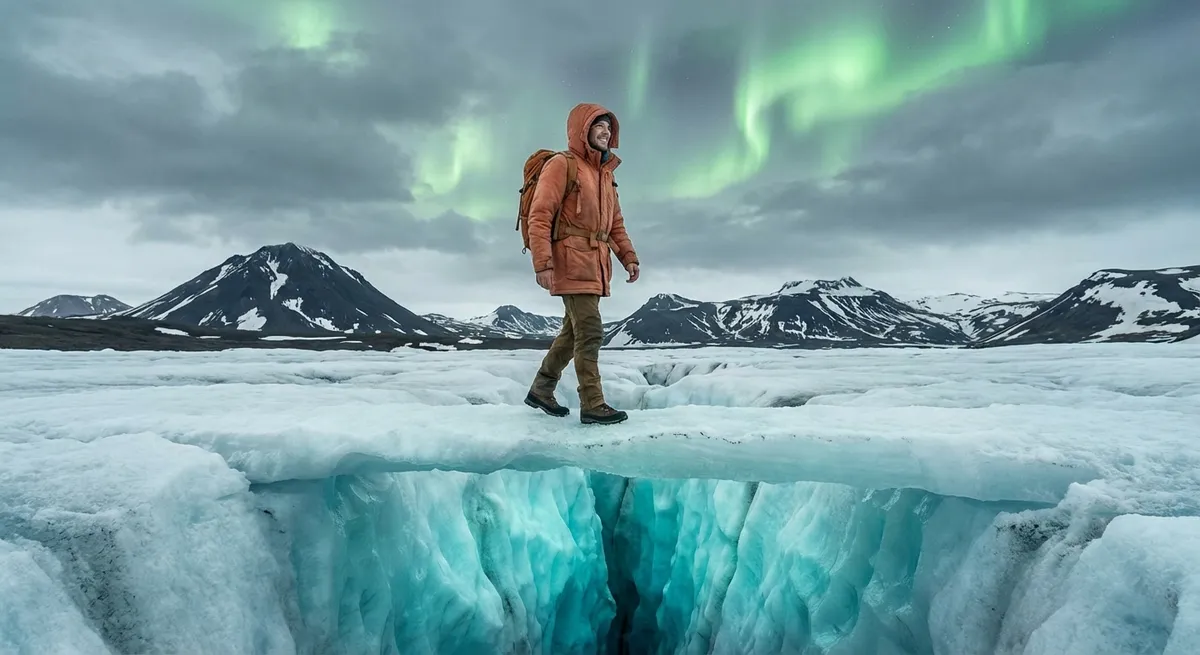
Most people travel to unwind. You’re here because you’d rather come home scraped, stunned, and slightly questioning your life choices. Welcome to the corner of the world where trips feel like dares, and guidebooks politely pretend these places don’t exist.
This is not about bucket lists. This is about experiments: five extreme travel discoveries that feel less like vacations and more like field tests on what your nerves, lungs, and comfort thresholds can handle.
1. Sleeping on Steel and Static: Freight-Train Shadows in the American West
Most travelers watch deserts through airplane windows. You can watch them from the underbelly of the system that built the country: the long, clanking skeleton of freight rail.
No, this is not an instruction manual for illegal train hopping (also: it’s illegal and extremely dangerous). But there is a whole shadow geography you only see if you follow the rails—by legal, safer means. Think budget motels and tiny towns strung along active rail lines, where the soundtrack is steel on steel and midnight horns that feel like they’re blasting straight through your ribs.
You can trace ghost routes of old westward expansion, stand in forgotten depots turned half-museums, half-storage, and hike along legal right-of-ways and public land near active lines in places like Nevada, Utah, and New Mexico. The trains become moving horizons: mile-long machines dragging containers, cars, chemicals, and the country’s hidden logistics through nobody’s hometown.
The extreme part isn’t just the environment—though nights can drop below freezing and days can scramble your brain with heat. It’s the rhythm. These towns keep railroad time, not tourist time. Freight delays your meals. Horns interrupt your sleep. And at 3 a.m. in some half-lit diner off a siding, you realize you’ve slipped into a parallel America: truckers, rail workers, drifters, and you, the only person here voluntarily.
If you go, treat it like backcountry travel for infrastructure: respect private property, avoid tracks themselves, learn rail safety, and keep your distances. You’re not the main character here—the trains are.
2. Volcano Vigil: Chasing Live Lava in the Ring of Fire
Most people settle for volcano museums and postcards. You can stand so close to a living crater that the air tastes like burning batteries and the ground vibrates under your boots.
On certain guided expeditions around the Pacific “Ring of Fire,” you can trek up active volcanoes (when conditions and authorities allow) and stare into pits of molten rock that have been boiling for longer than your entire family tree. Places like Vanuatu’s Mt. Yasur, Guatemala’s Pacaya and Fuego (from a distance when erupting), or Sicily’s Mount Etna turn “scenic viewpoint” into “I really hope the scientists know what they’re doing.”
The trek is usually a game of elements: heat you feel in your teeth, ash dusting your gear, sulfur clouds that force you to mask up or retreat, and the odd stone that reminds you gravity is flexible here. You learn to respect wind direction the way sailors respect storms.
This isn’t something you decide on a whim. You monitor volcanic activity reports, obey local closures, and book with guides who treat the mountain like a living, moody animal. The best ones carry gas masks, radios, and a healthy fear of sudden change.
The payoff is insane: night-time eruptions painting the sky neon orange, rivers of lava flowing like slow lightning, and the unnerving awareness that the planet is not a rock—it’s a breathing, molten system, and you’re standing on the thinnest part of the crust.
You leave smelling like sulfur, with gear flecked in ash and a new appreciation for the word “unstable.”
3. Silent Dive into Old Wrecks: Shipwreck Corridors Under a Different Sky
Beaches are for most people. You’re here for the places where boats went to die.
Wreck-diving takes the ocean from backdrop to labyrinth. While warm-water reef dives are for postcards, exploring shipwreck corridors in places like Micronesia’s Truk Lagoon, Egypt’s Red Sea, or the cold, eerie Atlantic off Scotland and Norway feels like trespassing inside time itself.
You descend through green or cobalt water and suddenly a shape materializes: bow, mast, hull, guns, cranes, cargo. These are not abstract “sites.” They are snapped-off stories—warships, cargo vessels, tankers—some swallowed in minutes during storms or battles, then slowly colonized by coral, algae, and fish. Floors tilt at impossible angles. Stairwells become vertical tunnels. Rust has its own architecture.
The extreme element isn’t just depth. It’s overhead environments, tight squeezes, and the psychological weight of knowing you’re moving through sealed spaces with a ceiling, relying entirely on your equipment and your training. Technical wreck-divers plan their penetrations like spacewalks: redundant air, reels of guideline, strict time limits.
Even recreational-level wreck dives (staying outside or in large, open sections) demand control. You learn to fin without kicking up silt, because one sloppy move can erase visibility in a brown-out. You manage nitrogen load and cold. You keep a mental 3D map of every turn.
This is not a casual “try diving once” field trip. You earn it: certification, practice, progression. The reward is perspective. Overhead, the surface feels like another planet. Underneath, fish swirl through broken windows of a ship that once crossed these exact coordinates alive.
You rise back into sunlight with salt-dried lips and the faint sense you’ve just walked through someone else’s ghosts.
4. Storm-Chasing on the Plains: Riding the Edge of the Sky’s Temper
While most people run from bad weather, there’s an entire underworld of travelers who drive straight toward it: storm-chasers.
The American Great Plains—Oklahoma, Kansas, Texas, Nebraska—turn into an atmospheric colosseum every spring. Under the right conditions, you can join expert-led storm-chasing tours that treat supercells and tornadoes not as disasters to exploit, but as extreme phenomena to carefully observe.
From a distance, it feels like witnessing gods argue. Sickly green skies, rotating updraft towers stacked like dark wedding cakes, lightning branching horizontally across half the horizon. Radar apps become your maps. Weather models your guidebook. Highways your gridlines on a giant living board game.
The danger is real—flooded roads, hail the size of golf balls, fast-moving tornado tracks—but the pros play by strict rules: never out-run a storm blindly, never cut escape routes, never get too close for a dramatic photo at the cost of your life. You follow spotter networks and official warnings, and you respect local communities who may be experiencing real loss while you’re learning.
A storm-chasing road trip is less about adrenaline selfies and more about humility in the face of scale. You realize the sky itself is a biome: boundaries, flows, collisions, violence, and sudden peace. One minute you’re in blinding rain, the next you’re standing in eerie calm under a rotating monster, listening to thunder roll across 50 miles of empty fields.
You come away with a new instinct: checking the sky by feel before checking your phone.
5. Frozen River Marches: Walking Winter Roads That Disappear in Spring
Most travelers avoid ice like a hazard. You can walk on water that becomes a highway, a supply line, and a short-lived universe all at once.
In some northern regions—Canada’s Northwest Territories, parts of Alaska, Scandinavia, and remote Siberia—winter builds roads where none exist the rest of the year. Frozen rivers and lakes become seasonal arteries for communities, freight trucks, and, if you’re stubborn enough, a very different kind of trek.
This is not a wander-out-alone situation. It’s a guided, hyper-local, timing-sensitive mission. Think multi-day expeditions on skis, fat bikes, snowshoes, or sleds over thick ice and packed snow, following routes that only exist for a brief meteorological window each year. Daytime you move, nights you shelter in remote cabins, heated tents, or local guesthouses when near settlements.
The cold punishes laziness. Forget a layer and you remember for hours. Your breath crystallizes on your balaclava. Gear failures aren’t inconveniences—they’re genuine threats. You learn to read ice: color, cracks, sounds. You follow local knowledge obsessively, because they know where currents thin the ice, where overflow hides under snow, and when the season is turning unsafe.
The silence is extreme. No engine noise, no waves, no leaves. Just your steps squeaking on compressed snow, wind, and maybe the distant groan of shifting ice. The travel line is entirely temporary; by spring, meltwater will erase your footprints as completely as if you’d walked across the sky.
You finish with frostbitten respect: for people who live this every year, for a planet that still has seasons with teeth, and for the idea that not all roads deserve to be paved.
Conclusion
Extreme travel isn’t about chasing danger for bragging rights. It’s about stepping into the parts of the world where the dial is turned up: the infrastructure skeleton under civilization, the molten lungs of the planet, shipwreck time capsules, wild-breathing skies, and winter roads that exist like rumors.
If you go, go eyes-open and skill-forward: train properly, hire people who know the terrain, listen to locals, and treat risk as a system to be understood, not a thrill ride to be hacked. The payoff isn’t just the adrenaline spike; it’s the way normal life feels hilariously tame when you come back.
There’s a whole planet operating outside the comfort algorithms. These were five doors into it. The rest, as always, you’ll have to find the hard way.
Sources
- U.S. Federal Railroad Administration – Railroad Safety - Official information on rail safety and regulations in the United States
- U.S. Geological Survey (USGS) Volcano Hazards Program - Up-to-date data and background on volcanic activity and associated risks
- Divers Alert Network (DAN) - Detailed guidance on wreck-diving safety, training, and risk management
- National Severe Storms Laboratory (NOAA/NSSL) - Educational resources on severe storms, tornado formation, and storm safety
- Government of Northwest Territories – Winter Roads - Official information on seasonal ice and winter roads, conditions, and safety considerations
Key Takeaway
The most important thing to remember from this article is that this information can change how you think about Extreme Travel.