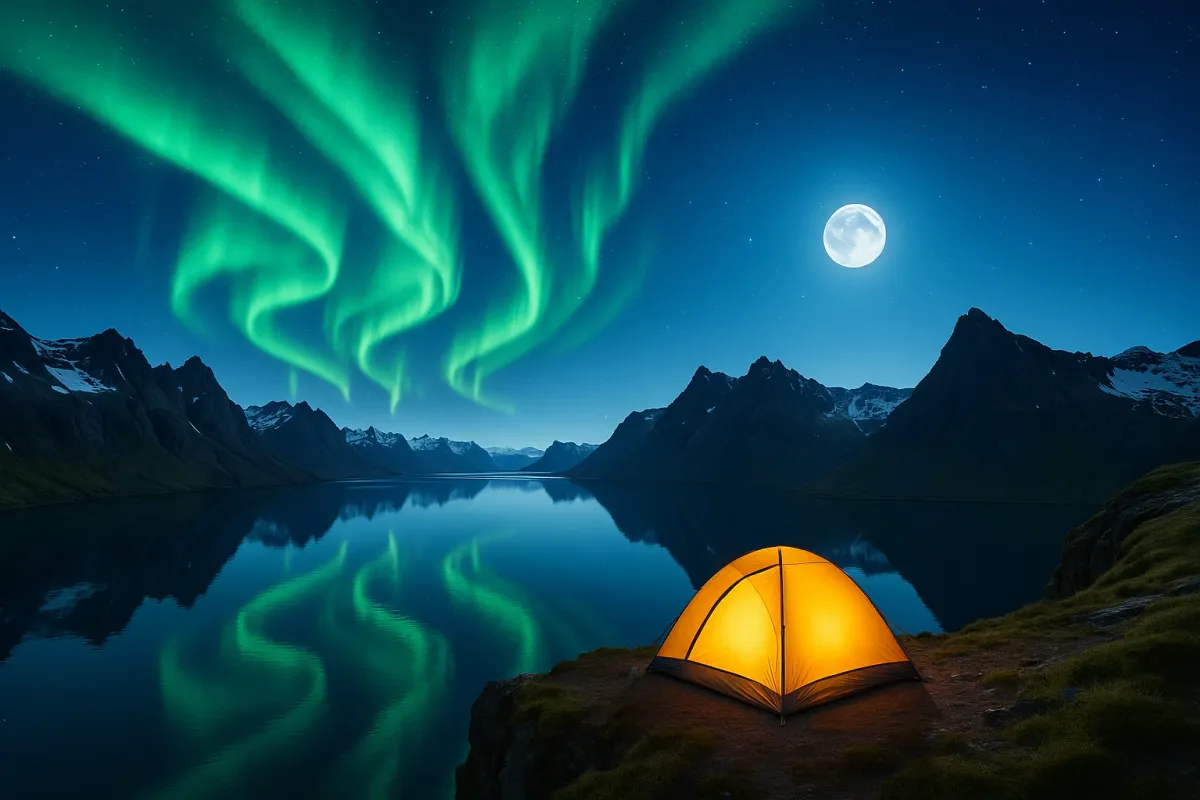
Everyone’s doom‑scrolling the same beach sunsets, but somewhere out there, a silent glacier is glowing blue with no one watching, a salt flat is turning the moon into a giant mirage, and a volcano is throwing free light shows for anyone bold enough to hike past the “viewpoint” sign.
With the Nature Photographer of the Year winners making the rounds online again—reminding us the planet still does jaw‑dropping without filters—it’s the perfect moment to ask: why just like those photos when you could walk straight into them?
Below are five wild places that feel like you’ve stepped inside an award‑winning nature shot—without the crowds that usually come with “top 10 bucket list” fame.
Ice Caves That Look Photoshopped: Vatnajökull’s Blue Heart, Iceland
Those mind‑bending glacier photos topping photography contests this year—electric‑blue ceilings, glassy tunnels, light dripping through the ice like stained glass—are often shot under the same ancient giant: Vatnajökull, Europe’s largest ice cap. Most visitors stick to the big‑bus tours and the famous lagoon viewpoints. You can do better.
Go in deep winter and hire a small, independent glacier guide (not the mega‑tour operators). Ask for the lesser‑known ice caves—the ones that require a bit more hiking or crampon time. These caves shift and reform every year as the glacier moves, which means no guidebook can ever be fully up to date—and no Instagram spot can stay “famous” for long. Step inside and it feels like you’ve slipped under frozen ocean waves mid‑crash: sapphire walls, air so quiet you can hear meltwater drip, and a sense of “wow, we really are tiny” you can’t fake.
The catch: this is not a place for solo heroics. The same forces that make these caves beautiful also make them unstable. Go with glacier pros, bring a real camera if you’ve got one, and accept that the best shot you’ll get might be the one your eyelashes take as they freeze.
A Salt Mirror That Eats Tripods: The Quiet Corners of Salar de Uyuni, Bolivia
When nature photographers win awards for “otherworldly landscapes,” there’s usually one suspect behind the curtain: a salt flat during the wet season. Salar de Uyuni is the most famous—so famous that parts of it can now feel like an open‑air Instagram studio. Tripods. Props. Drone armies. You know the deal.
But here’s the twist: the flats are the size of a small country. Most tours only skim the same accessible sectors. If you want the “am I walking in the sky?” illusion without a dozen influencers recreating the same perspective trick behind you, book a 3–4 day expedition‑style tour that pushes to the remote fringes of the salar and nearby volcanoes. Sleep in basic salt brick hostels, chase reflections where the road dissolves, and watch the moon inflate on the horizon until it looks like the supersized lunar shots that keep going viral.
This is not comfort travel. The altitude is rude. The wind will exfoliate your soul. Gear dies fast in the salt mist. But when the water’s perfectly still and the sky goes pure gold to ink‑black, you’ll understand why photographers plan their entire year around catching this exact 20‑minute window.
A Volcano with Front‑Row Lightning: Sakurajima’s Fiery Backstreets, Japan
Nature photo awards love volcanic drama—ash clouds, lava fountains, those impossible “volcanic lightning” shots. One of the most obsessively photographed culprits is Sakurajima, the hyperactive volcano just off Kagoshima in southern Japan. Day‑trippers ride the ferry, snap a distant pic from the official observatories, and head back for ramen.
The better move? Stay on the island. Sleep in one of the modest local ryokan or guesthouses, and wander the web of quiet roads that lace the coast. You can’t go right up to the crater (for good reason), but there are legal, safe zones where you’ll feel offensively close: abandoned fields dusted with ash, half‑buried torii gates, and hot springs with volcano views so intense you start checking evacuation routes mid‑soak.
On restless nights, minor eruptions pop like distant artillery. Ash drifts down like grey snow, and locals sweep it like it’s just one more annoying leaf fall. It’s a hidden gem not because it’s unknown—but because almost no one slows down long enough to feel what it’s like to actually live under a constantly smoking giant instead of just photographing it from a bus window.
A Forest That Hides Real‑Life Fairy‑Light Rivers: Firefly Season in Rural Japan & Malaysia
Those award‑winning night shots of firefly‑lit forests—trees glowing like someone wrapped them in a million slow‑breathing LEDs—are very real, and very poorly shared by mainstream tourism. Everyone knows cherry blossoms; almost no one plans a trip around synchronized insects.
Two quiet hotspots: the rural river villages of Malaysia (like Kampung Kuantan or Kampung Bukit Belimbing) and tucked‑away valleys in Japan’s countryside (think rural Kyushu or central Honshu) during peak summer. Instead of neon cities, you get slow rivers, wooden bridges, and humid nights thick with sound. Around new moon, entire groves start pulsing in unison, like the underbrush signed a lighting contract.
Skip the mass‑market firefly “cruises” that blare music and spotlight the trees. Find the low‑key homestays or tiny inns working with local conservation groups. They’ll take you out in silence, maybe in a small paddled boat or on foot, no flash allowed—because the point isn’t your selfie, it’s watching a living organism sync its heartbeat to thousands of neighbors. It’s as close as travel gets to stepping into a long‑exposure astro shot—only this time the constellations are at arm’s length.
A Desert That Turns Into An Alien Ocean at Night: Bioluminescent Shores in Remote Bays
Nature photography contests are dripping with bioluminescence this year—shorelines glowing electric blue, kayaks slicing through liquid stars, footprints fizzing on dark sand. Most people see those shots and assume it’s Photoshop. The reality is wilder: the ocean is full of tiny organisms that light up when disturbed, and they tend to reward travelers who willingly ditch neon cities for pitch‑black coasts.
Skip the overrun “famous” glowing beaches and aim for more obscure bays in places like Mexico’s Pacific side, isolated Greek islands, or lesser‑known coves in Southeast Asia. Look for local chatter about “the sea lighting up” rather than glossy brochure promises; bioluminescence is moody and seasonal, and the best displays tend to happen far away from big ports and resort strips.
Stay in basic beach shacks. Kill every artificial light you can. Then walk into the water on a moonless night and watch each step explode into blue sparks. Run your hand just under the surface and you’ll get a comet tail. It’s the same magic that keeps winning night‑photography awards—but standing waist‑deep in a glowing bay, you realize the wildest part isn’t the photo you could take. It’s the part your camera will never quite catch: the hiss of waves, the darkness behind the blue, and the quiet, unnerving thought that this planet still has tricks left.
Conclusion
As the Nature Photographer of the Year images ricochet across your feed—luminous ice caves, burning skies, deserts that look like other planets—remember: every one of those frames is also a GPS coordinate you can step into.
The secret isn’t chasing the exact shot. It’s chasing the conditions: cold enough to freeze a glacier cave, wet enough to flood a salt flat, dark enough to let plankton ignite, quiet enough for fireflies to risk a light show.
If you’re willing to trade convenience for strangeness, timetables for tides and eruptions, and five‑star hotels for places where the night sky is the main amenity, you’ll stop scrolling through nature’s greatest hits—and start walking around inside them.
Key Takeaway
The most important thing to remember from this article is that this information can change how you think about Hidden Gems.