There’s comfortable travel—monogrammed pillows, skip‑the‑line passes, beige memories—and then there are the trips that leave your friends saying, “You did what?” This is about the second kind. Extreme travel isn’t just dangling off cliffs or paying too much for a basecamp selfie; it’s rewiring how you move through the planet, flirting with the literal and psychological edges of the map—and coming back with stories that sound slightly illegal but somehow aren’t.
Below are five off‑limit‑adjacent discoveries for travelers who get bored the moment the guidebook agrees with them. These aren’t “hidden gems” or “secret spots”—they’re places and experiences that make you question whose idea of “normal” we’ve been following this whole time.
1. Chasing the Planet’s Breath: Active Volcano Sleepovers
Most people admire volcanoes from a polite, telephoto distance. You’re not “most people.” Across the planet, a handful of volcanoes let you camp, trek, or even sleep within earshot of a lava lake or glowing crater—close enough to feel the mountain’s exhale in your chest.
Think of places like Mount Nyiragongo in the Democratic Republic of Congo (when open and safe) or Guatemala’s overnight treks near Acatenango and Fuego, where you can watch incandescent eruptions stitch orange scars into the night. Even where camping on the rim isn’t allowed, guided night hikes can get you astonishingly close to the action, with geologists and rangers explaining why this particular act of madness is still technically responsible.
The catch: volcanoes are not props. Eruptive activity, noxious gases, and shifting regulations mean access changes constantly. This is an expedition you outsource to professionals—local guides who live in the mountain’s shadow, follow seismology reports like sports scores, and know when to turn back, no matter how epic the view.
If you can handle sleeping inside a low rumble, the payoff is an eerie sense of scale shift: cities and careers shrink into background noise while the earth casually liquefies itself in front of you. It feels less like “seeing a sight” and more like crashing a million‑year‑long backstage show.
2. Borderline Journeys: Legal Crossings at Impossible Edges
Most border crossings are tedious lines and grim fluorescent lighting. But there are a few where geography, politics, and pure absurdity collide into something that feels like stepping through a glitch in the world’s operating system.
Consider cold‑war‑era sites in Europe where you can still walk between countries in seconds—old no‑man’s‑lands turned into peaceful hiking paths with discreet posts marking what used to be a hard line. Or bizarre junctions like the village of Baarle on the Belgium–Netherlands border, where invisible lines zigzag through streets, cafes, and even front doors. Have coffee in one country and pay your bill in another without leaving your seat.
Then there are “triple borders” where three nations kiss at a single point—like the meeting of Argentina, Brazil, and Paraguay near Iguazu, or the more remote high‑mountain junctions in Central Asia where altitudes and politics both get dizzy. These are liminal spaces where flags, languages, and laws shift in the space of a footstep.
The extremity here isn’t danger; it’s perspective. You start realizing that the rules shaping your life are sometimes just paint on the ground. Moving through these crossings legally and respectfully—learning the history, talking to locals, reading the monuments and scars—turns a bureaucratic checkpoint into a live lesson on how fragile and negotiable our maps really are.
3. Dark Sky Pilgrimages: Hunting the Last True Night
Extreme doesn’t have to mean vertical. It can also mean subtractive—stripping away the light, the noise, the grid. Dark‑sky reserves and remote polar latitudes are modern pilgrim routes for those who want to see what the sky looks like without human ego smeared all over it.
In places like Chile’s Atacama Desert, rural Namibia, or officially designated dark‑sky parks across North America and Europe, observatories and small astro‑lodges cater to travelers willing to trade nightlife for night sky. Lie on your back and the Milky Way doesn’t look like a postcard; it looks like a wound in the darkness, pouring starlight.
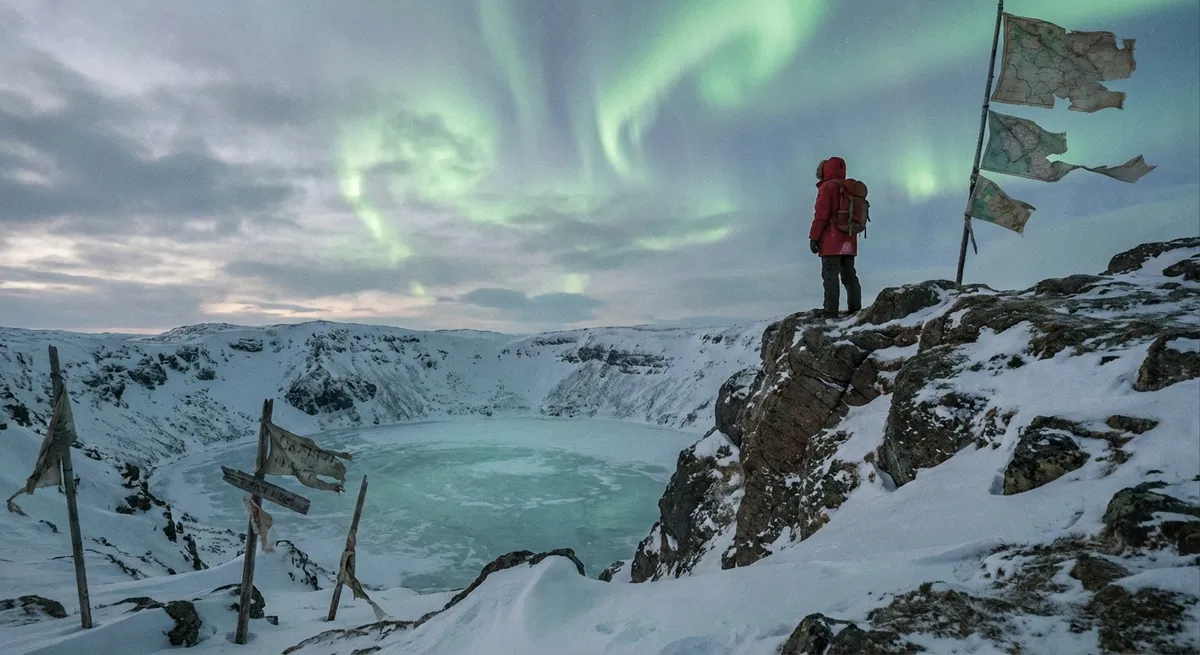
Push north or south at the right time of year and the show upgrades: aurora borealis in the Arctic, aurora australis in the Antarctic fringe. The catch is that these displays are moody—guided more by space weather than human convenience. You might spend nights in extreme cold, watching clouds and muttering at solar wind charts, only to get 20 minutes of curtains of electric green that completely rewire your internal definition of “worth it.”
The extremity here is sensory and emotional. For urbanized humans, genuine darkness is unnerving; you can’t see the horizon, your depth perception collapses, your brain starts inventing shapes. Then the stars come out in numbers you didn’t know existed, and suddenly your problems have the appropriate size: microscopic.
4. Tidal Traps and Moving Paths: Walking Roads That Vanish
Some of the world’s most surreal routes exist only part‑time, materializing and dissolving with the tides like the planet’s own disappearing ink. Walking or driving them—safely, with planning—is like stepping into a negotiation between land and ocean, where you’re the least important party at the table.
In parts of France and the UK, centuries‑old tidal causeways connect mainland to island for just a few hours a day. When the sea pulls back, a road appears; when it returns, it swallows everything, including the overconfident. Elsewhere, guided mudflat walks let you hike seafloors between sandbanks, your path dictated by sandbars, currents, and timing down to the minute.
The logistics are ruthless: you study tide tables like sacred texts, consult local authorities, and go with licensed guides who know exactly how fast the water will move when it decides it’s done being polite. One misjudgment, and your epic walk becomes a helicopter‑rescue anecdote—if you’re lucky.
What makes this so intoxicating is the ephemeral nature of the route. This isn’t a trail carved into rock; it’s a temporary invitation from a body of water that clearly doesn’t care if you make it. Every step is a reminder that the “solid ground” we take for granted is sometimes just a trick of timing.
5. Pressure, Silence, and Cold: Human Limits as Tourist Attractions
Some extreme experiences aren’t tied to one landmark, but to the edges of what your body can handle when you deliberately go poke the limits. These are the trips where you’re essentially paying to become a lab rat in your own experiment: how far can I push this machine I live in?
High‑altitude trekking and mountaineering introduce you to thin air headaches, burning lungs, and the weird, floaty thinking that comes with low oxygen. Polar trips confront you with cold so absolute it stops being “weather” and starts being a force—brittle eyelashes, frozen gear, the constant math of frostbite vs. exposure. Deep scuba dives add pressure, nitrogen narcosis, and the unnerving realization that your survival now depends on equipment and discipline more than instinct.
In all these cases, the experience is less about the bragging rights and more about the negotiation with your own limits—heart rate, panic thresholds, pain tolerance. You’re surrounded by guides who treat acclimatization schedules, cold‑injury protocols, and dive tables like scripture, because at these edges, improvisation is just a fancy word for “accident.”
When done responsibly, these journeys give you a slow‑burn superpower: a calibrated humility. You come home weirdly calm in airports and meetings because you’ve learned what actual risk feels like, and how it’s managed with boring, meticulous care—not swagger.
Conclusion
Extreme travel isn’t defined by how close you came to not coming back. It’s defined by how far you step outside the consensus reality of “normal vacation” and into spaces where the rules feel different—geologically, politically, or biologically.
Maybe that’s a night listening to a volcano’s heartbeat, a morning crossing two borders in one coffee break, or a week waiting on the aurora like a groupie stalking a mercurial rockstar. The point isn’t to collect danger points; it’s to collect perspective—the kind you can’t download, filter, or fact‑check from your sofa.
If you go chasing these edges, do it like a pro: obsessive prep, deep respect for local expertise, and a hard line between “bold” and “stupid.” The world will happily kill you if you insist. But if you treat it like an ancient, indifferent playground with rules you’re still learning, it might instead hand you the one souvenir worth hauling home: a permanently upgraded sense of what it means to be alive on this very strange planet.
Sources
- US National Park Service – Dark Sky Parks and Programs – Overview of dark‑sky initiatives and parks with exceptional stargazing
- International Dark-Sky Association – Directory and criteria for certified dark‑sky places around the world
- UNESCO – Global Geoparks – Information on volcanic and geological sites recognized for their scientific and cultural value
- British Geological Survey – Volcanoes – Background on volcanic hazards and why expert guidance is essential
- National Oceanic and Atmospheric Administration (NOAA) – Tides and Water Levels – Explanation of tidal dynamics relevant to tidal causeways and coastal travel planning
Key Takeaway
The most important thing to remember from this article is that this information can change how you think about Extreme Travel.