If your idea of “adventure” is picking the spicy option on a tasting menu, this is not for you. This one’s for the travelers who see warning signs as invitations, backup plans as optional, and comfort zones as something to be detonated, not expanded. We’re diving into extreme travel discoveries that live on the edge of what’s reasonable, sensible, or arguably sane—places where Google Maps gets nervous and travel insurance policies start sweating.
These aren’t your “hidden gems” or “underrated city breaks.” These are the trips where you ask: If things go wrong here… who’s actually coming? And you go anyway.
1. Hiking on Living Ice: Sleeping Above Crevasses in Glacier Country
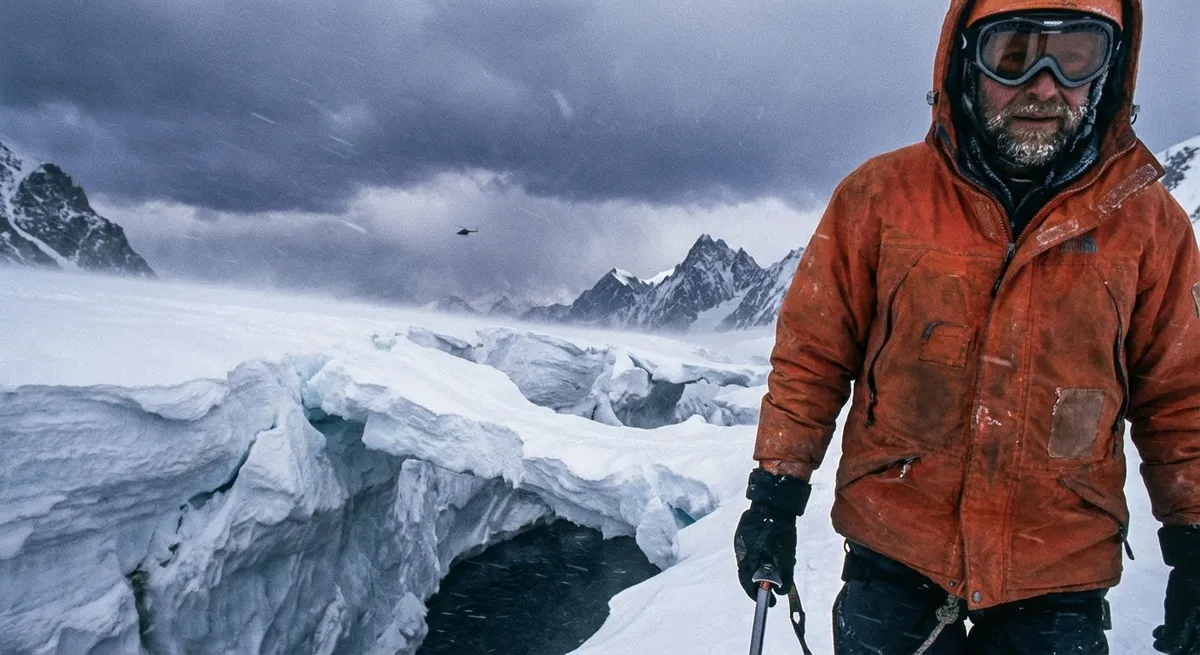
Glaciers aren’t just big ice cubes; they’re slow-motion rivers that crack, shift, swallow gear, and occasionally people. Extreme travelers are now leaning into this instability with multi-day glacier expeditions where you rope up, haul your world on a sled, and sleep on ice that’s literally moving beneath you.
In places like Iceland, Alaska, and Patagonia, guided expeditions let you strap on crampons, cross snow bridges that could collapse if you misstep, and camp on the glacier’s surface under skies that refuse to go fully dark in summer. You’ll learn crevasse rescue, self-arresting with an ice axe, and how to read snow that’s pretending to be solid but is actually a thin lid over a frozen abyss.
This isn’t a day hike selfie moment; it’s you vs. a frozen giant that’s constantly reshaping itself. Gear failure or poor judgment here doesn’t mean a twisted ankle—it can mean an unplanned one-way trip into a blue-lit ice cathedral. The tradeoff? You’ll walk through landscapes that look like another planet: sapphire melt pools, ice caves, and ridgelines carved by time and physics, not by hikers’ boots.
2. Volcano Proximity Trips: Ash Clouds, Lava Flows, and Exit Plans
Some travelers take photos of volcanoes. Others want to feel them—hear them roar, watch lava tumble out of the earth, and camp close enough that you’re mentally timing how fast you can run if things escalate. Active volcano tourism has gone from niche to nearly mainstream, but there’s still a thin line between “wild” and “what were you thinking?”
Destinations like Vanuatu’s Mount Yasur, Italy’s Stromboli, Guatemala’s Fuego, and Indonesia’s Semeru draw travelers who like their landscapes unstable. You’ll hike across fresh volcanic rock still warm in places, watch eruptions puncture the night sky with fire, and feel distant booms vibrate through your chest. You’ll also get intimately familiar with evacuation routes, gas mask protocols, and the difference between “persistent activity” and “you should really leave now.”
The discovery here isn’t just lava—it’s timing. There are windows when volcanoes are active but not catastrophic, where you can watch the planet vent without becoming part of a disaster documentary. To play this game, you need to be okay with plans changing fast: trails closing, alert levels rising, and guides saying, “We’re turning back.” The mountain doesn’t care about your itinerary.
3. Blue Holes and Blackouts: Underwater Sinkholes for the Non-Casual Diver
On the surface, a blue hole looks like a calm, perfect circle of dark water. Below? A vertical tunnel into another dimension. These underwater sinkholes, found in places like Dahab (Egypt), the Bahamas, and Belize, lure advanced divers with their sheer depth, eerie stillness, and the intoxicating simplicity of down, down, down.
For extreme travelers who’ve already done coral reefs and shipwrecks, blue holes offer a different thrill: the combination of technical challenge and psychological intensity. There’s often little marine life in the deeper sections, just rock, silence, and your own breathing. It’s easy to lose track of depth and time. In the most notorious blue holes, like Dahab’s “Blue Hole,” overconfidence has a very public body count.
The real discovery isn’t just the hole—it’s the edge of your own comfort in an environment that doesn’t forgive mistakes. You’ll prepare like an astronaut: gas management, decompression plans, redundant equipment, and an unromantic understanding that nitrogen narcosis will make you dumber right when you need your brain most. You’re not here for pretty fish. You’re here to dance with physics, math, and your own limits.
4. Storm Chasing as a Travel Itinerary: Running Toward the Weather
While everyone else checks the forecast trying to avoid bad weather, some travelers are booking flights into it. Extreme storm chasing trips—particularly in the U.S. Tornado Alley and parts of Australia and Argentina—turn the sky into an unpredictable, swirling destination.
You’ll ride in reinforced vans with meteorologists who stare at radar like it’s a prophecy, racing along backroads to intercept supercells and tornadoes. You’re not passively watching from a hotel window; you’re deliberately positioning yourself near rotating walls of cloud that can throw entire buildings around like toys. One wrong road, one misjudged speed, and a scenic detour becomes a survival problem.
But then there’s the payoff: watching a wedge tornado carve across open fields, lightning rip apart the horizon in strobe-like bursts, or a rotating mesocyclone tower above you like a slow, spinning cathedral. The discovery isn’t just the storms—it’s the choreography of chasing them. You’ll learn how weather systems form, how to read real-time radar, and how quickly a clear sky can mutate into something apocalyptic.
5. Deep Desert Crossings: Where Water Matters More Than Wi‑Fi
Most people flirt with deserts from the safety of a day tour: a sunset dune walk, a camel ride, maybe a night in a tent with fairy lights and Wi‑Fi. Deep desert expeditions are not that. They’re days or weeks spent in places where shade doesn’t exist naturally, temperatures swing from searing to freezing, and your water supply dictates everything you do.
From the Empty Quarter on the Arabian Peninsula to sections of the Sahara, Gobi, or Australia’s interior, serious desert crossings demand relentless calculation. How many liters you carry vs. how many kilometers you can realistically cover. When you move (often at night or early dawn) vs. when you hunker down under whatever shade you can rig. How you navigate when dunes erase tracks and “landmarks” are just slightly different versions of nothing.
The big discovery here is how fast modern convenience falls apart. Batteries die. GPS can fail. Sandstorms can erase visibility and push you off course. Dehydration doesn’t arrive dramatically—it sneaks in, clouding decisions just when clear thinking is critical. And yet, when the sky fills with more stars than you thought existed and the silence is so complete you hear your own heartbeat, it’s hard not to feel like you’ve stepped off the edge of the mapped world into something raw and original.
Conclusion
Extreme travel isn’t about bragging rights or adrenaline addiction; it’s about stepping into environments where consequences are real and control is an illusion. Glaciers that move under your feet, volcanoes that could wake up angry, underwater chasms that swallow light, storms that rewrite landscapes, deserts that strip life down to its essentials—these are not “destinations” so much as negotiations with the planet itself.
If you go, go like a professional: trained, guided, over-prepared, and humble. Because the wildest discovery you’ll make on these trips isn’t the place—it’s the sharp, undeniable awareness that you are very small, very mortal, and very, very alive.
Sources
- U.S. National Park Service – Glacier Safety - Overview of glacier hazards and safety practices for travelers in icy terrain
- U.S. Geological Survey – Volcano Hazards Program - Scientific background on volcanic activity, alert levels, and associated risks
- Divers Alert Network (DAN) – Technical and Deep Diving Risks - Detailed discussion of the hazards involved in deep and technical dives, including blue holes
- National Severe Storms Laboratory (NOAA NSSL) – Severe Weather 101 - Educational resource on tornadoes, supercells, and storm formation used by both researchers and chasers
- NASA Earth Observatory – Deserts and Desertification - Scientific overview of desert environments, climate, and conditions that shape extreme desert travel
Key Takeaway
The most important thing to remember from this article is that this information can change how you think about Extreme Travel.