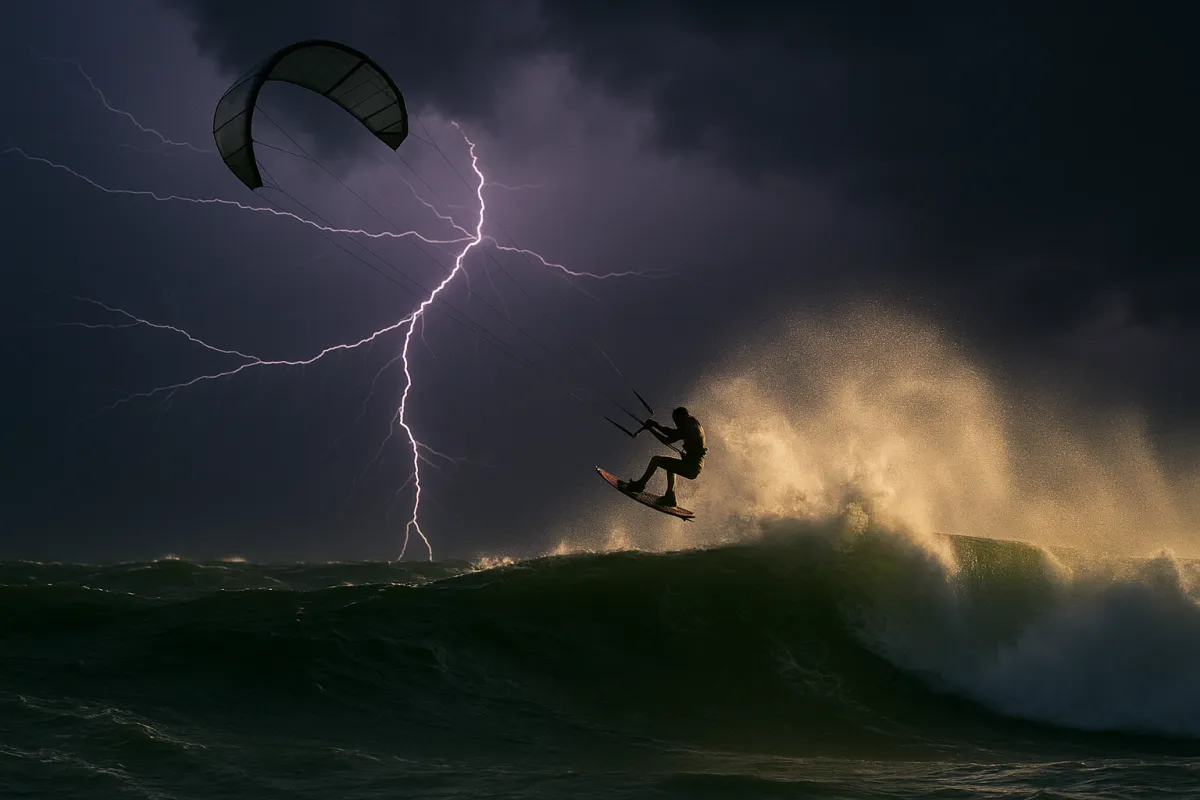
If you’ve glanced at the news today, you’ve seen it: storms hammering coasts, heat domes frying cities, Alaskan glaciers collapsing, Himalayan rescue missions, airlines re‑routing around volcanoes. The planet is throwing a full‑tilt tantrum, and most people are treating it as something to hide from.
At No Way Travel, we file this under: live terrain update.
Instead of doomscrolling, we’re looking at what these real events say about where extreme travel is heading right now—glaciers vanishing in real time, new high‑altitude rescue tech debuting on the world’s deadliest peaks, and climate‑twisted landscapes that look like sci‑fi backdrops. Inspired by today’s headlines, here are five real‑world frontiers where the news and your next bad idea collide.
Glaciers on Borrowed Time: Chasing the Last Ice
When satellite images of Greenland and Alaska are literally making the evening news because entire chunks of ice are calving off, that’s not just climate data—that’s a closing window.
Glaciologists are warning that iconic ice fields in places like Alaska’s Mendenhall Glacier, Iceland’s Sólheimajökull, and the French Alps are retreating so fast that the “classic” routes guides used a decade ago are now exposed rock. News outlets today are running before/after shots that look fake—until you remember they’re just ten years apart. Extreme travelers are turning this into a new kind of ticking‑clock expedition: “see it, but don’t screw it up further.” Outfitters in Juneau, Chamonix, and southern Iceland now offer ethical “last‑chance” glacier treks with strict no‑trace rules, carbon‑offset logistics, and sometimes even scientists tagging along to collect melt data while you walk. Expect collapsing seracs, widened crevasses, and shifting ice caves—this is not a mellow photo walk. If you go, you’re walking on a disappearing world, in real time, on your own two feet.
Death Zone 2.0: High‑Tech Summits on the World’s Deadliest Peaks
Every climbing season now has its viral headline: rescue helicopters hovering at insane altitude in Nepal, traffic jams on Everest ridges, avalanche warnings blasting across global news feeds. This year is no different—rescue teams in the Himalayas and Karakoram are deploying new drones, oxygen systems, and weather‑prediction tools to snatch climbers out of situations that would’ve been certain death in the 1990s.
For extreme travelers, that means the game has changed—but it’s not “safer” so much as “riskier with better toys.” Commercial operators on peaks like Manaslu and Ama Dablam are now bundling real‑time satellite weather routing, AI‑assisted avalanche forecasting, and live‑tracked SOS beacons into their expeditions. News stories about daring ultra‑high rescues are basically unofficial product demos for a new era of high‑altitude tech. If your idea of a good vacation is clipping into a fixed line above 7,000 meters while a storm rolls in from Tibet, this is your moment—but you’d better be okay knowing that your near‑miss could be tomorrow’s viral rescue headline.
Storm Front Tourism: Riding the Edges of Supercharged Weather
Today’s weather pages read like a disaster trilogy: atmospheric rivers drowning the Pacific Northwest, “once‑in‑a‑century” floods slamming Europe again, Category 4 hurricanes menacing the Caribbean with only a few days’ warning. Meanwhile, storm chasers in the U.S. Great Plains are live‑streaming tornado intercepts to hundreds of thousands of viewers.
A small but growing tribe of extreme travelers is leaning in. They’re booking trips based on NOAA briefings, ECMWF model runs, and the same satellite loops TV forecasters use. In Oklahoma, Kansas, and Texas, you can already join professional storm‑chasing tours that position you a safe(ish) distance from rotating supercells—but the trend is spreading: surfers racing to cyclone swells in Australia as they hit the news, photographers in the Mediterranean tracking “medicanes” (Mediterranean hurricanes) as they spin up, adventure sailors chasing monstrous but forecastable low‑pressure systems in the North Atlantic. The rules: go with pros, know your escape routes, and accept that your most intense travel photo might also be the one that makes your family text “Are you out of your mind?”
Lava Lines and No‑Fly Zones: Volcanoes as Live Travel Alerts
When a volcano pops now, it’s not just a local story—it reroutes half the planet’s flights and hijacks your news app push notifications. From Iceland’s Reykjanes eruptions grounding European airlines to Indonesian giants like Merapi belching ash over Java, aviation reporters and volcanologists are suddenly co‑starring in the same newscasts.
This chaos is rewriting the extreme traveler’s map in real time. Iceland, already a magnet for people who think “mildly unsafe” is a love language, has turned its recent eruptions into tightly managed but very real lava‑watching hikes where you can feel the heat and hear the earth ripping open—until the authorities shut it down an hour later because the vents shifted or the gas levels spiked. In Italy, Etna and Stromboli continue their on‑again, off‑again performances, occasionally dusting nearby villages in ash that ends up on Instagram before it hits the ground. The smart move? Subscribe to volcano observatory and aviation alerts, then keep your gear packed. One eruption can flip a sleepy fishing town into the hottest (literally) extreme destination of the year.
Heat Dome Frontiers: Night Adventures in Overheated Cities
News about record‑shattering heat waves no longer sounds surprising. Cities in Europe, the U.S., the Middle East, and South Asia are posting all‑time highs, with health officials warning people not to be outside in the middle of the day at all. It sounds like the opposite of travel inspiration—until you realize it’s also creating an entirely new style of urban extreme: the nocturnal city.
From Athens to Phoenix to Dubai, travelers are adjusting to “reverse” days: sleeping in blackout rooms through the heat spikes, then surfacing at midnight to explore heat‑warped streets under flickering neon. Night hikes up desert ridges, midnight bike rides through half‑empty boulevards, 2 a.m. street food runs, dawn swims before the UV index goes feral—it’s all being shaped directly by those heatwave graphs you see in the news. Some cities are responding with late‑night cultural programming, 24‑hour cafés, and extended public transit hours to keep people moving when the air is at least survivable. For extreme travelers, the challenge isn’t just endurance—it’s learning to read heat advisories and wet‑bulb temperatures the way mountaineers read avalanche bulletins.
Conclusion
Today’s headlines about collapsing ice, stranded climbers, grounded flights, superstorms, and brutal heat aren’t just background noise—they’re your unofficial, constantly updating adventure map.
Extreme travel has always been about flirting with the edge. The difference now is that the edge is moving, melting, erupting, and spiraling across radar in high definition. If you’re going to chase it, do it with intention: travel light, respect the locals living this “breaking news” every day, and know the line between audacious and idiotic.
The planet is loud right now. If you listen carefully, it’s not just warning you—it’s inviting you.
Key Takeaway
The most important thing to remember from this article is that this information can change how you think about Extreme Travel.