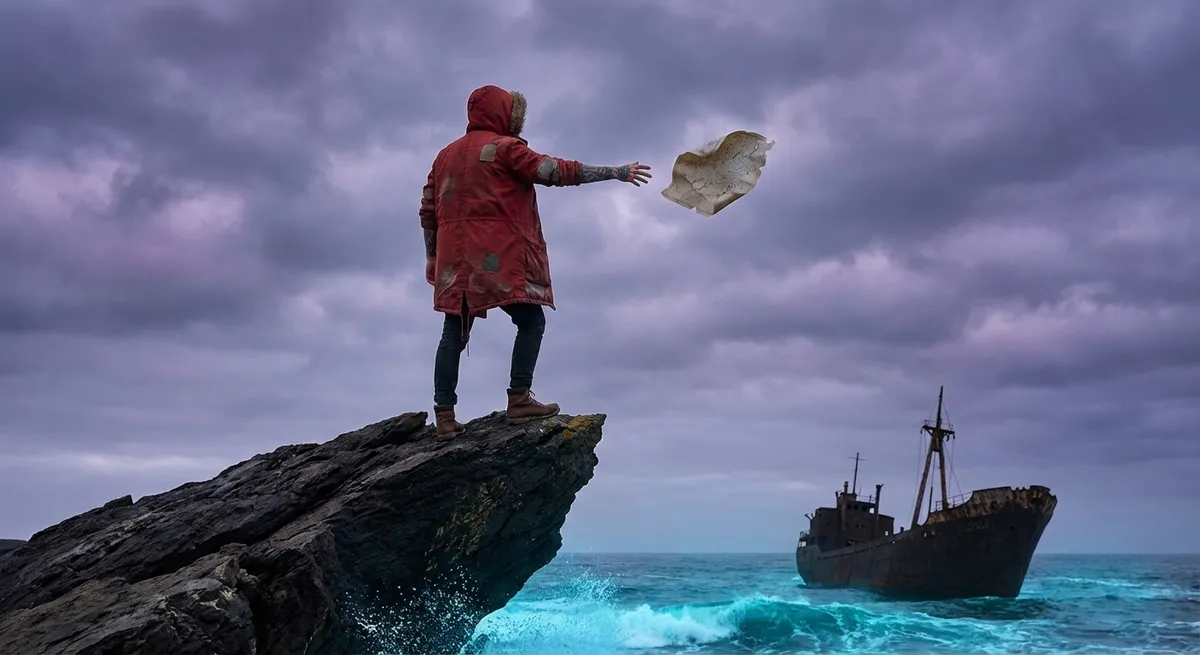
Most people travel to “see the sights.” You’re here because you’d rather be the glitch in the postcard.
This is not about bungee jumps sold in glossy brochures or “edgy” bars with craft cocktails. These are the trips you have to earn—places where the frontier is still moving, where your phone is more dead weight than lifeline, and where logistics feel like a full-contact sport.
Below are five extreme travel discoveries that aren’t just remote or dangerous—they’re psychologically disorienting, logistically absurd, and weirdly addictive. This is the travel equivalent of prying open the back panel of the planet and poking around in the wiring.
1. Riding the World’s Edges: Freight Ferries and Cargo Ghost Routes
Cruises are for people who like buffets. You’re here for ships that smell like diesel, paint, and unresolved bureaucracy.
Freight and cargo-passenger routes are the ghost arteries of global trade—often not meant for tourists, barely publicized, and running on schedules that feel more like rumors than timetables. You can cross entire oceans on vessels that carry exactly four passengers and eight thousand containers, or ride rust-stained ferries serving far-flung islands where your disembarkation involves jumping onto a heaving pier.
On these routes, “entertainment” is watching forklift ballet in some obscure port at 3 a.m. Your cabin is usually plain but sturdy; your fellow travelers are a feral mix of merchant mariners, long-haul truckers, and the occasional academic gathering climate data. Safety standards can range from ultra-regulated to “don’t stand under that cable unless you want a very short life story.”
This kind of travel rewires time. Days stretch, internet dies, and you’re forced to exist in a world where speed is irrelevant and land is a rumor over the horizon. It’s slow, it’s monotonous, and then—when you finally walk down the gangway into some seldom-visited harbor—it feels like you’ve hacked the planet’s shipping menu and ordered the secret level.
2. Into the Breathing Earth: Volcano Slopes, Lava Frontiers, and Ash Roads
Anyone can look at a volcano from a nice safe distance. Extreme travelers want to feel it humming.
Volcano environments are some of the strangest, most alive-feeling landscapes on Earth. You can hike recent lava flows still radiating heat, follow ash-covered paths past steam vents and fumaroles, or stumble through forests partly buried by eruptions that happened in living memory. It’s like watching the world boot up and crash at the same time.
The catch? Volcanic zones don’t care about your plans. Gases can turn toxic quickly. Trails get rerouted by new activity. Weather flips from blue skies to whiteout cloud in minutes. Authorities constantly adjust access; the most intense areas might only open briefly, or only with certified guides who actually know how to read the mountain’s mood.
Traveling here is part geology seminar, part risk management drill. You learn to obsess over hazard maps, seismograph readings, and alert levels. On the ground, your senses go hypervigilant: the smell of sulfur, low rumbles underfoot, the way fine ash crunches between your teeth. At night, if conditions allow and you’re lucky, you might watch the horizon pulse faint red and understand, viscerally, that the bedrock under your life is not as stable as most people like to pretend.
3. Nights on the Fringe: Extreme Dark Skies and Sky-Obsessed Outposts
Cities have “night.” Remote outposts have cosmic exposure therapy.
Extreme dark-sky locations—far beyond the typical stargazing spots—are where human presence is so thin that the Milky Way doesn’t just appear, it casts a shadow. Think high-altitude deserts, polar regions in winter, isolated plateaus, and research-town peripheries where light pollution is treated like an act of war.
These trips often start like a bad idea. Long transfers. Gravel roads that might not actually be roads. Towns with one store, three dogs, and no ATM. Then night drops, and the universe slams into you. Satellites crawl overhead in visible chains. Shooting stars become so frequent you stop pointing. The galactic core looks more like weather than decoration.
The extremeness here isn’t just physical—it’s psychological. Away from noise, structures, and your normal human-sized concerns, you become microscopic. You feel the creep of cold in your bones while listening to cameras click in the dark and astronomers mutter about filters and seeing conditions. Power might flicker. Water might be rationed. The nearest hospital could be a helicopter ride away.
But if you’re the kind of traveler who craves perspective more than pool bars, these nights on the edge of the visible are addictive. You don’t just see stars; you feel your own life drop from center stage to somewhere in the far back row of the cosmic audience.
4. Glitch-Weather Expeditions: Hunting Ice, Dust, and Atmospheric Chaos
Most people check the weather to pack. You’ll be checking it to figure out which planet the sky feels like this week.
Extremely volatile climate zones—where ice, storms, and atmospheric weirdness rule—offer a style of travel that’s half expedition, half controlled surrender. Think glacial trekking in regions losing ice faster than maps update, chasing massive dust storms across arid basins, or traveling to coasts where waves have started eating roads that were never designed to be temporary.
Here, the main attraction is instability. Trails vanish under fresh snow or meltwater. Rivers reroute themselves mid-season. Roads become impassable after a single landslide or flood. Local guides aren’t just recommended; they’re non-negotiable, because conditions you read about in last year’s blog post may already be ancient history.
An extreme weather-focused trip means embracing contingency as a travel companion. Your backups need backups. Plans become probabilities. You learn to interpret satellite imagery, storm tracks, and avalanche forecasts. Sometimes the most intense memory isn’t the big spectacle, but the hours pinned down in a shelter listening to wind rage outside, calculating how much fuel and food you have if this goes on longer than expected.
What you gain is front-row access to Earth in mid-transformation—a harsh, unvarnished look at systems in flux. It’s thrilling, sobering, and deeply real in a way curated “eco-tours” rarely deliver.
5. Human Limits as Itinerary: Hypoxia, Heat, and Biological Edge-Travel
Some trips test your gear. Edge-of-body trips test your operating system.
Extreme altitude, brutal humidity, heavy heat, and brutal cold all rewrite the rules for what “going for a walk” means. High passes where every step feels like a negotiation. Tropic lowlands where your clothes never fully dry and fungi seem to colonize anything that pauses for too long. Sub-zero landscapes where metal bites skin and batteries die faster than your optimism.
This isn’t about suffering for bragging rights; it’s about discovering how much of your comfort you’ve outsourced to mild, mid-level climates. You learn that headaches at altitude aren’t a character flaw; they’re your brain asking for oxygen. You figure out how to layer, hydrate, acclimatize, and say no when your ego wants yes. Suddenly, “just” boiling water at a windy camp becomes a small, triumphant science project.
On these journeys, basic tasks gain drama. Tying your boots at -25°C with gloved hands. Hauling yourself up a final, oxygen-thin slope. Keeping your cool (literally and mentally) while moving through humid heat that makes your heart pound. The line between “discomfort” and “actual danger” grows razor-thin—and learning to read that line is part of the thrill.
Your reward is a recalibrated sense of normal. Back home, climate control and sidewalks feel like outrageous luxuries, and you carry a quiet, private knowledge: your body can go much further than your pre-trip imagination ever thought was reasonable.
Conclusion
Extreme travel isn’t about chasing danger for its own sake; it’s about peeling back the padded safety layer modern life wraps around you and standing in direct contact with the raw mechanics of the planet.
Freight decks at dawn. Volcano slopes breathing under your boots. Skies so dense with stars they feel almost claustrophobic. Weather that treats your schedule like a joke. Environments where your pulse, breath, and sweat become your primary navigation tools.
If traditional tourism is about seeing the world, extreme travel is about negotiating with it. And for those willing to step past the guardrails—carefully, responsibly, and with eyes wide open—the planet still has plenty of wild, uncooperative, magnificent territory left to bargain with.
Sources
- International Maritime Organization – Passenger Ship Safety - Background on safety regulations affecting ferries and passenger-carrying cargo vessels
- United States Geological Survey (USGS) Volcano Hazards Program - Real-time volcano alerts, hazard maps, and educational material on volcanic environments
- International Dark-Sky Association - Information on dark-sky regions, light pollution, and certified dark-sky places around the world
- World Meteorological Organization - Global data and reports on atmospheric extremes, climate trends, and severe weather phenomena
- Centers for Disease Control and Prevention – High Altitude Travel & Altitude Illness - Medical guidance on traveling and exerting yourself in high-altitude and extreme environments
Key Takeaway
The most important thing to remember from this article is that this information can change how you think about Extreme Travel.