There’s a secret club of travelers who don’t wait for “someday” money. They raid the world on shoestring budgets, hack their routes on the fly, and find the kind of stories you can’t buy in a package tour. This isn’t about cheap postcards and discount buffets—this is about using your limited cash as a weapon to force your trip into creativity, chaos, and genuine discovery.
Welcome to budget adventuring: the art of doing something absolutely ridiculous with almost no money—and coming back with stories that make first-class travelers jealous.
The Night Train Trick: Turning Transit Into a Free Adventure
If you’re still paying for both transport and accommodation on the same night, the world is quietly laughing at you.
Night trains and long-haul buses are the unofficial bunk beds of the budget underworld. Instead of burning a day flying between cities and shelling out for a hostel, you roll into a new place at sunrise having already slept, traveled, and accidentally shared life stories with a stranger who eats sunflower seeds for dinner.
To make this work, you have to lean into the weirdness. Take the slower routes instead of the sleek express. Look for the trains with old compartments where seats face each other and fold into makeshift beds. On buses, pick routes that cross borders or mountain passes at night—places where the sunrise actually feels earned.
The trick is to treat the journey like its own destination: buy a cheap picnic from a supermarket instead of restaurant meals, download offline maps so you know when you’re creeping up on your stop, and say yes when someone offers to trade snacks or recommend a local breakfast spot at your arrival station. Your “hotel” is now a moving metal tube with strangers, flickering fluorescent lights, and the possibility of waking up in an entirely different culture.
When your budget is tight, your bed doesn’t need an address—just a direction.
The Grocery Store Heist: Eating Like a Local Without Going Broke
Forget Instagrammable brunches. If you want to understand a place on a budget, raid its supermarkets and corner shops like you’re planning a soft coup.
Supermarkets are where real life hides. This is where a city’s tastes, anxieties, and small luxuries live on the shelves. With the cost of eating out rising almost everywhere, grocery-store dining isn’t just cheap—it’s stealth anthropology.
Here’s how to go from “broke backpacker” to “undercover food detective”:
- Hit local markets and small shops early in the day for fresh, discounted produce.
- Look for regional snacks and street-food ingredients: flatbreads, canned sauces, pickles, and cheeses that locals actually buy.
- Turn city parks, train platforms, and riverbanks into your rotating “dining rooms.”
- In pricier countries, aim for lunch deals and cook your own dinners in hostel kitchens.
You’ll usually spend a fraction of what restaurants demand, and you’ll be eating what people who live there actually eat. Plus, your meal views will beat any overpriced terrace: a plastic bag picnic next to a canal, a park bench with a skyline, a quiet spot under a bridge where buskers test new songs.
The goal isn’t to skip culture—it’s to hack into its everyday operating system.
The Micro-Detour: Going One Stop Past Where Everyone Gets Off
Budget constraints can be a superpower if you wield them like a crowbar against the over-toured parts of the map.
Every well-known destination has an invisible border where the souvenir shops thin out, the prices drop, and the real country starts breathing again. That border is usually just one more stop away—one more metro station, one more bus ride, one more ferry crossing.
This is the “micro-detour” principle: wherever the guidebooks say “stay here,” you go just beyond.
Instead of booking the famous beach town, stay in the cheaper village two stops down the coast and commute in when you feel like chaos. Rather than sleeping in the old-town tourist core, pick a neighborhood where rent is meant for residents, not influencers. Prices often drop instantly: cheaper rooms, local bars, street food that doesn’t have “fusion” in the description.
Not only does this save money, it rewires your entire experience. You’ll be the traveler heading into the crowds for short bursts of chaos—and then retreating to somewhere where the baker remembers your face by day two. Your photos don’t have to look different; your life around those photos does.
Go just far enough off the standard route that your hostel-mates say, “Wait, where even is that?” Then smile and change the subject.
The Skill-for-Sleep Swap: Trading Talents for a Bed
When money runs low, most people panic. The smart ones check their skills.
Your ability to speak another language, paint murals, fix Wi-Fi, teach yoga, play guitar, or wrangle spreadsheets can all be traded for a bed, food, or even some small cash—if you’re willing to stay still for a while. Around the world, hostels, farms, small guesthouses, community centers, and even boats are quietly looking for help.
This is where the “work-exchange” dimension opens up: you’re not just passing through; you’re temporarily part of the machine.
The trick is to think smaller, not bigger. Instead of aiming for major hotels, target independent hostels, family-run operations, rural farms, or creative projects. Many will swap a bunk and breakfast for a few hours of your help: checking in guests, painting signs, running simple tours, editing photos, or teaching basic English.
This is how a tight budget turns into a longer trip. You spend less, stay longer, and suddenly have regulars and coworkers instead of fellow passersby. Just make sure you understand local labor laws, visa restrictions, and what’s actually allowed—your adventure should be audacious, not deportation-level dumb.
Your wallet might be thin, but your skill set could be thick enough to keep you on the road indefinitely.
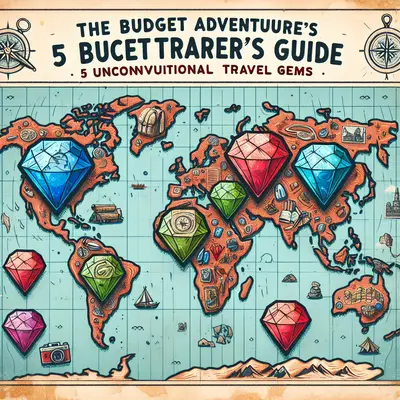
Five Offbeat Budget Discoveries for the Adventure-Obsessed
These aren’t glossy bucket-list clichés. They’re the kinds of places and experiences that budget travelers stumble into and then whisper about over questionable hostel wine. They’re affordable, wild at the edges, and far more interesting than another “Top 10 Must-See” anything.
1. Border-Town Markets Where Currencies Collide
Find a town that sits hard on a national border, and you get chaos at a discount. Border markets are where currencies, languages, and smuggling legends tangle together. Prices can drop because everyone’s playing the arbitrage game—buy in one country, sell in another, repeat.
There are spots like this all over the world: twin cities split by rivers, bridges, or train tracks. Choose one that’s safe and well-traveled enough for newcomers but still raw around the edges. Spend a morning just watching how locals cross, what they carry, what they buy cheap and sell high. You’ll learn more about the region’s economics from one border day than a semester of lectures.
And because these towns serve people constantly coming and going, you’ll find budget rooms, no-frills food stands, and shared rides fanning out in every direction.
2. Overnight Ferries That Double as Floating Hostels
If a night train is a metal bunk on rails, an overnight ferry is a drifting budget hotel with better views and worse coffee.
Many coastal countries have ferries where you can spread out a sleeping bag on deck or snag a basic cabin for less than a hotel room. You watch city lights fade, wake up to a new island or port, and pay one combined price for both your ride and your bed. Add in a supermarket dinner and a cheap drink on deck, and your “accommodation” just came with a private ocean.
The magic is in the between-ness: talking to truck drivers moving freight, families on yearly pilgrimages, locals who’ve done this route so many times they know exactly where the sunrise looks best. You’re not a passenger; you’re a temporary citizen of a floating micro-city.
3. Free City Rituals: Dawn Runners, Night Fishermen, and Park Societies
Every city has paid entertainment; the real magic is in the free rituals locals practice on autopilot.
Wake up abnormally early or stay up absurdly late and go looking for recurring gatherings that cost nothing: runners meeting at a bridge, seniors doing group exercise in plazas, fishermen dotting a riverside in the dark, amateur astronomers hauling telescopes into parks, skateboarders colonizing empty squares after midnight.
These are the city’s unlisted “events,” and they usually cost exactly zero money to observe—or even join. Your budget loves that. Your stories will, too.
A cheap thermos of coffee, a supermarket pastry, and one weird nighttime park conversation can be worth more than any ticketed attraction.
4. University Towns in Off-Season Mode
Big-city capitals drain your budget. Student cities—especially in off-season—can revive it.
University towns are wired for people who are perpetually kind-of-broke: cheap cafeterias, student bars, thrift shops, bike rentals, and discount events. When the academic year slows or holidays hit, these places often run semi-empty but still functional, with lower rental prices and a strange, calm energy.
If you want to live “locally” on a budget, university towns are practice zones for doing exactly that. Look for short-term room rentals, join open lectures or cultural events, and use the student ecosystem to stretch your cash: campus libraries, cheap eats, secondhand bookshops, and public sports facilities.
It feels less like tourism and more like slipping into an alternate life for a week or a month.
5. Long-Distance Local Buses That Stitch Remote Villages Together
Tourist shuttles are designed to move you efficiently. Local buses are designed to move everyone eventually.
Out in rural regions, long-distance local buses connect villages, markets, and small towns in lurching, unpredictable circuits. They’re often far cheaper than tourist transfers, and they pull back the curtain on the in-between spaces: fields, roadside shrines, impromptu rest stops where you can eat for pocket change.
You might share a seat with a sack of produce, a grandmother in traditional dress, or kids coming home from school. Schedules can be more rumor than reality, which is exactly why they’re an adventure. Your day becomes a puzzle of connections and guesses, rather than a pre-booked certainty.
If your budget is thin but your patience is thick, these buses unlock whole networks of places that never make it into glossy travel features.
Conclusion
A small budget is not a prison; it’s a design constraint. And constraints are what force you off the polished rails and into the weird side alleys of the planet, where real life refuses to perform for the camera.
Sleep on moving vehicles. Raid supermarkets like an edible archive. Go one stop past the safe recommendations. Trade your skills for more time. Chase the overlooked nodes where borders, ferries, students, fishermen, and village buses all tell you: the main show is overrated.
You don’t need more money to travel harder. You just need to be willing to break the unspoken rule that “good trips are expensive.” The best stories are usually the ones you had no financial right to squeeze out of your budget—but did anyway.
Sources
- OECD Tourism Trends and Policies - Data and analysis on global tourism patterns and how travelers are shifting behavior, including budget-conscious trends
- United Nations World Tourism Organization (UNWTO) – Tourism Data Dashboard - Official stats on international arrivals, spending, and transport, useful for understanding where budget travel is growing
- European Commission – Rail Passenger Rights - Details on rights when using trains in Europe, relevant for night-train and long-distance rail travelers
- U.S. Department of State – Travel Advisories - Essential safety and border information for travelers considering offbeat routes and border towns
- Lonely Planet – Budget Travel Tips - Practical guidance on saving money while traveling, complementing the unconventional approaches in this article
Key Takeaway
The most important thing to remember from this article is that this information can change how you think about Budget Adventures.