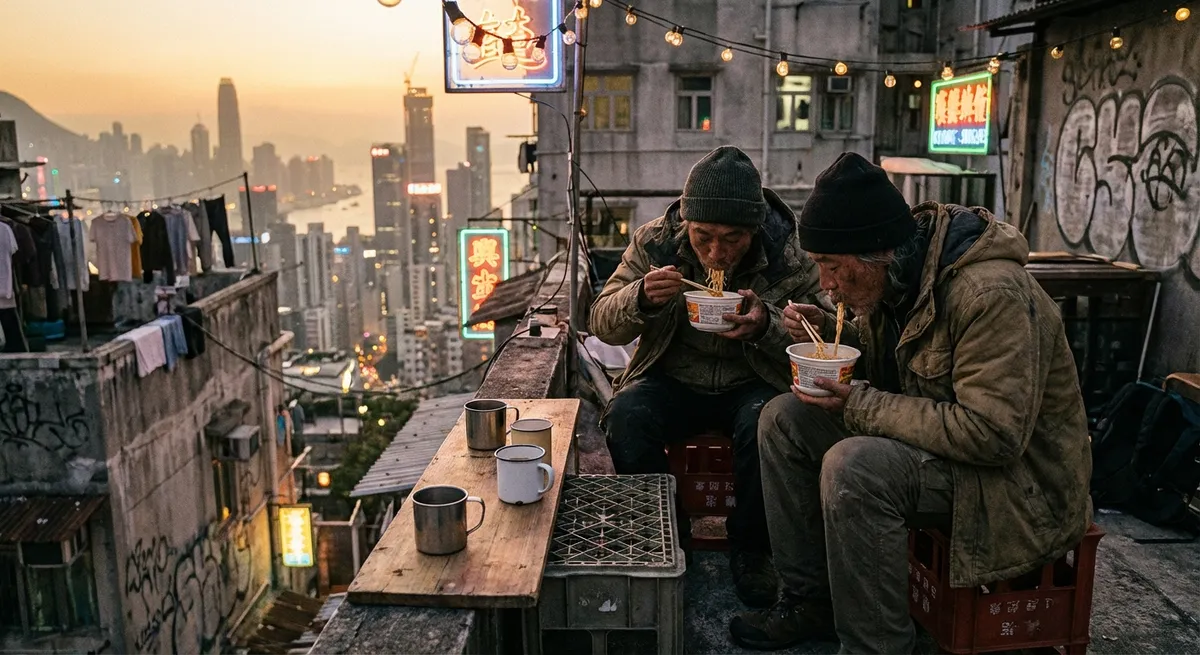
There’s a sweet spot between “sleeping in an airport” and “maxing out your credit card in Bali.” That’s where the real stories live—the ones built on $2 noodles, rooftop shortcuts, and conversations with people who don’t speak your language but get you anyway. This isn’t about deprivation; it’s about hacking your sense of wonder so hard that your budget has no choice but to keep up.
Welcome to the side of travel where the line item called “miscellaneous” becomes your main itinerary.
The Sunrise That Isn’t on Any Tour: Hilltop Temples Above the City
Most big cities have at least one high point the tourists barely touch: a hilltop shrine, wind-beaten fort, or abandoned lookout that locals only visit on holidays. These are the places where sunrise feels stolen, like you’ve broken into the control room of the sky.
Scout for:
- Old forts and watchtowers in places like Lisbon, Athens, or Jaipur—often cheap or free to enter, with vast city views and almost no one around at dawn.
- Hilltop temples and monasteries in Southeast Asia and Latin America. The climb is your “entry fee,” and your reward is a front-row seat to the world waking up.
How to make it work on a micro-budget:
- Use offline map apps to scan elevation lines and stair pathways. If locals use a path daily, it’s often free.
- Grab a street-stall breakfast and coffee the night before; your entire sunrise “tour” might cost less than $3.
- Ask a hostel worker or café barista where they go for “sunrise when they don’t want tourists around.” Phrase it exactly like that.
The discovery isn’t just the view. It’s the realization that the best overlook in town isn’t behind a ticket counter—it’s at the end of a staircase locals barely notice.
The Night the City Turned Into Your Living Room: After-Hours Public Spaces
When the sun clocks out, some cities roll down the shutters; others quietly hand their public spaces over to anyone curious enough to wander. You’ll find basketball courts glowing under cheap floodlights, squares taken over by night markets, and train stations humming like beehives.
Watch for:
- 24/7 plazas and waterfronts where skaters, buskers, and night fishermen hang out. Completely free—and better than a paid show.
- Late-night libraries, art schools, or cultural centers with open courtyards or free events. These places are where the city’s subcultures cross-pollinate.
How to dive in without draining your wallet:
- Pick a neighborhood that locals call “too far” or “too boring.” That’s where rent is cheaper and night life is less curated and more lived-in.
- Follow the food—when you see folding chairs, plastic tables, and steam rising at midnight, you’ve found budget dinner and a front-row seat to local life.
- Sit on the edge of the action. Read, sketch, journal, or eavesdrop (respectfully). Your only purchase is a cheap drink or snack, but the human theater is priceless.
Your discovery here: a city’s true personality comes out when the souvenir shops shut and everyone stops pretending they’re Instagrammable.
The Accidental Apprenticeship: Learning a Local Skill for the Price of a Snack
Instead of paying for a tour, pay for someone’s time—and let them teach you their thing. Not in a “workshop” way. In a “you show up, buy snacks, and they show you their world” way.
Things to look for:
- Dock workers, market vendors, or street barbers who have a visible craft. You’re not photographing them—you’re asking them to show you how it works.
- Neighborhood sports or hobby clubs—chess in the park, pickup football, dominoes, local card games, amateur dance practices.
How to turn that into a budget adventure:
- Approach with curiosity and food: offering coffee, fruit, or street snacks covers your “lesson fee” in many cultures.
Use simple questions: “Can I watch?” “How did you learn this?” “Can you show me one small thing?”
3. Accept that your “class” may last 10 minutes or three hours. The point isn’t mastery; it’s immersion.
Discovery here: people are weirdly generous when they feel respected and seen. You’ll stumble into micro-apprenticeships in things like knife-sharpening, dough kneading, or local dance steps—skills no tour brochure ever thought to sell you.
The Transit Line Treasure Hunt: Riding the Cheapest Route to the End of the World
Every city has a cheapest way to get as far from the center as possible: the last bus on the line, the final metro station, the tram that slices through invisible neighborhoods no guidebook bothers to name.
Treat public transport like a theme park ride with a tiny ticket price.
How to run the experiment:
- Buy a day pass, then pick a random bus, tram, or metro line and ride it to the final stop.
- Watch how the scenery changes: shop signs shift languages, buildings shrink, laundry appears on balconies, street art gets more honest.
- Get off at the end and walk back toward one or two stops earlier, exploring as you go.
Things you’ll discover on a budget:
- Pocket parks with local kids playing games you’ve never seen.
- Mom-and-pop food stalls where nothing is in English and everything is half the tourist price.
- Improvised street businesses: shoe repair on a crate, phone charging off car batteries, fruit carts jerry-rigged from old bikes.
Your “adventure fee” is a single transit ticket. In exchange, you get a crash course in how a city really breathes when it stops performing.
The Roof, the River, and the Ruins: Free-Entry Micro Landmarks
While travelers queue for the main attractions, cities hide dozens of “micro landmarks” that don’t look like much from the street—but unlock entire alternate dimensions once you step in.
Start hunting for:
- Public or semi-public rooftops in malls, parking garages, or municipal buildings. Many are free; some cost the price of a cheap drink.
- Under-bridge spaces and riverfront paths where fishermen, runners, and couples hang out far from the curated waterfront.
- Stray ruins or half-preserved walls that never made it into the official brochure but still stand there, ignored, full of stories.
Budget tactics:
- Ask where locals go “to think” or “to be alone.” People rarely suggest expensive tourist attractions as their alone-time spot.
- Look for staircases labeled “viewing deck,” “car park,” or “terrace.” If it’s publicly accessible and safe, go.
- On rivers, follow the path away from the downtown—where bike lanes turn scruffy and the Instagram crowd tapers off.
The discovery: awe doesn’t care whether something is “famous.” A quiet view from a mall rooftop at dusk might hit harder than a world-famous skyline—especially when it’s just you, the wind, and a few locals skipping the elevator fee.
Conclusion
Budget travel isn’t about counting coins; it’s about counting how many times in a week you say, “There is no way this is my life right now” while holding a snack that cost less than bus fare.
You don’t need VIP access, infinity pools, or luxury anything. You need:
- One pair of good legs.
- A transit pass.
- Enough currency for street food and coffee.
- A willingness to walk toward the edges of the map, both literal and social.
Run to the end of the bus line. Climb the stairs nobody labels a viewpoint. Offer to buy a stranger a snack in exchange for a story. Let rooftops, riverbanks, and forgotten ruins be your all-inclusive resort.
The world isn’t just waiting for you; it’s hiding from anyone who thinks adventure comes with a price tag.
Sources
- U.S. Department of State – Traveler’s Checklist - Guidance on safety, documentation, and practical prep for international trips
- Lonely Planet – Budget Travel Tips - Practical strategies for stretching your money further on the road
- BBC Travel – How to Travel the World on a Shoestring Budget - Insights and examples from long-term budget travelers
- National Geographic – How to Travel More Sustainably - Advice on minimizing environmental impact while exploring
- Rick Steves – Europe Travel Tips and Tricks - Detailed, practical advice for using public transport, finding viewpoints, and saving money in cities, especially in Europe
Key Takeaway
The most important thing to remember from this article is that this information can change how you think about Budget Adventures.