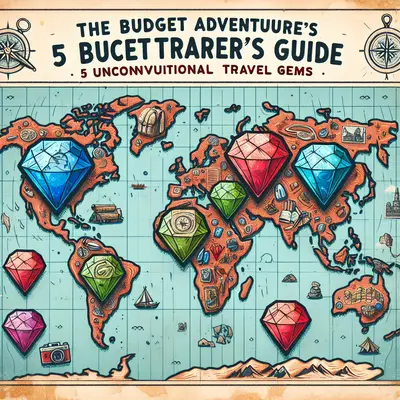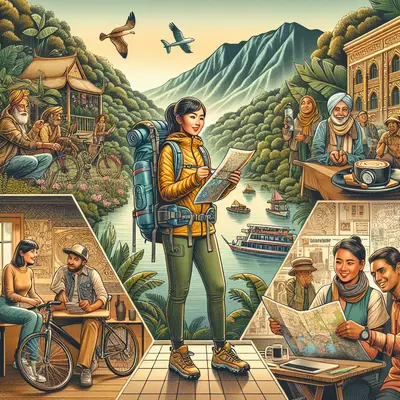
Luxury is boring. You’re not here for room-temperature buffets and identical hotel lobbies. You’re here to stretch a reckless streak across the map without overdrafting your bank account. Budget travel isn’t about suffering; it’s about outsmarting the system and finding the weird, the wild, and the wildly underpriced.
These five discoveries aren’t just “cheap destinations.” They’re places and tactics that turn small money into big, high-voltage experiences—if you’re willing to ditch the script.
Trading Skyscrapers for Staircases: Hill-Top Villages with Million-Dollar Views
Skip the coastal resorts. Aim for the places where the bus schedule looks like a dare and the streets are more staircase than road. Hill-top and mountain villages across Europe, Asia, and Latin America often cost a fraction of nearby “must-see” cities, while dropping you into a life that still runs on conversation, not content.
In southern Europe, many once-abandoned villages have guesthouses, artist residencies, or ultra-basic rooms renting for the cost of a bad cocktail in a capital city. High-up villages in places like Portugal’s interior, Italy’s mountain regions, or Spain’s lesser-known sierras are usually reached by slow trains and slower buses—exactly the infrastructure that tourists in a hurry avoid. That’s your advantage. You can wake to valley mist, hike from doorsteps instead of parking lots, and share ultra-local food in family kitchens masquerading as taverns.
These villages are where festival culture is still raw and unmonetized: saints’ days, harvest parties, late-night music erupting in a square that never shows on Instagram. You’ll find fewer English menus, more pantomiming, and the quiet thrill of being the only outsider in sight. Your budget stretches because life still moves at human speed—and no one’s trying to sell you a €15 “artisan” espresso.
Sleeping in Transit: Turning the Journey Into Free Accommodation
If the bed doesn’t move, you’re overpaying. One of the purest budget hacks is making transport do double duty: it gets you somewhere and covers your night’s “accommodation” in one go. Create itineraries where the journey is the main event, not just a tunnel between attractions.
Overnight trains in regions like Eastern Europe, parts of Southeast Asia, and sections of South America can cost less than a night in a hostel plus a daytime ticket. In many places, “hard sleeper” or second-class couchettes are still safe, social, and surprisingly comfortable if your standards are flexible and your curiosity isn't. Long-haul buses are less glamorous but often cheaper and more chaotic—in the best way. You might share snacks with an entire family, get a running commentary from the driver, or watch five different soap operas in five hours.
This strategy forces your adventures out of perfectly curated centers and into the messy infrastructure that locals actually use. You’ll see border crossings at 3 a.m., stations where the timetable is handwritten, and food stalls operating from single lightbulbs and bottomless stock pots. Your budget benefits, but so does your sense that travel is supposed to feel like something—slightly confusing, slightly uncomfortable, and completely alive.
Unpolished Port Cities: Where Rust, Sea Air, and Cheap Food Collide
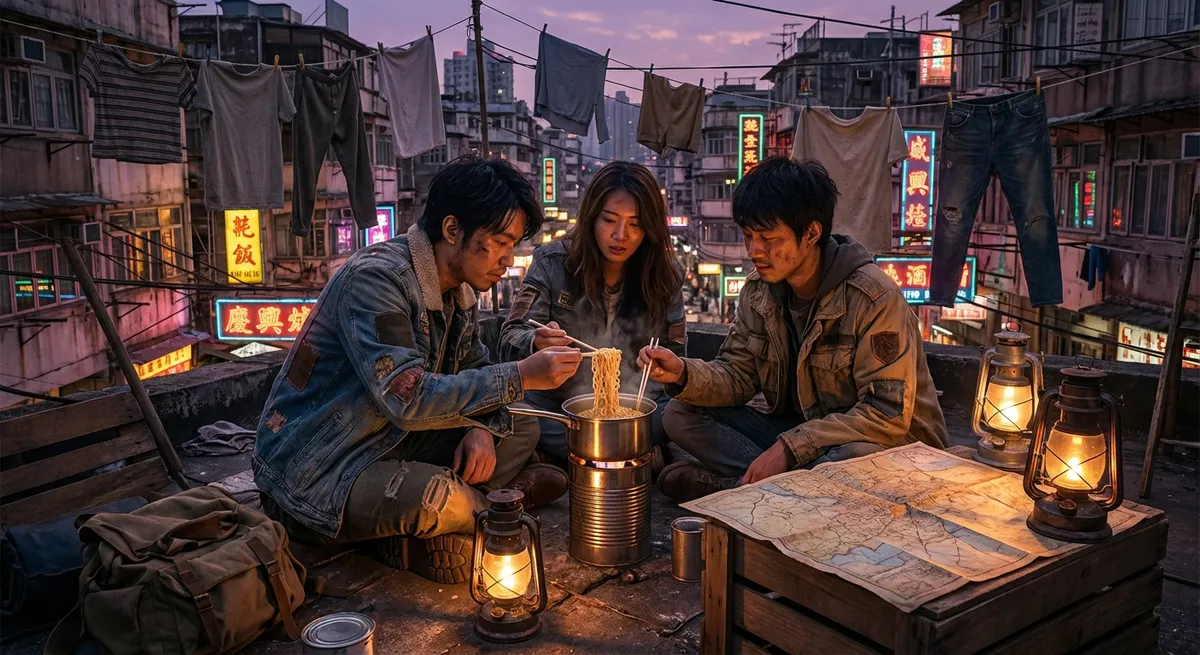
If a city’s waterfront is labeled “revitalized,” your wallet is already under attack. Head for the ports that haven’t finished reinventing themselves—industrial edges, peeling paint, and just enough tourism to keep a few hostels alive. Port cities in transition are some of the best places to burn small money for big experiences.
These are working towns first, destinations second. That means fresh markets with prices aimed at dock workers instead of cruise passengers, irregular ferries that cost less than a museum ticket, and bars that serve mystery stews and cheap beer under flickering lights. Here, the sea isn’t an aesthetic; it’s a job, a soundtrack, and occasionally the reason your dinner still has eyes.
Port cities punch far above their weight in culture: shipwreck stories, immigrant neighborhoods, mashups of languages, and crumbling warehouses turned into underground galleries or music dens. With a bit of research and a high tolerance for grime, you can find waterfront hostels or family-run pensions way cheaper than inland tourist honeytraps. The days smell like salt and diesel; the nights feel like you’ve fallen into a noir film with better snacks.
Parallel Cities: Crashing Local Timetables Instead of Tour Schedules
Tourism creates a weird parallel universe layered on top of real life—a universe with its own prices, hours, and invented traditions. If you want your budget to breathe, you need to slip out of the tourist timeline and sync with the local one instead.
This means shopping where people actually buy their groceries: wet markets, neighborhood bakeries, ugly supermarkets on second floors of old malls. Pick your accommodation by commute patterns, not “Old Town” proximity—if there’s a metro stop or a battered bus hub full of students and workers, your daily costs will usually implode in the best way. Food stalls outside office districts at lunchtime are a goldmine: fast, cheap, and battle-tested by people who eat there five days a week.
Try aligning your days to how the city actually lives: late dinners in southern Europe, early breakfasts in parts of Asia, long midday breaks wherever the sun is brutal. You’ll stumble onto spontaneous festivals, after-work rituals, and city parks that belong to joggers at 6 a.m. and dancers at 10 p.m. The deeper you slide into the local rhythm, the quicker the “tourist tax” vanishes—and the faster your generic trip morphs into something half-illicitly real.
The Skill Trade: Using What You Know Instead of What You Own
Money is just one form of currency. Skills are another—and many are shockingly portable. Using your talents on the road won’t just save cash; it can rewire your entire relationship with a place, shoving you from spectator to participant.
Teaching languages or tutoring kids, offering photography in exchange for room discounts, helping with basic web or social media for small guesthouses, or volunteering with trail maintenance, beach cleanups, or conservation projects can cut your daily costs dramatically. Platforms like work exchanges and volunteer networks often list placements where you trade a few hours of help for a bed, meals, or both. The trick is to be brutally honest with yourself about what you’re good at—and to avoid anything that replaces paid local labor or skirts ethical lines.
Trading skills shrinks the world. You’ll end up gossiping with guesthouse owners in back kitchens, fixing gear with rangers at dawn, or being pulled into family events because you’re not just “that tourist,” you’re the person who helped mend the fence or translate a menu. Your budget stretches, but more importantly, your travels stop feeling like consumption and start feeling like collaboration.
Conclusion
Budget adventure isn’t a consolation prize for people who “can’t afford real travel.” It is real travel—stripped of fluff, heavily seasoned with unpredictability, and powered by resourcefulness instead of resort wristbands.
Aim for the hills instead of the malls. Sleep on moving vehicles. Chase rusted harbors instead of polished promenades. Sync to local life instead of tourism’s script. Trade skills, not status. The less you spend trying to imitate someone else’s vacation, the more room you have to build your own mythology.
The best stories don’t come from what you buy. They come from where you’re willing to go when your budget says “no” and your curiosity says “do it anyway.”
Sources
- U.S. Department of State – Travel Advisories - Official safety and advisory information to check before planning offbeat routes
- Seat61: The Man in Seat 61 - Detailed, practical information on international train and ferry travel, including overnight options
- Lonely Planet – Work & Travel Abroad - Overview of ways to combine work, volunteering, and travel on a budget
- Hostelling International - Global network of budget accommodations and resources for low-cost travel
- UNWTO (World Tourism Organization) - Data and insights on tourism patterns, useful for identifying less-touristed, better-value regions
Key Takeaway
The most important thing to remember from this article is that this information can change how you think about Budget Adventures.