If you think “budget travel” means dorm bunks, beige hostels, and eating pasta in a shared kitchen, you’ve been lied to. The world is wired with loopholes, forgotten routes, and low-cost experiments that feel wildly more expensive than they are—if you’re willing to ditch the script.
These five discoveries aren’t just “cheap destinations.” They’re hacks to rewire how you move through the world: sleeping where nobody thinks to look, riding routes built for locals not tourists, and sneaking into front-row views without paying front-row prices.
Night Trains: The Moving Hostel Nobody Told You About
Night trains are the original budget time machine: you fall asleep in one city, wake up in another, and you didn’t pay for a bed and a flight—you bought both in the same ticket.
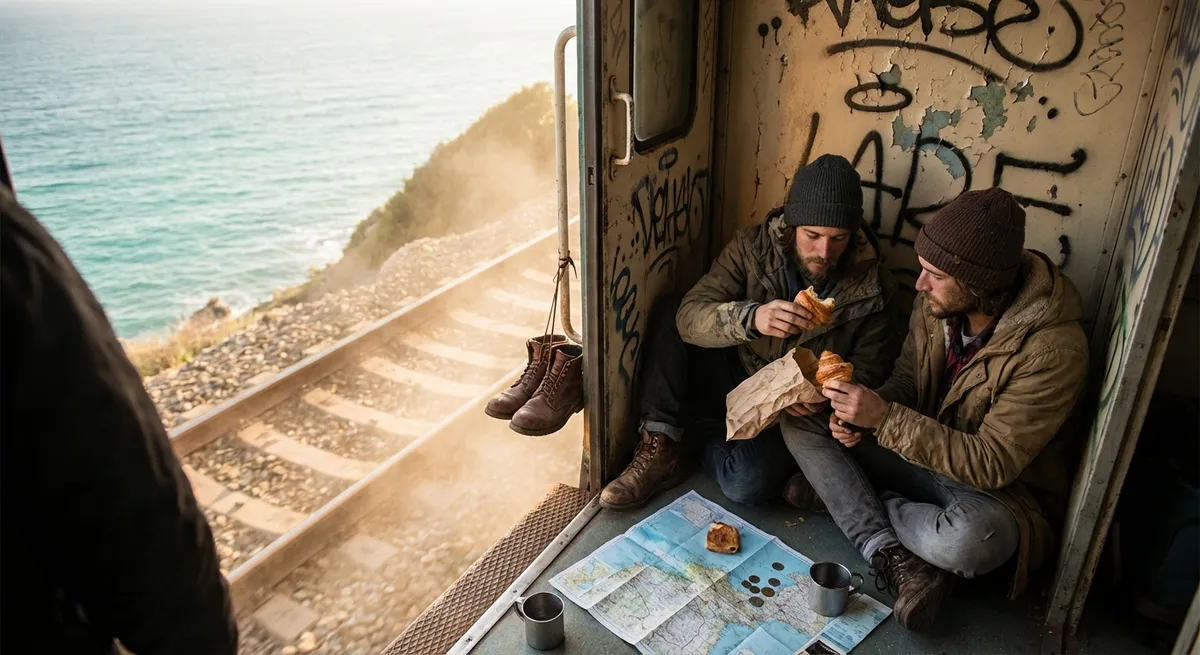
Across Europe, Asia, and bits of Africa, overnight rail still quietly undercuts flights and hotels. A reclining seat or 2nd-class couchette can cost less than a hostel plus a budget airline ticket, especially once you factor in luggage fees and airport transfers. You board with snacks, a downloaded playlist, and a neck pillow; you roll out eight hours later in a new country with the sunrise hitting train station windows.
The magic isn’t just the savings—it’s the liminal weirdness. Carriages turn into micro-societies after dark: students sneaking wine into paper cups, families sharing food, backpackers trading entire life stories between midnight and the border control knock. And unlike flying, you’re riding through actual geography, watching cities dissolve into fields, then mountains, then strange stations with names you can’t pronounce.
If you’re serious about a budget adventure, look for routes where night trains replace both a hotel and a transfer. Think: Vienna to Venice, Bangkok to Chiang Mai, Cairo to Aswan, or Madrid to Lisbon. Book early, aim for the cheapest sleeper category, and treat the train like a roaming hostel that costs the same but covers 500–1,000 km while you dream.
House-Sitting: Living in Someone Else’s Life for Free
House-sitting is the closest legal thing to identity theft: you step into a stranger’s home, water their plants, defend their fridge from loneliness, maybe toss a ball for their dog—and in exchange you live there rent-free.
For budget travelers, this isn’t just a “hack”; it’s a teleportation device into neighborhoods you’d never afford. Downtown apartments with city-skyline views, hillside homes above the sea, quiet suburban streets where the grocery store cashier recognizes you after week one. You’re not a tourist; you’re the weird new “neighbor” whose only job is not to burn the place down.
The trade is simple: homeowners want peace of mind while they travel, you want a base camp. Instead of cramming every experience into three frantic days, you linger. You learn bus routes by heart. You find the cheap produce market two streets over that never shows up on blogs. You share a bench with local dog walkers at 7 a.m. and get unsolicited—but very real—restaurant recommendations.
The best budget move: stack house-sits back to back in one region. Two weeks in one city, three in another, a quick week somewhere coastal in between. Your “accommodation budget” evaporates, and every saved dollar becomes train fare, street food, or museum tickets. It’s not travel like a local—it’s live as a vaguely responsible local impersonator who owns more luggage than the neighbors.
Local Transit Safaris: Riding Cities Instead of Touring Them
Most travelers treat public transit as a chore, a tunnel between “sights.” That’s a waste. Budget adventurers use it as a full-contact city safari.
A single day pass on a city’s buses, trams, and metro often costs less than one cheesy hop-on-hop-off tour. But it buys you the right to move like a ghost through neighborhoods no guidebook cares about. Ride the line to the last stop, not the famous one. Watch the city’s fashion, languages, and architecture change at each station. Jump off when something outside the window throws a hook into your curiosity: a food market, a mural, a riverside path, a crowd heading toward music.
Some cities have legendary routes hiding in plain sight. In Istanbul, ferries between European and Asian shores give you a front-row Bosphorus cruise for pocket change. In Hong Kong, the Star Ferry is an ultra-budget harbor crossing with skyline views luxury hotels charge extra for. In Lisbon, old trams still rattle up impossible hills for the price of a coffee. These are not “experiences added onto your day”; they are the skeleton of the day itself.
Build an entire itinerary around a transit map instead of a guidebook. Pick a color line, ride it end to end, stopping wherever the vibe feels right. Your budget stays intact, but your memories won’t look anything like everyone else’s neatly Instagrammed must-see list.
Free-Culture Cities: Where Museums and Music Don’t Cost You
There’s a special breed of city that quietly funnels massive tax money into art, museums, and public events—and then hands them over to you for free or close to it. If you’re broke but culturally greedy, these places are your playground.
Think capitals and university towns where museums open their doors without charging, or only on certain days: London’s big hitters like the British Museum and National Gallery, Washington, D.C.’s Smithsonian constellation, many European city art collections. Throw in free galleries, city-sponsored concerts, street performances, and seasonal festivals, and suddenly your “no money” itinerary looks suspiciously rich.
This is where budget travelers flip the script: instead of paying for a list of attractions, you stalk the city’s event calendars like a hunter. Outdoor movie screenings, free entry nights, public lectures, park festivals, university theater productions—most travelers don’t even realize these exist because they’re too busy googling “top 10 things to do.”
Anchor your trip around free cultural gravity wells. Base yourself near a museum district, big park, or campus. Spend mornings wandering exhibitions, afternoons people-watching in public squares, and evenings following the sound of live music. Your only non-negotiable budget line: street food and bakery runs to keep you fueled while you gorge on art.
Micro-Basecamps: Choosing One Cheap HQ and Exploding Outward
Instead of speed-running five cities in seven days, try this: pick one outrageously affordable town or city as your “basecamp,” and attack everything around it in cheap day trips.
The trick is to choose a place where accommodation is significantly cheaper than the surrounding hotspots, but still well-connected by buses or trains. Stay put: same bed, same grocery store, same coffee spot where the barista starts to nod at you knowingly by day three. Then you weaponize local transportation: sunrise buses to mountain villages, slow trains to nearby cities, shared taxis to beaches the package tourists never hear about.
This flips the whole budget equation. You’re not paying “big city prices” every night; you’re paying one affordable rent, then feeding the local transport beast with pocket money. Day-trip into the chaos, gorge on sights, then retreat to your calm, low-cost bunker.
Micro-basecamp travel is for people who prefer depth over checklist bragging rights. You’ll know which corner store sells the best cheap fruit, which local bakery dumps end-of-day bread for half price, which café won’t mind if you sit there for two hours reading. Meanwhile, your passport stamps and camera roll will look like you teleported constantly—because you kind of did, just without dragging luggage and hunting new accommodation every 24 hours.
Conclusion
Budget adventures that actually feel adventurous don’t come from shaving pennies off hotel deals—they come from bending the rules of how you move, sleep, and explore. Night trains turn transport into accommodation. House-sitting swaps rent for responsibility. Transit lines become your unhinged tour guide. Free-culture cities pour art into your open hands. Micro-basecamps let you live somewhere and raid everywhere.
You’re not trying to “do more with less.” You’re trying to do weirder with less. And that’s exactly where the fun starts.
Sources
- Eurail: Night Trains in Europe – Overview of major European night train routes, classes, and booking tips
- Smithsonian Institution – Visiting the Museums – Details on free admission to Smithsonian museums in Washington, D.C.
- UK Government – Help with Museum and Gallery Admissions – Information on publicly supported museums and galleries in the UK, many of which are free
- U.S. Department of Transportation – Public Transportation Facts – Background on public transit systems and their role in urban mobility
- USDA Forest Service – Dispersed Camping Guidelines – Official guidance on low-cost, backcountry-style camping options on public lands (useful for building budget basecamps near nature)
Key Takeaway
The most important thing to remember from this article is that this information can change how you think about Budget Adventures.