Budget travel isn’t about clipping coupons and sleeping in neon-lit hostels that smell like boiled socks. It’s about gaming the system so hard that your bank account thinks you stayed home, while your passport quietly bursts into flames. This is your invitation to run a low-key heist on the idea of “expensive travel” and replace it with something feral, clever, and actually doable.
Below are five budget-friendly travel discoveries that feel like you’ve found an admin backdoor in the world’s booking system—no trust fund, no miracle deals, just calculated chaos and smart hacks.
Discovery #1: The “Ghost Shoulder Season” That Airlines Don’t Market
Everyone talks about shoulder season. Almost no one talks about what happens two weeks before and two weeks after it—what we’ll call the ghost shoulder.
This is the weird limbo when:
- Peak tourists haven’t arrived (or just left).
- Airlines quietly drop fares, but don’t brag about it.
- Hotels go from “you’ll have to sell an organ” to “we can probably find you a room with a window and no bunkmate named Brad.”
The trick: stop searching by month names and start thinking in climate and school calendars.
- Look up local school holidays and avoid them like they’re cursed.
- Check historical weather instead of relying on vague “best time to visit” blog fluff.
- Use tools with date flexibility (like Google Flights’ calendar view and Skyscanner’s “whole month” option) and hunt for those random dips in prices that appear 7–15 days before or after a major season change.
Result: same destination everyone flexes on Instagram, but you slide in when flights are cheap, the crowds are thin, and the atmosphere feels like you were let in after closing time.
Discovery #2: Night Transit as Your Stealth Accommodation
Hotels are expensive. Beds are overrated. What if you could delete half your accommodation costs by weaponizing transit?
Enter: night buses, red-eye trains, and overnight ferries.
Instead of paying for a bed and transport separately, you merge them like a chaotic travel Voltron:
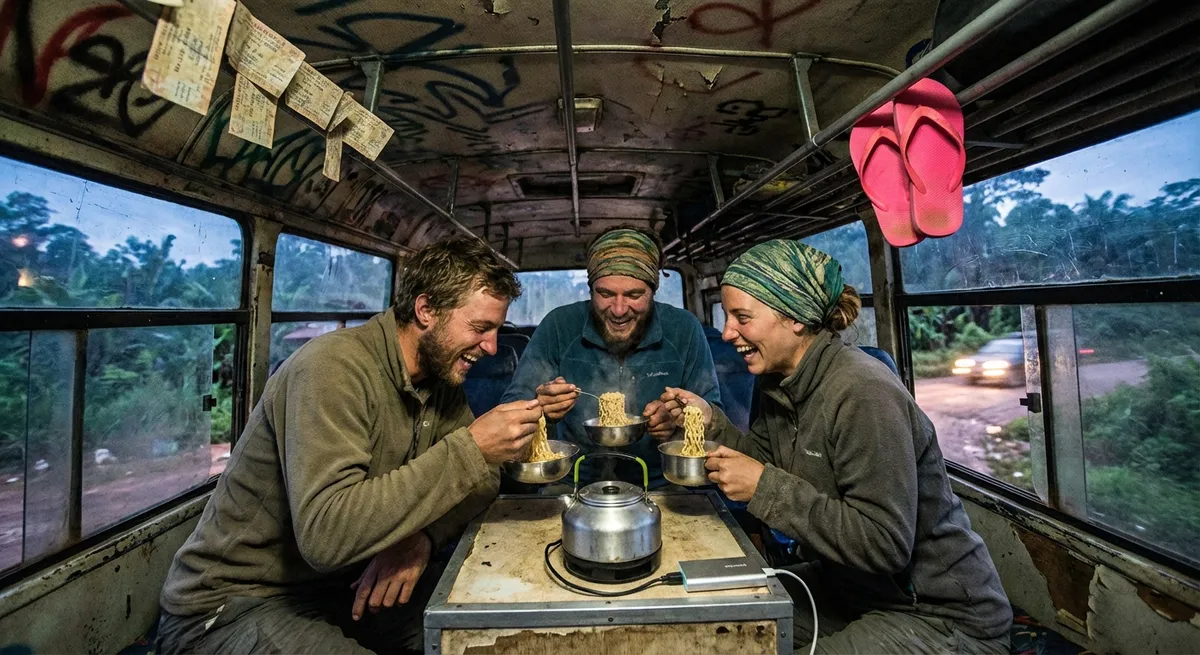
- Long-distance buses in South America, Europe, and Southeast Asia often have fully reclining seats and blankets that feel suspiciously like free business class for people with low standards.
- Night trains in places like Europe, India, and parts of Asia give you a bed, a door, and the comforting click-clack soundtrack of “I’m getting somewhere while I do absolutely nothing.”
- Overnight ferries turn you into a hobbit crossing oceans with your backpack as your only real commitment.
To make it work without hating your life:
- Always pick one step above the cheapest tier (the absolute bottom tier can feel like being checked into an experiment).
- Pack a sleep kit: earplugs, eye mask, scarf/hoodie, and a compressed travel pillow.
- Schedule your “trash sleep” nights between slower days, not on high-intensity hiking or city-exploring days.
You’re not just saving money; you’re bending the map so transport and accommodation collapse into a single budget line.
Discovery #3: Hyper-Local Micro-Cities Hidden Inside Big Cities
Big cities are wallet vampires—until you realize they’re actually clusters of tiny micro-cities stacked together, and some of those mini-worlds are cheap, weird, and wildly alive.
Instead of “doing Paris” or “doing Tokyo” or “doing Mexico City,” pick one specific neighborhood and treat it like a mini destination:
- Live there: find budget guesthouses, dorm hostels, or short-term apartments just outside the hype zones.
- Eat there: chase corner joints, markets, and menuless places buzzing with locals at lunch.
- Explore there: public parks, alley art, local bars, staircases to nowhere, community centers, late-night street gatherings.
This shrinks your transport costs to almost zero and multiplies your sense of belonging. The city around it becomes optional, like DLC content you can unlock with a cheap metro ride.
Bonus chaos mode: repeat the same move in a second neighborhood in the same city. You get two entirely different realities in one destination without ever paying another flight.
Discovery #4: Volunteering Without Signing Your Soul Away
You don’t need to commit six months of your life, sell your possessions, or become a full-time digital monk to get free or cheap stays by trading your time.
There are flexible, short-term ways to volunteer or work-trade that still leave room for adventure:
- Farm stays and eco-projects where you help with gardening, maintenance, or basic chores in exchange for a bed and sometimes food.
- Small hostels, guesthouses, and surf camps that trade a few hours of reception, cleaning, or social media help for accommodation.
- Community projects that look for language practice partners, arts workshops, or event help.
The move is to treat this like a hybrid trip:
- Spend 1–2 weeks anchored in one place volunteering or work-trading.
- Use days off and evenings to explore the surrounding region deeply and cheaply.
- Then pivot into regular travel for a while before anchoring again somewhere new.
You’re turning “I can’t afford to travel long-term” into “I just alternate between paid travel and low-cost, high-connection stays that feel like side quests.”
Discovery #5: Free Experiences Hiding Behind Boring Words
The most underrated travel hack: read like a local, not a tourist.
Instead of “things to do in X,” search the boring, municipal stuff:
- “City of ___ events calendar”
- “___ public cultural center schedule”
- “___ university public lectures / film screenings”
- “___ free museum days / pay what you wish”
- “Community festival ___ month”
You’ll start finding:
- Free open-air concerts you didn’t know existed.
- Film nights, public lectures, and workshops where you’re the only non-local.
- Museum days where the entry fee drops to zero, and you suddenly have four hours of art for the price of a coffee.
These aren’t the glossy itinerary staples influencers recycle. They’re the living, breathing activities locals actually attend. Your budget likes them. Your social media feed likes them. Your travel memory bank loves them.
Conclusion
Budget adventure doesn’t mean suffering your way through a discount version of someone else’s dream trip. It means you reroute, re-time, and reframe the way you move until the system bends a little.
Find the ghost shoulder. Sleep while you travel. Build micro-worlds inside megacities. Trade your time instead of your savings. Read the city like a resident, not a tourist.
You’re not “doing it cheap.” You’re rewriting the rules so cheap still feels outrageously alive.
Sources
- U.S. Department of Transportation – Airline Customer Service and Flight Info – Background on air travel, rights, and timing considerations that can influence cheaper bookings
- Google Flights Help Center – Explains flexible date search and calendar tools useful for finding off-peak and shoulder-season deals
- Eurail – Night Trains in Europe – Overview of night train options and how they combine transport with accommodation
- Hostelling International – Practical advice on hostels, work-exchange, and budget-friendly ways to stay in cities around the world
- UNESCO – World Heritage Centre Events & Activities – Example of cultural events and public activities that illustrate how to tap into free or low-cost experiences in major destinations
Key Takeaway
The most important thing to remember from this article is that this information can change how you think about Budget Adventures.