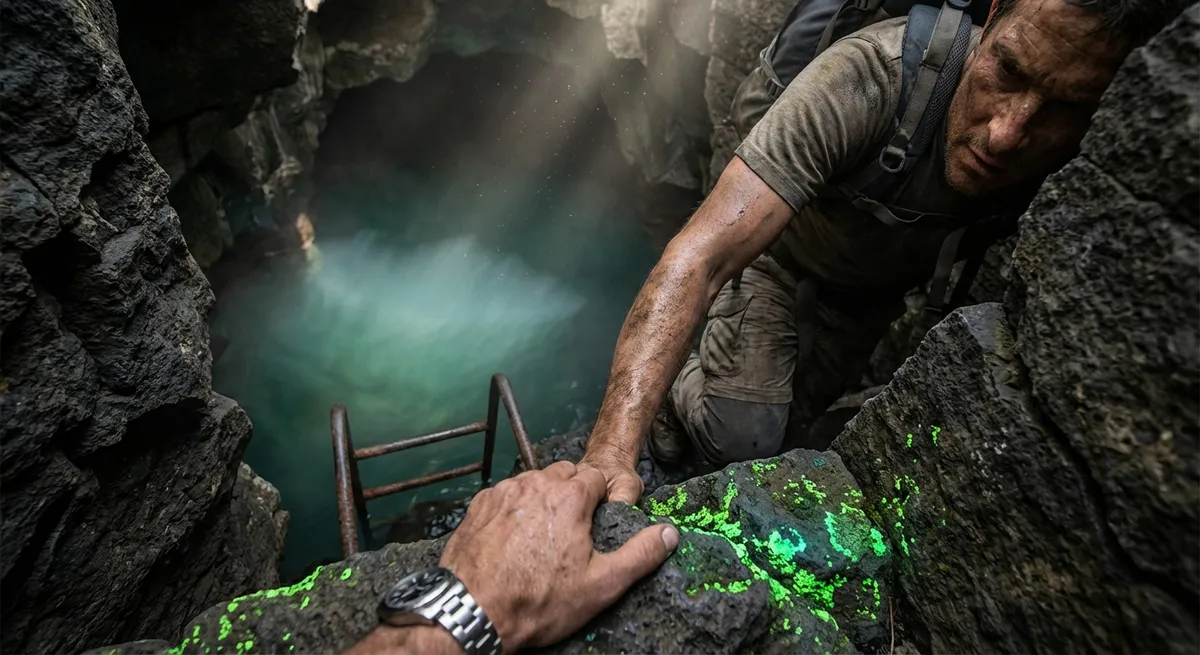
There are places that feel like you’ve taken a wrong turn in the universe and accidentally walked into a backstage door marked “Staff Only – Reality Show in Progress.” These aren’t the spots cluttering your feed or starring in tourism boards’ glossy campaigns. These are the barely-whispered, eyebrow-raising, “are we allowed to be here?” corners of the planet that most people speed past without noticing. If you’re the kind of traveler who gets suspicious when a place has too many signs and not enough mystery, this one’s for you.
Below are five travel discoveries that aren’t about ticking boxes—they’re about yanking open trapdoors in the map and seeing what leaks through.
1. The Desert That Writes Its Own Music – Singing Dunes of Kazakhstan
In Altyn-Emel National Park in southeastern Kazakhstan, there’s a sand dune that hums back at you.
The “singing dune” is a 150-meter-high mountain of sand that vibrates when the grains slide, producing a deep, almost organ-like note that hangs in the air like a soundtrack to your own desert hallucination. No gift shops. No escalators to the top. Just wind, heat, and a dune that growls when you disturb it.
You reach it via a rough, bumpy ride through a landscape that looks like someone tried to design Mars from memory. The closer you get, the quieter it becomes—no traffic, just the rustle of dry bushes and the calls of birds that clearly know they rule this place.
Climb the ridge, let your feet sink in, then deliberately slide or run down the slope. The vibration starts in your legs, then your chest, then suddenly the dune is singing—a low, eerie sound that feels like an ancient engine starting up underneath the desert.
This isn’t a curated tourist “experience.” This is geology acting weird in real time. Go with a local guide (roads can be rough, and conditions can flip from picturesque to punishing), pack more water than you think you’ll need, and be ready to leave with sand in your shoes and the echo of an invisible choir in your head.
2. A Cave Full of Stars That Aren’t Stars – Glowworm Depths of Waitomo, New Zealand
If you’ve ever wanted to walk into a night sky and discover it’s actually dripping, bioluminescent life—welcome to the glowworm caves of Waitomo on New Zealand’s North Island.
From the outside, these caves look like any other karst formation: green hills, limestone, sheep pretending you don’t exist. But once you descend into the underworld, the ceiling transforms into something that feels straight-up extraterrestrial. Thousands of glowworms cling to the rock, their blue-green lights dangling on delicate threads like some kind of alien fishing rig.
Most people shuffle through on a standard tour, but the real adventure is in the darker, wetter, more absurd routes: blackwater rafting on inner tubes, crawling through tight squeezes, or abseiling into caverns where your headlamp becomes optional because the “stars” do the lighting.
The best part? The glowworms aren’t just decoration—they’re predatory larvae drawing in insects with their luminous traps. It’s gorgeous and mildly horrifying if you think about it too long… which is exactly the kind of energy we like.
This is a hidden gem hiding inside a country that is already a giant postcard. Just remember: this is a living ecosystem. Don’t touch the walls, don’t shine bright lights at the glowworms, and treat the cave like it belongs to someone else—because it absolutely does.
3. The Village at the Lip of the World – Meteora’s Overlooked Monastery Paths, Greece
Most travelers who make it to Meteora, Greece, point their cameras at the big-ticket monasteries glued to the top of spires and then bail. But if you trail off the usual viewpoints and dive into the old footpaths, Meteora changes from epic backdrop to full-body experience.
Underneath those gravity-defying monasteries is a network of ancient walking trails that once served as the monastic highways—before asphalt and tour buses rolled in. Today they’re the secret level: quiet, shaded paths snaking through forests, rock corridors, and forgotten hermit caves.
Start from the town of Kastraki and follow one of the marked (but blissfully underused) trails into the pillars. You’ll pass old monk ladders carved in stone, ruins swallowed by moss, and viewpoints that beat the parking-lot panoramas by a mile. One moment you hear church bells drifting up from the valley; the next, you’re pressed against warm rock, watching a train of tiny cars far below like you’ve zoomed out on Earth.
This version of Meteora doesn’t hand-feed you drama—you earn it with sweat, scratched calves, and the occasional wrong turn. It’s a place where you can spend a whole afternoon and cross paths with more lizards than people, while massive monasteries float above you like architectural hallucinations.
Bring trail shoes, ignore the “perfect Instagram angles,” and aim for the little side paths that disappear into the trees; that’s usually where the real views start.
4. The Forest That Eats Time – Białowieża, Poland’s Primeval Green Maze
Most forests in Europe are edited. Trimmed. Rearranged. Białowieża Forest, straddling the border between Poland and Belarus, is what the continent looked like before humans decided trees were negotiable.
Step off the road and it’s like walking into an unpatched version of Earth. Fallen giants rot where they fell. Moss swallows trunks. The ground is a chaos of mushrooms, ferns, and roots that don’t care about your ankles. The air is dense in that weird way that makes you whisper, even when no one is around.
This is one of Europe’s last great primeval forests, home to wild European bison, wolves, lynx, and enough birdlife to make even casual hikers feel underqualified. Some parts are accessible only with licensed guides, which is exactly what keeps it feeling deliciously unpolished.
You’re not here for a manicured national-park loop with twelve interpretive signs about squirrels. You’re here to feel like you’ve wandered into a place that’s older than your language, your politics, your passport—older than your species’ memory.
Time moves weirdly in Białowieża. A short walk stretches out. A whole day disappears. This isn’t the forest you go to “clear your head”; this is the forest that reaches quietly into your skull and rearranges your sense of scale.
If you go, respect the restrictions. Stay on allowed trails, go with a guide into the core protected zones, and treat every fallen log like a throne you do not have the right to move.
5. The City That Refuses to Sit Still – Valparaíso’s Living Street-Canyon Gallery, Chile
Some cities have street art. Valparaíso, Chile, is street art with a port problem.
Built like an amphitheater collapsing into the Pacific, Valpo stacks its neighborhoods on wild hills connected by rattling funiculars, mad staircases, and alleyways that feel like secret chutes in a board game. Every flat surface is apparently under contract with someone’s imagination: walls, steps, doors, abandoned buildings—painted, stenciled, layered, overwritten.
You don’t “do” Valparaíso by hitting a checklist of murals. You wander uphill until your legs protest, then pivot into whatever alley looks the most chaotic. One corner hosts a hyper-detailed portrait; the next, an entire facade turned into a surreal ocean-scene. Some pieces are famous; others were sprayed last night by someone who couldn’t sleep and brought their insomnia outside.
The best views aren’t just of the sea—they’re down into the tangle of color, laundry lines, and dogs who have clearly memorized the city’s gravity. Grab a local guide or graffiti-focused walking tour to decode tags, stories, and the politics painted into the bricks, or just drift and get happily lost.
Valpo is a hidden gem hiding in plain sight—overshadowed by Patagonia’s glaciers and Atacama’s deserts. But if your idea of adventure includes urban exploration, creative rebellion, and the sense that the whole city is mid-sentence, this is your labyrinth.
Just remember: people live here. The art is their front porch, not your photo prop. Ask before shooting people, support local cafes and galleries, and tread lightly on the steps that double as both sidewalks and living rooms.
Conclusion
Hidden gems aren’t defined by how few people have been there—they’re defined by how awake you have to be when you arrive. A singing dune in Kazakhstan, a glowing cave in New Zealand, monastic trails beneath floating monasteries in Greece, an ancient European forest that never signed the development contract, and a Chilean port city that paints itself anew every night—none of these places want you to stay passive.
They demand sweat, curiosity, and a willingness to follow the weird side path instead of the paved route. That’s the real hidden gem: not the destination, but the way you move through it.
If your passport is itching and your comfort zone is already complaining, good. That means it’s working.
Sources
- Altyn-Emel National Park – Kazakhstan Tourism – Official tourism info on Altyn-Emel and its singing dunes
- Waitomo Glowworm Caves – Official Site – Background on glowworm caves, tours, and conservation
- Meteora – UNESCO World Heritage Centre – History and significance of Meteora’s monasteries and landscape
- Białowieża Forest – UNESCO World Heritage Centre – Ecological importance, wildlife, and protection status of Białowieża
- Valparaíso – UNESCO World Heritage Centre – Cultural and historical context for Valparaíso’s urban landscape and heritage
Key Takeaway
The most important thing to remember from this article is that this information can change how you think about Hidden Gems.