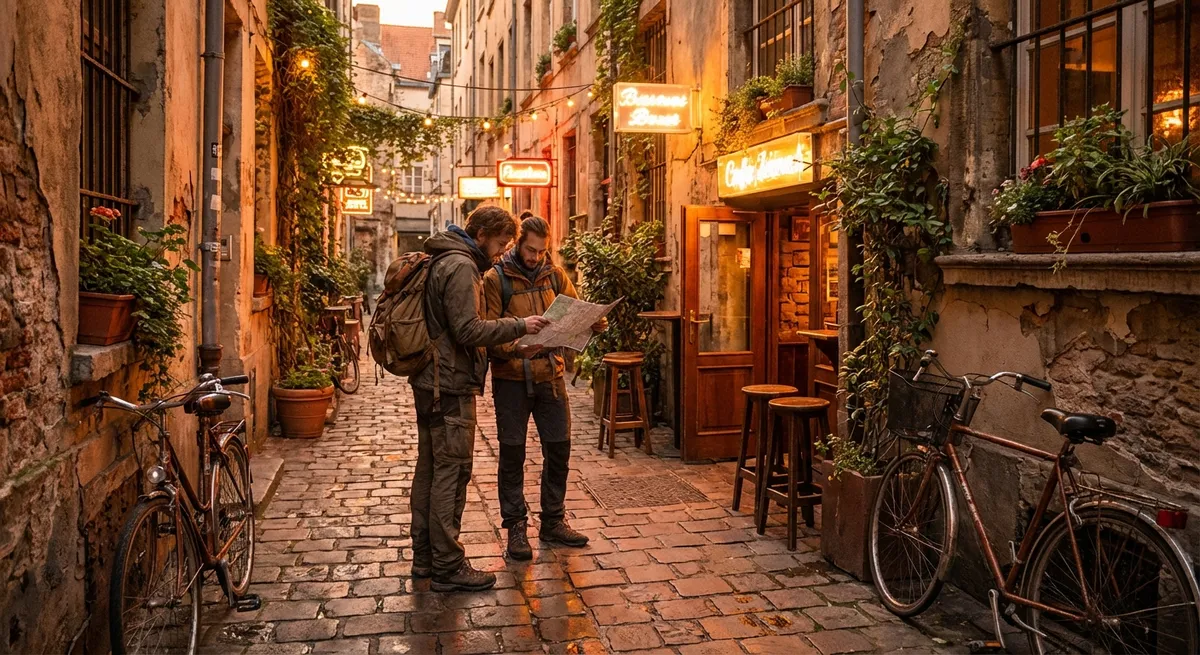
There’s a whole parallel planet running underneath the one you see on postcards. It’s not on the glossy brochures, it’s not pinned on your coworker’s vision board, and your favorite influencer probably walked past it to get a better angle of a cappuccino. This is a field guide to the places you stumble into when you ignore the “right” way to travel—and follow the odd roads, dead ends, and wrong turns instead.
These five discoveries aren’t the usual “hidden gems.” They’re the ones that feel like you weren’t supposed to see them yet. Bring curiosity, a loose plan, and shoes you don’t mind ruining.
1. The Stairways That Don’t Care About Your Knees
Some cities hide their best views behind unreasonable amounts of stairs—forgotten staircases that once funneled workers, smugglers, or monks between layers of the city. No one mentions them at the airport welcome desk, but they’re still there, stitched into hillsides and alleys like secret escalators from another century.
Hunt for these in old port cities and hillside towns. In Lisbon, evade the tram queues and follow the side alleys of Alfama: you’ll find cracked steps where locals shortcut between levels, with laundry lines and azulejo tiles for company instead of tour groups. In Hong Kong, the Mid-Levels escalator steals the spotlight, but the real magic is in the steep side stairways—tiny shrines wedged into landings, noodle shops squeezed into half-floors, and stray cats that have clearly seen things.
The rule: when your map suggests a sensible flat route, zoom in. If you see those grey contour lines getting smugly close together, look for stairs. They’re often unloved, unphotogenic, and absolutely worth it. You’ll emerge in courtyards with zero signage, half-finished murals, and views that feel illicit—like you climbed into the city’s backstage.
2. The Places That Only Exist at One Weird Hour
Some destinations are invisible until you hit them at the wrong time of day. Not sunrise, not golden hour—those are too curated. Aim for the time slots that sound mildly questionable: 4:30 a.m., 11:45 p.m., dead midday in off-season drizzle.
Slip out in the pre-dawn hours and head toward the parts of town built for work, not play. In coastal cities, fish markets are entire universes before sunrise—workers yelling in dialects you won’t find in phrasebooks, forklifts threading between crates, the air thick with sea salt and diesel. You’ll see a city function before it remembers it’s supposed to entertain you. Just follow the refrigerated trucks or the smell of salt and noise.
Late at night, look for spaces that transform: a weekday plaza that turns into a skate park after dark, or a quiet temple whose courtyard becomes a meeting point for dog walkers and insomniacs. This is where you see a city testing out its alter-egos. No ticketed experience, no curated soundtrack—just the weird, off-hour version of the place, running on its own internal clock.
Hidden gem rule for weird hours: pick an area your hotel says is “boring,” then visit when nobody’s supposed to be there. If it feels like you’ve intruded on a dress rehearsal for the city’s day, you’ve found the good stuff.
3. Infrastructure as Playground: Canals, Service Lanes, and Back-of-House Earth
Everyone else is lining up for the “historic center.” You’re going hunting for the parts of the city that were built for utility, not beauty—and somehow ended up with their own crooked charm.
Canals are a cheat code here. Ignore the polished waterfront where all the umbrellas match and walk away from the pretty section of river or canal. Eventually, you’ll hit the stretch where boats rust, bridges peel, and waterbirds outnumber humans. In Amsterdam or Copenhagen, venture to the industrial edges and you’ll find graffiti walls, DIY bars in old warehouses, and cyclists who clearly aren’t commuting to museums.
In Asian megacities, look for the little covered service lanes running behind main streets—narrow corridors of ducting, gas bottles, half-broken neon, and staff having smoke breaks. These service veins can lead you to tiny food stalls, hole-in-the-wall shrines, or printer shops somehow open at midnight. It’s the city’s loading screen, and you’re not really supposed to be here, which is exactly the point.
Anywhere you go, infrastructure leaves breadcrumbs: utility roads under power lines, overgrown paths along disused rail tracks, stairways under highways up to quiet pedestrian bridges. Follow the ugly, and see where it breaks open into something unexpectedly human.
4. The Improvised Museums Nobody Calls Museums
Hidden gems aren’t always landscapes—they’re often just clusters of objects someone couldn’t bear to throw away. The world is full of de facto museums that survive on stubbornness, not funding, and they’re usually hiding in neighborhoods nobody markets.
Think: a barber shop that has turned into an unofficial archive of local politics using yellowing posters and clippings. A repair shop where radios from four decades stack like a geological record of technology. A community hall whose walls are caked in photos of parades, floods, and football teams no one outside this postcode has heard of—each one annotated in ballpoint pen.
These are easier to find if you aim away from the main grid: take a tram or bus to the end of the line and walk back toward the city center through residential streets. Look for open doors, glass-front micro-businesses, and bulletin boards, not big signs and ticket booths. Many countries have thriving community centers and cultural associations that quietly keep archives and artifacts for locals, not visitors.
If you’re respectful and genuinely curious, the curator—who will insist they’re “just the owner” or “just the caretaker”—might end up giving you the most detailed, biased, and brilliant walking tour of your life. In a world of slick museums with sponsored exhibitions, these improvised archives feel alive, political, and personal.
5. The Weather-Only Worlds: Places You Need the “Wrong” Conditions For
Most people plan to dodge bad weather. Hidden-gem hunters sometimes do the opposite and chase weather that makes guidebooks nervous. Stormy coasts, off-season rains, cold snaps—they all flip destinations into alternate versions of themselves.
Visit a classic summer beach town in winter: shutters closed, boardwalk empty, wind strong enough to edit your thoughts. What’s left is the skeleton of the place—locals walking dogs, repair crews patching up summer’s damage, fishermen still doing their thing. This is when you realize the town doesn’t exist for you; you’re just passing through its real life.
In mountain regions, fog is your co-conspirator. Trails that seem tame under blue skies become eerie corridors of muffled sound and ghost trees. You won’t get the panorama photo, but you’ll get something arguably better: an intimate, altered version of the landscape that feels like it’s temporarily shrunk to your field of view. Just make sure you know your limits—fog and storms are best consumed with solid navigation skills and a healthy respect for nature’s exit policies.
Rain can also expose hidden architecture: water management systems, improvised awnings, tight-knit alleys that suddenly channel entire rivers. You’ll learn more about a city’s design during a 20‑minute downpour than in a whole day of sunshine.
Conclusion
Hidden gems aren’t coordinates—they’re side effects. They show up when you mess with timing, route, expectation, and comfort. You won’t find these spots in listicles because they’re less about “where” and more about “how”: take the stairs no one recommends, walk into the city at the wrong hour, follow the ugly infrastructure, say yes to improvised museums, and don’t run from imperfect weather.
The world’s most overexposed destinations are still full of secret versions of themselves. You just have to be willing to get it “wrong” on purpose.
Sources
- UN World Tourism Organization (UNWTO) – Global tourism data and trends, useful for understanding how overtourism shapes destinations and why lesser-known areas remain under the radar
- UNESCO World Heritage Centre – Background on cultural landscapes and how everyday urban and rural spaces hold heritage beyond standard tourist sights
- Project for Public Spaces – Insight into placemaking and how informal, community-driven spaces become meaningful “hidden” places
- National Park Service – Hiking Safety – Practical guidance on staying safe when exploring off-peak hours, unusual weather, and less-traveled routes in natural areas
- American Planning Association – Great Public Spaces – Examples of public spaces that illustrate how infrastructure, alleys, and overlooked corners can become vibrant, discovery-worthy environments
Key Takeaway
The most important thing to remember from this article is that this information can change how you think about Hidden Gems.