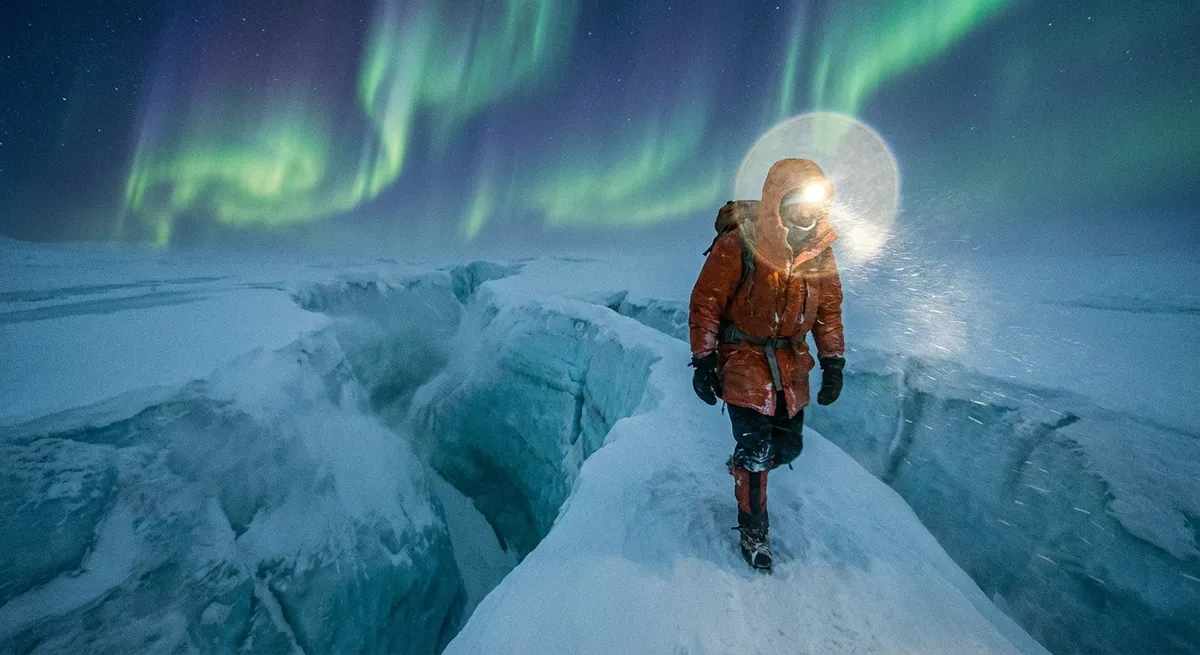
Most trips are about seeing the world. Extreme travel is about arguing with it. It’s where weather becomes an opponent, landscapes feel sentient, and your comfort zone taps out before you even zip your bag.
This isn’t a list of “top 10 epic thrills” or reheated bucket-list clichés. These are five very real, very strange frontiers—part environments, part endurance tests—where adventurous travelers stop being tourists and become temporary test pilots for the human body.
Read this as inspiration, not instruction. These trips require serious prep, respect for local rules, and the humility to walk away when conditions turn feral.
Riding the Edge of Night: Chasing Polar Twilight in the High Arctic
There’s daylight, there’s darkness, and then there’s the Arctic’s long, haunted in‑between. For a few surreal weeks each year—especially in Svalbard (Norway) and northern Greenland—the sky refuses to commit. It just smolders in blue, purple, and silver for hours, like the sun forgot how to set or rise.
Extreme travelers don’t go here for pretty sunsets; they go to feel their body clock surrender. You’ll find yourself eating breakfast at noon, wide awake at 3 a.m., and wondering if time still has rules. Guiding outfits in places like Longyearbyen, Svalbard, operate snowmobile expeditions, glacier hikes, and ice-cave explorations under this eerie half-light, where the shadows feel longer than the land itself.
This is not a casual “fly in with a fleece” situation. Temperatures can plummet below -20°C, polar bears are very real, and storms can erase visibility in minutes. Any trip this far north should be done with licensed local guides, proper cold‑weather gear, and emergency plans that don’t rely on wishful thinking or phone signal.
The reward for all that preparation? Standing on sea ice or a bare ridge, watching the horizon glow like a permanent afterthought of sunset, and realizing this is what it feels like when the Earth bends its own schedule.
Volcanic Insomnia: Sleeping on a Living Mountain
There are mountains, and then there are volcanoes that purr, hiss, and occasionally throw rocks. Few experiences are as unnerving—or addictive—as camping on the shoulder of an active volcano, listening to the planet’s tectonic whisper all night long.
In places like Guatemala (Acatenango with views of Fuego) or Sicily’s Mount Etna, guided overnight treks get you close enough to see lava glow, hear distant rumbles, and feel the ground’s low, animal growl. You cook dinner in the cold thin air while watching the crater flicker like a broken furnace in the distance. Sleep comes in short, uneasy bursts, interrupted by the occasional boom that makes your entire tent tense.
This is not about sneaking into restricted zones or dancing on crater rims. Reputable local outfitters track volcanic activity reports, respect exclusion areas, and will cancel if conditions go sideways. Your job is to bring the right gear (layers, headlamp, real boots, not fashion “hikers”), listen to instructions, and drop any macho impulse to “get closer” than your guide permits.
Extreme travelers love these trips not because they’re reckless, but because they’re humbling. Camping on a volcano is a masterclass in scale: you are a timestamp, the mountain is a storyline.
Vertical Oceans: Descending into Glacial Ice Worlds
The surface of a glacier is impressive. The inside of one feels like you broke into a parallel planet made of frozen light and echo. Glacier moulins, crevasses, and ice caves—found in places like Iceland, Alaska, and the European Alps—offer some of the most intense, otherworldly environments accessible to humans without leaving Earth.
Under a glacier’s crust, blue stops being a color and becomes an atmosphere. Ice overhead warps sunlight into strange halos; rivers thunder through frozen corridors; your crampons scratch and scream with every step. Technical trips led by ice-climbing and glacier guides might have you abseiling into vertical shafts, crawling through tight chutes, and navigating chambers where you can hear meltwater roaring beneath your feet.
This is terrain that changes constantly—caves collapse, tunnels flood, and routes can vanish in a single warm spell. That’s why only trained professionals should be deciding where you go and when you turn back. You’ll need a helmet, harness, proper mountaineering boots, and cold‑weather gear rated for wet, icy environments. Claustrophobes and thrill-chasers looking for selfies at the edge of a hole with no safety gear should opt out.
For those who respect its danger, the reward is wild: you walk out with the rare sensation of having visited the inside of a climate system, not just admired its postcard.
Storm Pilgrimage: Voluntary Encounters with Extreme Weather
Most travelers run from storms. A certain subset deliberately walks toward them—with caution, science, and a very healthy respect for nature’s uppercut.
In the central United States, licensed storm-chasing tours follow severe weather systems during peak tornado season, coordinating with meteorological data and local warnings. You’re not “racing tornadoes”; you’re learning to read the sky, watching supercells form like alien motherships, seeing lightning turn daylight into a film negative. Similarly, in places like northern Australia, some operators focus on wet-season spectacles: colossal thunderstorms, flooded landscapes, and mind-bending skies—always within safety margins and current regulations.
This isn’t something you improvise with a rental car and a YouTube education. Extreme weather kills the unprepared and unlucky every year. Responsible storm-chasing outfits use radar, have evacuation routes, obey local authorities, and keep wide safety buffers. You’ll spend long hours on the road, adjusting course as forecasts change, often ending the day exhausted and wired from pure sensory overload.
But if you’ve ever wanted to feel how gigantic and alive the atmosphere really is, there’s nothing quite like standing at a safe distance watching a rotating supercell flex across the plains, your entire nervous system tuned to every gust.
The Thin Air Threshold: High-Altitude Borderlands Without the Summit Obsession
Mountaineering culture glorifies summits. Extreme travelers are starting to glorify something else: the altitude itself. Instead of chasing the bragging rights of a single peak, more people are seeking extended time in high‑altitude “borderlands” between 3,500–5,500 meters, where the air goes thin and the whole world feels a little unhinged.
Think multi-day treks in the Himalayas (like Khumbu region lodges and side valleys), Peru’s Cordillera Blanca, or the high plateaus of Tajikistan and Kyrgyzstan. You’re not dangling from ice walls or risking technically extreme climbs. You’re living at an altitude your sea-level body did not evolve for—sleeping in thin air, learning to move slowly, listening to your heart tap dance on every uphill step.
This is biological negotiation, not conquest. You focus on gradual acclimatization, rest days, hydration, and recognizing warning signs of altitude sickness (headaches, nausea, dizziness, confusion). Local guides and support teams know the terrain, the weather patterns, and evacuation options if someone’s body decides the experiment is over.
What makes these journeys extreme is the sustained exposure: days or weeks of rarefied air, weather that can pivot from sunshine to snow in minutes, and landscapes so oversized your sense of proportion just gives up. You’ll come back with a new respect for red blood cells, and for the people who call these altitudes home year-round.
Conclusion
Extreme travel isn’t really about danger; it’s about thresholds—the lines where weather, geology, light, and biology start behaving strangely, and you have to adapt or retreat. Arctic twilight, volcanic insomnia, glacial underworlds, storm pilgrimages, and high‑altitude borderlands are all versions of the same invitation: step into places where Earth stops feeling familiar.
If any of these call to you, treat that call like a contract. Do the research. Go with qualified local experts. Respect local laws, indigenous communities, and the quiet logic of landscapes that were here long before you and will outlast your passport.
The world still has corners that feel like experiments. You don’t have to break rules to find them—you just have to go where the normal ones no longer apply.
Sources
- U.S. Geological Survey – Volcano Hazards Program – Scientific information on volcanic activity, monitoring, and safety considerations
- Norwegian Polar Institute – Svalbard Information – Background on Svalbard’s environment, climate, and polar conditions
- National Snow and Ice Data Center (NSIDC) – Detailed explanations of glaciers, ice structures, and related hazards
- U.S. National Weather Service – Storm Safety – Guidance on severe weather awareness, risk, and best practices for staying safe
- Centers for Disease Control and Prevention – High Elevation Travel & Altitude Illness – Medical guidance on acclimatization, symptoms, and prevention of altitude-related illness
Key Takeaway
The most important thing to remember from this article is that this information can change how you think about Extreme Travel.