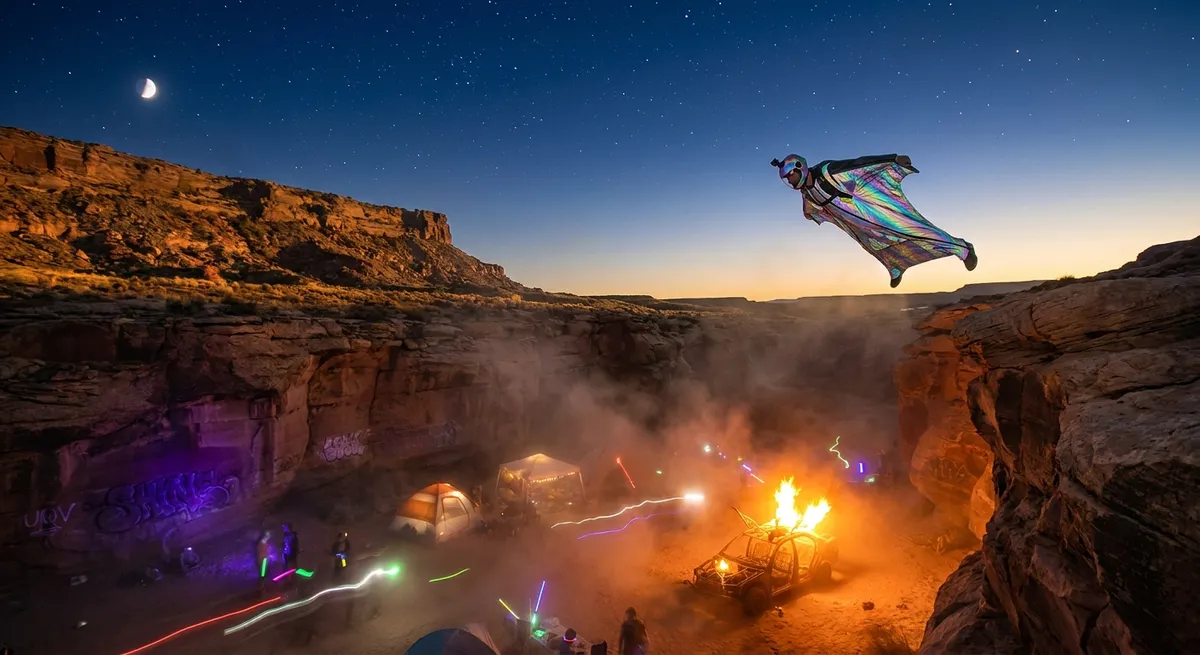
There’s regular travel, and then there’s the kind that makes your friends zoom in on your Instagram stories and ask, “Wait, where even is that?” This is the second kind. Extreme travel isn’t just about danger; it’s about choosing places and experiences that feel slightly wrong for humans—and going anyway.
These aren’t bucket-list classics. These are five travel discoveries that feel like dares the planet is making. They’re harsh, brilliant, inconvenient, and unreasonably exciting. Perfect.
1. Living on the Edge of an Active Volcano (Stromboli, Italy)
Stromboli is the island that never really sleeps—because the volcano doesn’t. Off the coast of Italy, this black-sand shard of rock is basically a smoking chimney rising out of the sea. Locals live with a constant soundtrack of low rumbles and the occasional glowing burp of lava. Travelers come here not to “see the sights,” but to feel the ground vibrate under their boots.
Guided night hikes wind up the volcano’s slopes, weaving through loose ash that turns each step into a gamble. You climb in the dark, in a headlamp halo, until the crater is close enough that you can see molten rock launch into the sky like fireworks from another planet. The air smells like burned metal and the sea far below looks like a black hole. It’s terrifying and strangely peaceful at the same time.
This isn’t a place for control freaks. The volcano runs the schedule; sudden activity can shut down parts of the trail or the summit. You’ll need a licensed guide and proper gear, and you’ll have to make peace with the fact that “safe” here is a sliding scale. But if you want to know what it feels like to stand inside the world’s bad temper and still be in awe, Stromboli delivers.
2. Riding the World’s Slowest Roller Coaster: Cargo Ferries Through Storm Seas (Patagonia & Subpolar Routes)
Cruises are for people who want cocktails and towel origami. Cargo ferries are for people who think, “What if the ship felt slightly too industrial and the weather slightly too personal?” Along the fjords of Patagonia, the subpolar North Atlantic, and remote island chains, cargo and passenger ferries connect far-flung communities the world never thinks about.
Instead of sterile decks and casino lights, you get rust, rope, and metal that has obviously seen things. The “entertainment” is the ocean itself: waves climbing windows, winds that steal your hat, and skies that flip from postcard blue to apocalyptic gray in one afternoon. Seabirds track the ship, icebergs drift by in cold-water routes, and sometimes the only land you’ll see for a day is a dark outline with no name on your map app.
Life on board is stubbornly practical. You share space with truck drivers, locals hauling goods, maybe a priest or a nurse hitching a ride to the next village. Meals are whatever the galley is making; you’re here to cross water, not be pampered. When storms roll in, you learn a new definition of “motion.” Your world shrinks to rails, horizon, and the slow certainty that you are very small and this planet is not designed for your comfort.
It’s not glamorous. That’s the point. You come away with a new respect for supply chains, sailors, and the unsettling beauty of empty sea. Your photos won’t scream luxury—but they’ll radiate raw, weather-beaten presence.
3. Sleeping Under a Sky That Won’t Turn Off (High Arctic, Svalbard)
In the Arctic summer, the sun gets confused and just refuses to leave. On the Svalbard archipelago, north of mainland Norway, the midnight sun stretches the concept of “day” until it breaks. Step outside your guesthouse at 2:47 a.m. and the light is bright, flat, and slightly insane. Your body keeps asking, “Are we… allowed to be awake now?”
This is not a gentle landscape. Permafrost, polar bears, and serious cold define the rules. You walk around Longyearbyen—the main town—with signs warning about bears and the expectation that anyone leaving the settlement carries a rifle (or hires someone who does). Snowmobiles and tracked vehicles look more at home than regular cars. The place feels like a frontier experiment humanity isn’t sure it should have tried.
But spend a few days here and the extremity becomes addictive. You join boat trips past calving glaciers, where slabs of ancient ice crumble into neon-blue water with shotgun cracks. You hike across rocky tundra that looks like a dead planet—until you notice tiny flowers and arctic fox tracks. At 1 a.m., with the sun dipping almost low enough to pretend it’s sunset, you realize that “time” is just a story we tell ourselves to feel stable.
Svalbard forces you to question comfort, normal daylight, and what “remote” really means. It’s not just about cold and latitude; it’s about living where nature still has veto power over every plan you make.
4. Chasing Earth’s Quietest Catastrophes: Glacial Collapse Watch (Alaska, Greenland, Patagonia)
Most disasters are sudden. Glaciers are the slow-motion version: enormous bodies of ice sliding, cracking, and dying in inches—until they suddenly don’t. Extreme travelers are starting to treat glacier fronts like living theaters, heading to places where ice is loud, angry, and actively reshaping the world.
In Alaska, Patagonia, and Greenland, you can approach glacier faces by boat or on foot (within safe, regulated distances) and listen: deep groans, cracking booms, the thunder of seracs collapsing into the sea. The air feels colder around them, heavy with ancient frozen air finally being released after thousands of years. It’s not serene; it’s tense, like watching a cliff that might decide to jump.
Kayaking near icebergs, you paddle past floating shards the size of houses, neon blue where the ice is densest. Every few minutes, something shifts: an iceberg rolls, a wall breaks, a wave races out. Scientists and guides treat the area with total respect because the ice isn’t a backdrop—it’s a moving, unstable machine. You wear layers, flotation gear, and a constant awareness that this wonder is temporary.
This is “climate tourism” in the most uncomfortable sense: you’re witnessing a system in collapse. It’s beautiful in the way a lightning storm is beautiful—thrilling, dangerous, and ethically complicated. But it can also be a catalyst, making climate change real in a way no graph ever will.
5. The Hangover of Humanity: Exploring Abandoned Megaprojects (Central Asia, Eastern Europe, Beyond)
Some of the wildest places on Earth aren’t natural—they’re human ideas that failed so hard they became landscapes. Across Central Asia, Eastern Europe, and other corners of the world, abandoned megaprojects sit in the dust: unfinished resorts, decaying space infrastructure, empty Olympic venues, satellite towns built for futures that never arrived.
Exploring them feels like wandering through someone else’s fever dream. Think rusting launch towers in the steppe, concrete skeletons of hotels on forgotten coasts, or entire war-era tunnels bored into mountains and then left to echo. Graffiti blooms where ambition died. Rust turns metal into lace. Nature creeps back in, indifferent and thorough.
This is not casual tourism. Many of these sites are off-limits, structurally unsafe, or require special permissions and local guides. When done legally and responsibly—through sanctioned tours, historical excursions, or partnered expeditions—they offer a rare kind of extreme: psychological, not just physical. You’re walking through the aftermath of grand plans, touching the edges of political dreams, military paranoia, or economic overreach.
It can be haunting: a half-built ski resort with no visitors, an empty stadium where crowds once screamed, or a ghost-airfield where jets no longer land. But it’s also clarifying. The message is loud: our species loves monumental projects, but the planet always gets the final edit. You leave with eerie photos and a brain full of questions about what we build, why we abandon it, and what future travelers will say about our current “forever” cities.
Conclusion
Extreme travel isn’t about collecting bragging rights; it’s about stepping into environments that refuse to bend around your comfort. Volcanic islands that periodically explode, ships that cross seas nobody’s watching, towns under unsleeping suns, glaciers mid-collapse, and abandoned monuments to human ego—none of them are easy, and that’s exactly why they matter.
If you go, go prepared, go legally, and go humbly. These places don’t need you; they’re already epic without witnesses. But if you’re lucky enough to stand in them, feel small, pay attention, and bring that feeling back with you. The world is weirder, harsher, and more astonishing than your feed will ever show—and that’s where the real adventure lives.
Sources
- US Geological Survey – Volcano Hazards Program - Background on volcanic activity, eruption styles, and safety considerations relevant to visiting active volcanoes like Stromboli
- Norwegian Polar Institute – Svalbard Information - Overview of Svalbard’s environment, wildlife (including polar bears), and polar conditions
- National Snow and Ice Data Center – All About Glaciers - Scientific context on glacier dynamics, calving, and climate impacts behind glacial travel experiences
- NOAA – Ocean Facts - Authoritative information on ocean conditions, storms, and marine hazards relevant to extreme sea crossings and ferry routes
- UNESCO World Heritage Centre – World Heritage List - Detailed entries on various protected natural and cultural sites, including polar regions, glaciers, and historically significant landscapes
Key Takeaway
The most important thing to remember from this article is that this information can change how you think about Extreme Travel.