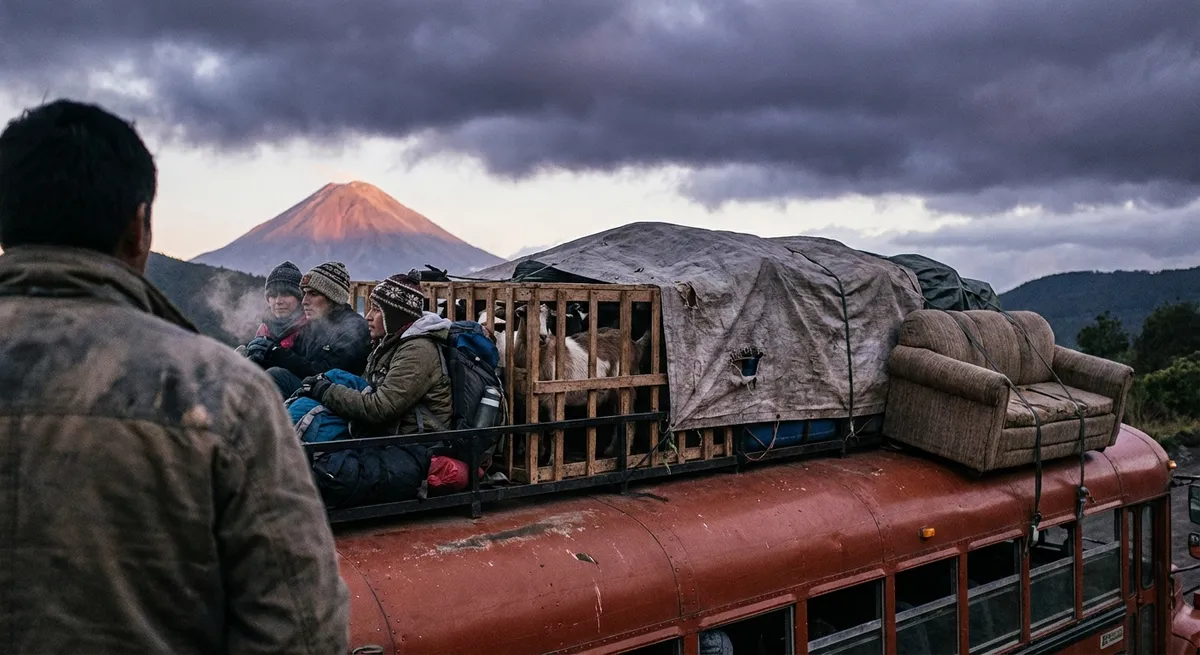
Comfort is cheap. You can buy it in bulk on booking sites, flight upgrades, and “all-inclusive” packages that include everything except a pulse. Extreme travel isn’t about danger-for-clicks or being the loudest person on Instagram; it’s about voluntarily breaking the agreement you made with your own comfort zone—and seeing what’s hiding on the other side.
This isn’t a list of “top 10” stunts or bucket-list clichés. These are five very real, very intense travel discoveries—experiences that flip the script on what a trip is for. Some will test your body. Some will mess with your sense of time. All of them will make your sofa very, very jealous.
Cold That Bites Back: Life Inside a Polar Night
Most travelers flirt with winter. Extreme travelers move in with it.
Spending time in or near the polar regions during the dark season is not just “ooh, pretty aurora” and thermal leggings. It’s a slow-motion psychological experiment where the sun disappears for weeks or months, your circadian rhythm dissolves, and your definition of “outside” becomes something between a dare and a negotiation. Towns like Tromsø in Norway, Longyearbyen in Svalbard, and Utqiaġvik (Barrow), Alaska are real, functioning communities that live through polar night every year—not as a novelty, but as a lifestyle.
The discovery here isn’t just “wow, it’s dark.” It’s how human beings hack that darkness: full-spectrum lamps in kitchens, community events in the middle of “night,” and an almost defiant culture of going out anyway. You learn how snow changes sound, how your mood is tethered to artificial light, and why people get almost over-emotional when the sun finally peeks back over the horizon. Extreme travelers come here not just to chase northern lights, but to feel what happens when your primary navigation tool—the sun—gets deleted from the interface.
What you need: serious cold-weather gear, respect for local safety rules, and a plan for your mental health (hello, light therapy). What you get: a permanent reset of what “bad weather” means and a very intimate relationship with the concept of time.
Volcanic Earth: Sleeping on a Planet That’s Still Under Construction
Standing near an active volcano is the closest you can get to watching the Earth in debug mode.
Volcanic travel isn’t about ticking off the famous peaks—it’s about inhabiting landscapes that are still being drafted. Think hiking over still-warm lava fields in Iceland, watching fresh vents form near Fagradalsfjall, or staying in villages that live in the shadow of stratovolcanoes in Indonesia, Japan, or Central America. You’re not just seeing scenery; you’re scrolling through the planet’s version history.
You quickly discover how casually humans coexist with risk. Locals farm hyper-fertile volcanic soil, build houses on slopes with evacuation signs nailed to telephone poles, and treat eruptions like intense, unwelcome seasonal storms. As an outsider, hearing evacuation sirens or seeing ash fall from the sky is a jolt—the realization that the ground isn’t as static as you’ve been taught. Lava flows, gas emissions, and sudden closures are not inconveniences; they’re reminders that you’re standing on molten negotiation.
This kind of extreme travel requires more than bravery; it demands homework. You read live seismic reports, follow official bulletins, and accept that authorities can—and should—close areas without explanation. Your discovery isn’t “I saw lava.” It’s “I watched a coastline, a crater, or an entire hillside being redrawn in real time, and knew that a hundred years from now, someone else will walk a completely different line.”
Edges of Oxygen: Living Light at High Altitude
Marketing calls them “sky cities” and “roof of the world.” Your lungs call them “hostage situations.”
High-altitude travel isn’t just summiting a famous mountain and taking a victory selfie. It’s spending real time—days, not hours—where the air is thin enough that walking up a flight of stairs feels like an argument with gravity. Cities like La Paz in Bolivia, Lhasa in Tibet, or towns along the Annapurna Circuit and in the Indian Himalaya don’t exist to serve adventurers; they’re long-running experiments in human adaptation.
The discovery here is how differently everything works when oxygen is scarce. Water boils at a lower temperature, cooking takes longer, your sleep can turn weird and fragmented, and trivial exertion becomes a tactical decision. Locals who’ve adapted look almost superhuman as they haul loads uphill while you stop every twenty seconds pretending to “admire the view.” The culture of slowness isn’t laziness; it’s strategy. Pacing, hydration, and altitude-aware medicine become part of your daily vocabulary.
This is extreme travel that quietly tests your respect for your own biology. Ignore acclimatization, and the mountain will notice. Take it seriously, and you tap into a calm, stripped-down headspace where every choice becomes deliberate: one step, one breath, one more contour line on the map. The real trophy isn’t a summit photo; it’s learning how to listen to a body you usually try to outthink.
Human Noise: Immersing Yourself in Controlled Chaos
Some people chase silence in deserts and remote islands. Others deliberately dive into the loudest possible human environments and stay there long enough to go past overstimulation and into something stranger: flow.
Extreme urban travel means placing yourself inside events where the “crowd” isn’t a backdrop but the main element. Think massive religious gatherings like India’s Kumbh Mela, colossal cultural festivals, dense megacities in peak rush hour, or chaotic transit hubs where thousands of people move more like a single organism than a group of individuals. You’re not just visiting a place; you’re surfing the physics of human density.
Your discovery hits when you realize that what feels like chaos from the outside is often a highly tuned system. You start to notice informal rules: how people merge, how vendors set up micro-economies around choke points, how certain gestures or body language clear invisible paths. You begin to move differently, switching from “I am a unit” to “I’m a cell inside a living thing.” It’s intense, exhausting, and—once you adjust—shockingly addictive.
Extreme travelers use these environments as sensory boot camps. You learn to manage anxiety, protect your space without hostility, and navigate when signs, language, or even street layouts don’t make immediate sense. Instead of escaping crowds, you reverse it: you go so deep into them that you come out with a new understanding of how cities—and the people inside them—actually pulse.
Time Distortion: Chasing the Edges of Days, Seasons, and Sleep
Most trips respect the calendar and the clock. Extreme travel toys with them.
There’s a whole category of journeys where the primary “extreme” element isn’t temperature or terrain, but time itself. Think sailing across multiple time zones slowly instead of flying over them, taking long-distance trains that erase the usual logic of departure and arrival, or following seasonal phenomena like the migration of animals, the midnight sun, or long twilight at extreme latitudes. You’re not collecting “places visited”; you’re hacking your experience of duration.
The discovery comes when your usual anchors stop working. You wake up and realize you’ve crossed three borders overnight without stepping outside. You watch a sun that barely sets, or barely rises, and feel your brain arguing with the sky. In places with long summer days or winter nights, people invent rituals just to orient themselves: midnight hikes, early-morning markets that happen in darkness, festivals that only make sense when you’ve been there long enough to feel the seasonal shift in your bones.
Extreme travelers lean into this confusion. They deliberately schedule “too long” layovers to feel the drag of time in airports, ride third-class trains where nothing is predictable, or stay in one wild place long enough to see it flip from one season’s personality to another. The reward is subtle but radical: you stop treating time as a fixed resource you’re racing against and start treating it as an environment you can inhabit, bend, and explore.
Conclusion
Extreme travel isn’t a checklist of near-death experiences or a portfolio of scars. It’s a deliberate, often uncomfortable decision to rearrange the basic assumptions you travel with: that the sun will rise, the ground will hold still, the air will cooperate, other people are background noise, and time behaves itself.
The five discoveries above—polar darkness, volcanic earth, high altitude, human density, and warped time—aren’t about proving how tough you are. They’re about putting your entire operating system under stress just long enough to reveal the hidden settings: what you fear, what you underestimate, and what you’re actually capable of when comfort stops leading the way.
Your sofa will still be there when you get back. The part of you that returns to sit on it will not be the same—and that’s the whole point.
Sources
- US National Park Service – Volcano Hazards Program - Overview of volcanic landscapes, risks, and safety considerations in active volcanic regions
- US Geological Survey – Volcanoes - Scientific information on volcanic activity, monitoring, and current alerts worldwide
- Centers for Disease Control and Prevention – High-Altitude Travel & Altitude Illness - Medical guidance on physiological effects of high altitude and how to acclimatize safely
- National Weather Service – Midnight Sun and Polar Night - Explanation of polar day/night phenomena and their impact on daily life
- United Nations – World Urbanization Prospects - Data and analysis on global urban growth and megacity dynamics relevant to extreme urban environments
Key Takeaway
The most important thing to remember from this article is that this information can change how you think about Extreme Travel.