The best places left on Earth are the ones that haven’t figured out they’re supposed to pose for Instagram. These are the destinations where your phone signal dies, your expectations glitch, and your sensible friends start sending “Are you alive?” texts. Welcome to the wild corners of the map—five travel discoveries that feel less like vacations and more like secret levels you weren’t meant to unlock.
The Glow-in-the-Dark Shoreline That Looks Fake: Bioluminescent Bays
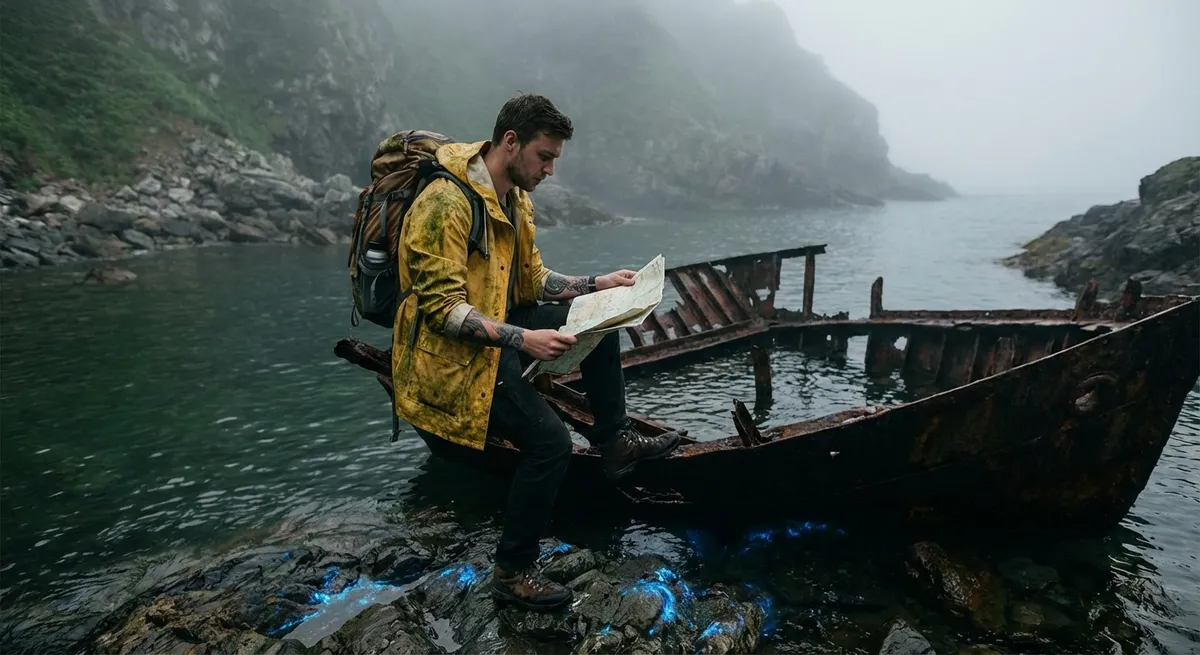
Some beaches are for sunbathing. Others are for wondering if you’ve fallen into a sci‑fi movie. Bioluminescent bays—where microscopic organisms light up when disturbed—turn the ocean into an electric-blue storm every time you move. Kayak paddles leave neon trails, fish look like shooting stars, and your hand glowing underwater feels like illegal magic.
These bays are scattered around the world: Mosquito Bay in Puerto Rico, the Maldives’ “Sea of Stars,” and pockets around Southeast Asia where the glow appears unpredictably. The catch: the most intense displays are usually tied to low light pollution, specific seasons, and calm waters, so you can’t just show up and demand nature run a light show for you. Go paddleboarding at midnight, kill your flashlight, and accept that your photos will never capture how weird it feels to watch waves explode in blue fire at your feet.
This kind of place filters out casual tourists. You need patience, some level of discomfort tolerance (nighttime, ocean, no lifeguards, questionable footwear choices), and the will to trust locals on where and when the glow actually shows. But once you watch the water ignite around a moving school of fish, every hotel pool on Earth will feel aggressively boring.
The Island of Whispering Sand: Dunes That Actually Talk Back
On the surface, “singing sand dunes” sound like a marketing gimmick. In reality, they’re one of the strangest natural soundscapes you can stumble into. In a handful of spots around the planet—places like Mongolia’s Khongoryn Els, China’s Mingsha Shan near Dunhuang, or select desert parks in the U.S.—the sand doesn’t just crunch under your boots; it hums.
Slide down the steeper faces of these dunes and the entire slope can start to vibrate, releasing a low, eerie drone that sounds like an engine in the distance or a giant, broken cello. It’s not spirits, it’s physics: tons of sand grains shearing and rubbing perfectly in sync. The weirder part is that your own body becomes part of the instrument—your movement triggers the sound.
This is not a resort scene. You’ll be hot, dusty, and possibly full of sand in places sand should never be. You’ll also get sunset colors over rippling dune ridges, sky so big it feels almost confrontational, and a soundtrack that’s closer to a monastery horn than a nature trail. It’s the kind of experience you can’t really explain later without people assuming you were dehydrated or slightly hallucinating. Perfect.
The Borderland Village That Ignores Straight Lines
Most borders are neat lines on a map. Then there are places that look like cartographers gave up mid‑shift. In a few small towns around the world—Baarle on the Belgium–Netherlands border is the poster child—streets are carved up into overlapping enclaves and exclaves so chaotic that one side of your couch could legally be in a different country than the other.
Imagine walking down a street where white crosses and border markers are painted casually across sidewalks, splitting bakeries, homes, even restaurant tables. One doorway might be in one country while its window opens into another. Different shop hours, different tax rules, different jurisdictions—all wrapped into a single, walkable neighborhood that treats sovereignty like a puzzle game.
This kind of place isn’t “pretty” in a postcard sense. It’s psychologically disorienting and perfect for travelers who enjoy breaking their own sense of normal. Grab coffee “in” one country, step three paces to pay in another, and watch your phone battle for which network thinks it owns you. It’s a reminder that maps are human inventions—and some humans were clearly bored when they drew this one.
The Forest That Eats Time: Ancient Trees With Their Own Gravity
Most forests are pleasant. Some forests feel like they’re quietly judging your entire species. In certain old‑growth pockets—like temperate rainforests in the Pacific Northwest, primeval beech forests in Central Europe, or remote patches of New Zealand—trees have survived wars, empires, and your last five career pivots. Walking into them feels less like a hike and more like entering a cathedral that never asked your permission.
Massive trunks wrapped in moss, nurse logs birthing new trees, ferns reaching Jurassic dimensions: it all adds up to a feeling that you’ve stepped sideways in time. The air is heavier, quieter, wetter. You can hear your breathing. You notice how small your gear, your itinerary, your everything really is. This isn’t a national-park parking-lot viewpoint; these are the less‑Instagrammed trails that require you to push deeper away from the main routes.
These forests are hidden not because they’re obscure, but because most travelers rush through them en route to “the main attraction.” Slow down. Get soaked. Follow that side trail that looks slightly too muddy. Sit on a fallen trunk and let 800-year-old trees stare you down. A place where the Wi‑Fi dies and you start to realize that’s the point is a hidden gem, no matter how big it looks on a satellite map.
The Town That Turns Its Ruins Into a Nighttime Stage
Ruins are usually treated like museum pieces: roped off, labeled, and stripped of anything resembling chaos. But a few places refuse to let their history sit quietly. Some towns hold concerts in old fortresses, light shows in abandoned industrial sites, or theater in half‑collapsed amphitheaters. By day: archaeological site. By night: wild crossover episode between the past and a rave.
Picture this: you enter an old fort through a stone gate, climb crumbling steps, and emerge into a courtyard pulsing with sound and color. Projected visuals map over ancient walls, DJs or bands set up where soldiers once stood watch, and locals mix with travelers who clearly just followed the bass. You’re not “looking at history”—you’re inside it while it misbehaves.
These events aren’t always heavily marketed in English. They’re often locally organized, somewhat chaotic, and posted on grim social‑media pages, flyers taped to café doors, or word‑of‑mouth threads. That’s the charm. It’s the opposite of curated “heritage experiences.” It’s messy, loud, and disrespectful only in the sense that it refuses to treat the past as fragile glass. If your ideal trip includes both archaeology and dancing in places that probably wouldn’t pass a modern safety inspection, this is your hunting ground.
Conclusion
Hidden gems aren’t just about secrecy; they’re about friction. The places above don’t roll out red carpets—they throw you glowing waves, humming dunes, tangled borders, time-warp forests, and ruin-raves and let you decide if you’re up for it. They demand curiosity, patience, and a willingness to get a little lost or uncomfortable.
Go where the map looks boring, where the guidebooks only give a sentence, where your friends say, “Why there?” Follow the weird physics, the strange soundscapes, the bad phone signal, and the local flyer stapled to a leaning pole. That’s where travel stops being a checklist—and starts feeling like you’ve glitched out of the main storyline and into the secret level.
Sources
- National Park Service – Bioluminescence in Parks - Overview of bioluminescent organisms and where they appear in U.S. parks
- U.S. Geological Survey – Singing Sand Dunes - Explains the science behind humming and booming sand dunes
- Official Tourism Baarle (Baarle Tourism Office) - Information about the complex border situation in Baarle-Hertog/Baarle-Nassau
- UNESCO World Heritage Centre – Primeval Beech Forests of the Carpathians and Other Regions of Europe - Details on ancient European forests and their significance
- UNESCO World Heritage Centre – Fortifications of Vauban - Example of historic fortifications reused and integrated into contemporary urban and cultural life
Key Takeaway
The most important thing to remember from this article is that this information can change how you think about Hidden Gems.