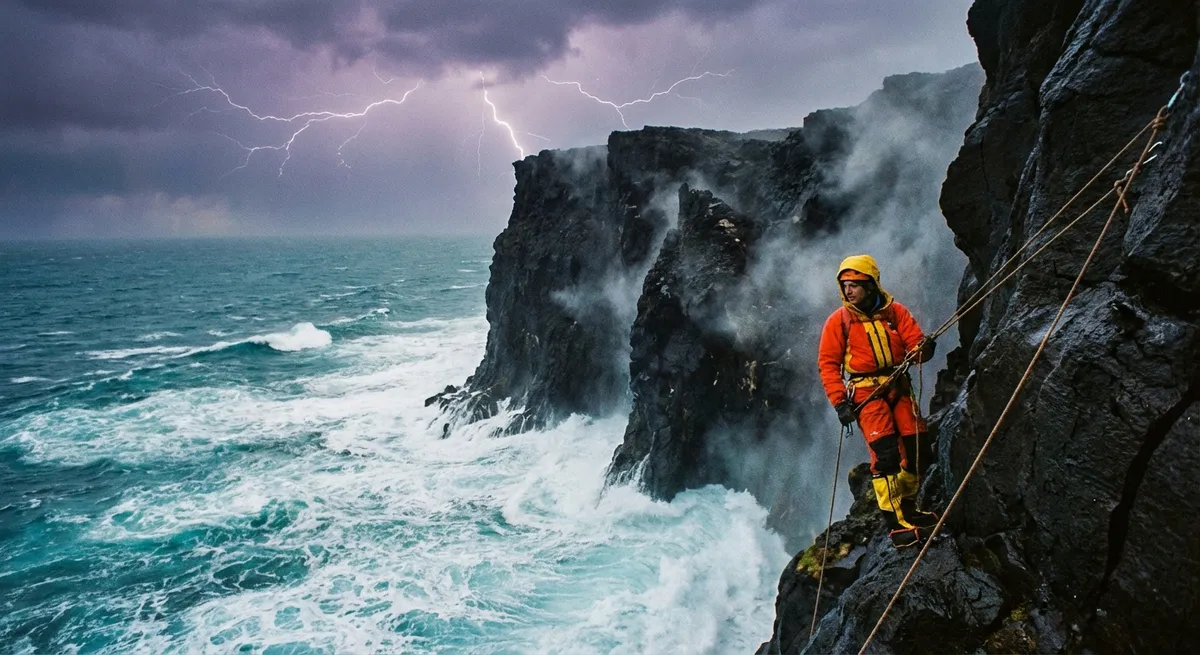
If your idea of “getting away” involves altitude sickness, frozen eyelashes, and the occasional existential crisis, you’re in the right corner of the internet. This is not about cute viewpoints and curated “adventure lite.” This is about places where the planet pushes back—where gravity, weather, and raw geography remind you that you’re not the main character, you’re just lucky backup cast.
Below are five extreme travel discoveries for people who’d rather earn their view with blisters, brain fog, or a little controlled terror. None of these are secret—but they feel like they shouldn’t be possible.
1. Sleeping Above the Abyss in Peru’s Sacred Valley
Peru’s Sacred Valley is famous for Machu Picchu. Fine. Cute. But look up from the trains and tour buses and you’ll spot something absolutely unhinged bolted into the cliffs: transparent capsule suites hanging 1,200 feet over the valley floor.
These suspended pods—like the ones from Skylodge Adventure Suites—turn “room with a view” into “room that might rewire your fear of heights forever.” To get there, you either climb a via ferrata (a vertical route with fixed cables and metal rungs) or traverse a series of ziplines that feel like shortcuts across the void. At the top, you’re rewarded with a minimalist bubble clinging to rock, where your walls are clear, your floor is thin, and your brain is suddenly very aware of gravity.
Nights are surreal. The valley glows below like a circuit board, trains whisper past in the distance, and the wind presses against your pod while you pretend you’re relaxed enough to sleep. By morning, you unzip into cloud-filtered sunrise and a sense of “I definitely should not be here, and yet here I am.”
This is not a hotel stay. It’s legalized cliff camping for people who secretly wish they were in a survival documentary but still want a duvet.
2. Chasing Electric Skies in Iceland’s Volcanic Backcountry
Iceland looks dramatic from the Ring Road, but the polite tourist loop is just the tutorial level. The real chaos lives in the highlands and volcanic zones where the earth seems permanently mid-tantrum: steaming vents, cracked lava, glacial rivers that don’t care about your crossing schedule.
Base yourself around areas like the Reykjanes Peninsula or near active systems when conditions allow (always through trusted local operators, because eruptions here are not theoretical—they’re calendar events). You might catch vents breathing sulfur, fresh lava fields still radiating heat, or eerie orange glows on the horizon that make the sky look glitchy.
Layer on storm season and the aurora borealis. You can stand on a black-sand beach while winter waves slam the shore, icy rain attacks sideways, and auroras explode overhead like the sky is mid-software update. It’s not comfortable; it’s cinematic.
The thrill isn’t just the visuals; it’s the awareness that Iceland is geologically busy. Things move. New vents open. Roads close. The country posts detailed volcanic and weather updates because the ground here has opinions—and you’re walking on them.
Respect the hazard signs, go with guides, and keep your exit plan as flexible as the tectonic plates under your boots.
3. Into the Thin-Air Zone in Ladakh’s High Desert
Part of India, part sky. Ladakh sits high enough that your lungs file a complaint the moment you step off the plane in Leh (about 3,500 meters / 11,500 feet). The air is thin, the light is razor-sharp, and the mountains look like a half-finished lunar construction project.
Most travelers come for monasteries and viewpoints. Extreme travelers come to push their physiology, slowly and deliberately, into the altitude red zone. Overland routes like the road to Khardung La or Chang La take you above 5,000 meters, where even walking uphill feels like sprinting underwater. Think road-trip meets high-altitude lab experiment.
Ice-cold rivers slice through desert valleys, monasteries cling to cliffs like architectural dares, and nights are violently quiet—no trees, no insects, just starlight that feels illegally bright. If you trek or cycle here, your daily routine becomes a negotiation with your own oxygen needs. Heart racing? Head pounding? Welcome to the game.
The danger is real: acute mountain sickness isn’t macho; it’s medical. But if you acclimatize properly, drink disgusting amounts of water, and listen to your body instead of your ego, Ladakh becomes one of the most otherworldly playgrounds you can move through under your own power.
It’s not just high-altitude travel. It’s learning what “tired” really means when the sky is practically in your lap.
4. Living Inside the Storm in Patagonia’s Wind Corridor
Patagonia isn’t just a place; it’s wind with a land problem. Those screensaver photos of jagged granite needles and turquoise lakes? They do not show the part where the air physically slaps you sideways and steals your dignity.
Areas like Torres del Paine (Chile) and Los Glaciares (Argentina) are technically hiking destinations, but describing this as “going for walks” is like calling base jumping “trying gravity.” You slog through sideways rain, sleet, and gusts strong enough that park authorities regularly issue wind warnings for actual adults.
One moment, the sky is a painter’s daydream; the next, it’s a grumpy washing machine. Trails crest ridges with drop-offs you definitely don’t want to trip near. Glacier viewpoints arrive only after hours of battling the elements, and when you finally get there, the ice groans like an ancient ship breaking apart.
Patagonia’s extremity isn’t about any single danger; it’s the accumulated attrition. Wet socks for days, tents rattling at 3 a.m., gear that fails at the worst time. Yet when clouds lift and sunlight hits the spires of Fitz Roy or the Torres, all that misery converts directly into awe.
You don’t conquer Patagonia. You negotiate short-term visitation rights with an overcaffeinated weather god.
5. Heat, Emptiness, and Echoes in Namibia’s Skeleton Coast
Imagine if a desert and an ocean tried to occupy the same space and refused to compromise. That’s Namibia’s Skeleton Coast: towering dunes collapsing into violent Atlantic surf, shipwrecks scattered like bad decisions, and a fog bank that appears daily like the world’s largest plot twist.
Here, “extreme” is not about cliffs or altitude; it’s about absence. Absence of shade, of water, of people, of anything that suggests humans belong here long-term. You can take guided expeditions into regions where 4x4 tracks vanish into unmarked sand, and navigation feels like witchcraft. Miss your turn and you’re just… in more sand.
The wind rearranges the landscape in real time, animal tracks etch temporary stories across dunes, and those whale bones and rusted hulls are real, not theme-park props. Every step or tire rotation here is dependent on planning: fuel, water, weather, route intel, and the absolute humility to turn around if conditions change.
Nights are sensory whiplash—after the white-hot exposure of day, darkness drops like a curtain, and the Milky Way detonates overhead. Somewhere out there, waves pound shipwrecks you can’t see, and the desert quietly decides whether it will let your footprints last until morning.
The Skeleton Coast isn’t a place you “visit” so much as a hostile environment that briefly tolerates your curiosity.
Conclusion
Extreme travel isn’t about bragging rights or turning your vacation into a near-death reel. It’s about voluntarily stepping into places where the terrain, the climate, or the altitude strips away your autopilot. Where every decision—layers, timing, pace, route—actually matters.
Whether you’re sleeping in a cliff pod in Peru, stalking auroras over lava in Iceland, bargaining with oxygen in Ladakh, leaning into radical wind in Patagonia, or tracing shipwreck ghosts in Namibia, the pattern is the same: the planet is not designed for your comfort. It just occasionally offers you a front-row seat to its chaos.
Go prepared, go humble, and go with the understanding that you’re not “conquering” anything. You’re just borrowing a few wild pages from Earth’s rough draft.
Sources
- Peru Travel – Official Tourism Site – General information on the Sacred Valley, adventure activities, and safety considerations in Peru
- Icelandic Meteorological Office – Up-to-date data on Icelandic volcano activity, earthquakes, weather alerts, and aurora forecasts
- India Ministry of Tourism – Official travel guidance and high-altitude region information for Ladakh
- Chile Tourism – Patagonia & Torres del Paine – Details on trekking routes, climate, and safety in Chilean Patagonia
- Namibia Tourism Board – Background on the Skeleton Coast, access rules, and environmental conditions
Key Takeaway
The most important thing to remember from this article is that this information can change how you think about Extreme Travel.